Best Auto Tracking Camera System for Smart Surveillance in 2026
Answering the top buyer question: which auto-tracking camera system best fits your property and budget? This guide focuses on systems with intelligent motion tracking, multi-angle coverage, and reliable remote access. It highlights models ideal for homeowners, small-business premises, and rental properties that need hands-off monitoring. The table below compares five strong options by key strengths and target users.
| Product | Best For | Key Strength |
|---|---|---|
| REOLINK RLK8-800PT4 | Homes with outdoor spaces; users wanting 4K clarity | 4K resolution with auto-tracking and AI detection |
| aosu 4K Solar Kit | Off-grid installs; long-term outdoor coverage | Solar powered; cross-camera tracking |
| Hiseeu 5G & 2.4G Kit | Budget-friendly, versatile outdoor setups | Dual lens with 360° coverage and auto-tracking |
| OHWOAI Dual-Lens 4K System | Small business or home with wide coverage needs | Dual lens, AI auto-tracking, color night vision |
| YOYIRYB 4K Solar 4-Cam Kit | High-privacy areas; multi-camera view on one screen | 4K, AI cross-camera tracking, solar power |
Note: Each product emphasizes auto-tracking, wide angles, and remote accessibility. Consider battery or power needs, local storage, and whether you prefer wired vs. wireless setups when choosing a system that matches your property layout and monitoring habits.
REOLINK 4K Security Camera System with Auto-Tracking
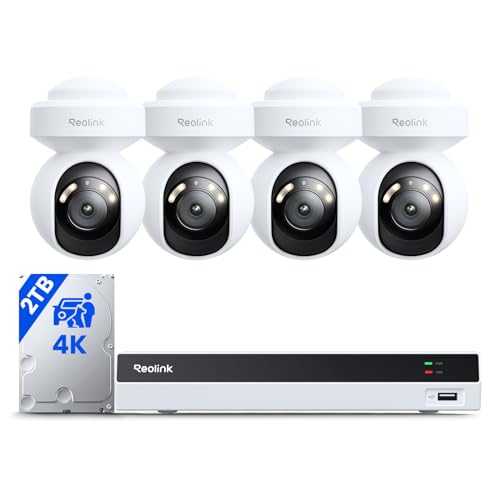
This system offers 355° pan and 50° tilt with auto-tracking, plus 4K UHD resolution. It supports AI-enabled detection (person, vehicle, animal) to minimize false alerts and includes two-way talk and spotlights. Best for: households needing high-resolution evidence and smart alerts for outdoor areas. Limitations: may require wired NVR setup and local storage suitability varies by model configuration.
aosu Security Cameras Outdoor Solar Kit
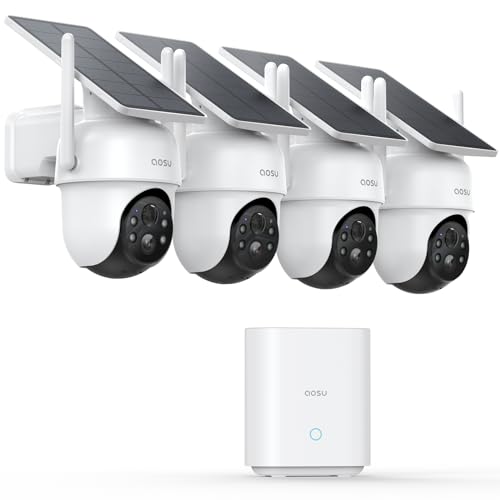
This solar-powered system eliminates monthly fees while providing cross-camera tracking and 2K color night vision. It stores video locally via aosuBase and supports multi-area viewing on a single screen. Best for: locations with ample sunlight and a desire to avoid ongoing subscription costs. Caution: verify compatibility with your local network and ensure solar exposure meets performance needs.
Hiseeu Wireless Security Cameras Outdoor Kit

Note: this system is wireless in operation but requires plugging in cameras. It uses dual-lens cameras with 360° coverage and auto tracking, plus color night vision. Best for: budget-conscious buyers who want broad coverage without complex wiring. Limitation: relies on a constant power source to function reliably outdoors.
OHWOAI Dual-Lens 4K PoE System
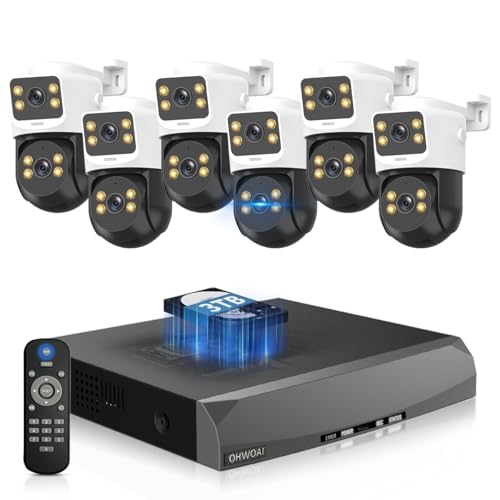
Featuring dual lenses and AI-powered auto tracking, this system emphasizes wide coverage and detailed 4K output. Best for: small-to-medium properties needing robust coverage with proactive tracking. Limitation: dual-lens setup may require careful placement to maximize the overlap of fields of view.
YOYIRYB 4K Solar 4-Cam Kit

This four-camera solar kit provides 360° auto tracking and color night vision, with a local storage base station and no monthly fees. Best for: remote properties or rental units where wiring is impractical. Caution: ensure the base station is connected by Ethernet to your router for stable streaming.
Buying Guide
What should you check when choosing an auto-tracking camera system?
- Power and connectivity: Decide between wired PoE, wireless with a base station, or fully solar-powered setups. Wired systems generally offer more stable performance over time.
- Resolution and night vision: Higher resolution (4K) provides sharper evidence, especially for license plates. Color night vision helps identification in well-lit outdoor scenes.
- Auto-tracking and AI features: Look for reliable human/vehicle detection to reduce false alarms and ensure tracking follows subjects smoothly.
- Storage and access: Consider on-site NVR storage vs. local base stations. Verify app compatibility, remote viewing, and alert delivery methods (push, email, buzzer).
- Field of view and placement: Wide horizontal coverage (360° or near) minimizes blind spots. Plan camera placement to maximize overlap between lenses.
- Expandability and compatibility: If you anticipate adding cameras later, choose a system that supports multi-camera expansion and compatible accessories.
FAQ
- What is auto tracking in a security camera system?
Auto tracking uses motion detection to automatically pan and tilt the camera to follow a moving subject, helping ensure continuous capture without manual control.
- Do I need a subscription for these systems?
Many options offer local storage with no ongoing subscription, while some include optional cloud or base-station services. Check the product details for storage and data plans.
- Is 4K worth it for exterior surveillance?
4K provides clearer detail, especially at longer distances, which improves identification in evidence. Consider bandwidth and storage implications.
- Can these systems be used in cold weather or on solar power?
Some models advertise operation in low temperatures and solar-powered setups. Verify the operating temperature range and solar charging capacity for your climate.
- What’s the difference between wired and wireless setups?
Wired (PoE) systems tend to be more stable with less interference, while wireless systems offer easier installation but may require robust Wi‑Fi and power planning.
- How many cameras should I start with?
Begin with a core set (2–4 cameras) covering entry points and high-traffic areas, then expand if needed based on gaps in coverage.