Best 10-18mm Lenses for Wide-Angle Photography
Wide-angle lenses in the 10-18mm range unlock dramatic perspectives for landscapes, interiors, travel, and vlogging. This guide reviews five strong options across Canon, Sony, and Sigma ecosystems, focusing on performance, compatibility, and overall value. Each pick emphasizes sharpness, minimal distortion, and practical features for modern APS-C bodies. Whether you shoot with Canon EOS, Sony Alpha, or micro four-thirds, these lenses help you capture expansive scenes with clarity and composition in mind.
| Product | Brand | Format | Notes |
|---|---|---|---|
| Canon EF-S 10-18mm f/4.5-5.6 IS STM | Canon | APS-C | Entry-level ultra-wide with image stabilization |
| Canon RF-S 10-18mm f/4.5-6.3 IS STM | Canon | APS-C | Mirrorless focus with compact form factor |
| Sony E 10-18mm F4 OSS | Sony | APS-C | Lightweight, stabilized wide-angle for E-mount |
| Sigma 10-18mm F2.8 DC DN Contemporary (Sony E) | Sigma | APS-C | Fast, bright ultra-wide for Sony E |
| 10-18mm F2.8 DC DN Contemporary (Canon RF Mount) | Sigma | APS-C | Bright ultra-wide for Canon RF mirrorless |
Canon EF-S 10-18mm f/4.5-5.6 IS STM Lens

The Canon EF-S 10-18mm f/4.5-5.6 IS STM is an affordable ultra-wide for APS-C Canon DSLR bodies. It uses a drive system with stepping-motor control to provide smooth AF and a flexible focal range of 10-18mm, equivalent to roughly 16-29mm on full-frame terms. Closest focusing distance is about 0.72 feet (0.22 meters), making it suitable for creative close-ups in tight interiors and dramatic landscape shots. Image stabilization helps steady handheld shooting at slower shutter speeds, which is useful in dim environments or low-light situations.
Key considerations include compatibility with Canon’s EF-S lineup and the trade-off of a variable aperture (f/4.5-5.6). For videographers, the STM motor supports steadier AF during recording, while the lighter weight and budget-friendly price make it a popular entry point into ultra-wide photography.
Canon RF-S 10-18mm F4.5-6.3 Is STM Ultra-Wide Zoom

The Canon RF-S 10-18mm is an ultra-wide zoom designed for Canon’s APS-C mirrorless systems. With a focal range of 10-18mm (roughly 16-29mm equivalent), it excels in cramped interiors and sweeping landscapes where expansive framing matters. The lens benefits from STM technology and optical stabilization, helping maintain steady footage during handheld shooting. Its compact design makes it ideal for travel and daily vlogging, where a lightweight setup can reduce fatigue over long shoots.
Important considerations include impact on overall kit size for Canon’s RF ecosystem and the trade-off of a variable aperture. For creators prioritizing portability and an AI-friendly autofocus experience, this model offers a balanced option for wide-angle storytelling.
Sony E 10-18mm F4 OSS Wide-Angle Zoom

The Sony E 10-18mm F4 OSS is a compact, stabilized ultra-wide for Alpha APS-C bodies. With an important coverage angle, it provides expansive framing from 10mm (15mm equivalent) to 18mm on the sensor. The minimum focusing distance, around 0.82 feet (0.25 meters), helps with close-in environmental portraits and architectural details. Optical SteadyShot (OSS) assists with handheld video and low-light photography, while the wide focal range supports landscape and interior work with good perspective control.
Considerations include its fixed maximum aperture of f/4 for the widest end and the balance between weight and stabilization. The lens is well-suited for travel shooters who value a lightweight, versatile option that maintains strong image quality across the zoom range.
Sigma 10-18mm F2.8 DC DN Contemporary (Sony E)

The Sigma 10-18mm F2.8 DC DN Contemporary is a bright ultra-wide for Sony E-mount, offering a fast constant maximum aperture of f/2.8 across the zoom range. This lens delivers a compact form factor with low weight, ideal for on-the-go landscapes, cityscapes, and video work where depth of field control and subject isolation matter. The 7-blade diaphragm contributes to pleasing bokeh in close scenes, and the wide aperture supports shooting in lower light conditions without sacrificing depth of field.
Protection and accessories, such as compatible hoods and filters, can help preserve image quality in challenging environments. This lens is a strong choice for photographers who want versatility in one lens without sacrificing performance in dim settings.
Sigma 10-18mm F2.8 DC DN for Canon RF Mount
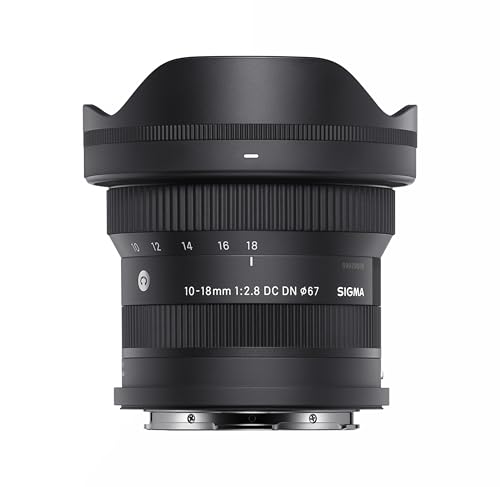
This Sigma lens extends the fast-wide option to Canon RF-mount mirrorless bodies, maintaining an f/2.8 aperture across the 10-18mm range. Its compact design and bright performance suit landscape, architecture, and storytelling where dynamic perspective and subject separation are desirable. The autofocus is designed to be reliable for both stills and video, while the close focusing distance supports creative macro-style wide shots within a larger scene.
Key considerations include compatibility with Canon RF cameras, the need for appropriate adapters on older Canon bodies, and the trade-off between size and reach. For Canon APS-C users seeking a high-speed, versatile ultra-wide, this Sigma option provides strong creative potential.
Buying Guide: How to Choose a 10-18mm Ultra-Wide
- Camera system compatibility: Confirm your body (Canon EF-S, Canon RF, Sony E, etc.) and whether you need a lens that supports stabilization (IS/OSS) or a fast aperture.
- Aperture and low-light needs: Lenses with f/2.8 offer more light and better background separation, especially useful in dusk landscapes or indoor scenes; slower apertures (f/4-6.3) save weight and cost but require brighter conditions or higher ISO.
- Weight and portability: Travel and vlog shooting benefit from lighter, compact designs. Consider whether you prioritize a small form factor over maximum speed.
- Autofocus performance: For video or action, reliable and quiet autofocus is essential. Look for lenses with stepping motors (STM) or designated AF systems for your mount.
- Image stabilization: Optical stabilization helps handheld shooting, reducing blur in low light. Some lenses provide IS/OSS, others rely on body stabilization.
- Field of view and distortions: Ultra-wides produce perspective exaggeration and barrel distortion. Check test samples for distortion control and minimal color fringing.
- Build and weather sealing: If you shoot outdoors, weather resistance and durable construction are important considerations.
- Budget versus value: Entry-level options deliver solid performance at a lower cost, while high-speed f/2.8 pro-level ultrawides offer faster performance and greater versatility in low light.
When selecting, consider your primary use: landscapes and interiors benefit from wide coverage and sharp corners, while vlogging may value stabilization and compact weight. For Sony and Canon ecosystems, the availability of a fast, stabilized, and sharp ultrawide in the 10-18mm range can significantly expand creative possibilities without requiring multiple lenses.