Best 11 Mm Nikon Lens Options for Wide-Angle Shots
The top 11 mm and near-11 mm Nikon-compatible lenses listed here are ideal for landscape, architecture, and immersive interior photography. They cater to different camera systems including Nikon DX, Nikon F, and Nikon Z. This guide highlights who each lens is best for, why it stands out, and any notable limitations.
The following table summarizes the featured products to help you compare at a glance:
| Product | Mount | Best For | Key Benefit |
|---|---|---|---|
| Tokina 11-16mm f/2.8 AT-X116 Pro DX II | Nikon F (DX) | Aps-C shooters who want constant fast aperture | Excellent wide zoom with constant f/2.8 |
| TOKINA ATX-i 11-16mm F2.8 Nikon F | Nikon F | Premium feel and coating for frequent use | Improved handling and flare control |
| TTARTISAN 11mm F2.8 Fish Eye Z Lens (Z-Mount) | Nikon Z | Immerse wide fisheye perspective | 180° fisheye view with macro-like close focus |
| TTARTISAN 11mm F2.8 Fisheye F (Nikon F) | Nikon F | Classic fisheye look on DSLR bodies | Sharp edges and strong vignette for creative shots |
| YONGNUO YN11MM F1.8 Prime Lens (Nikon Z Mount) | Nikon Z | Compact, fast wide for Z-mount mirrorless | Large f/1.8 aperture for low-light and depth |
Tokina 11-16mm f/2.8 AT-X116 Pro DX II Digital Zoom Lens (AF-S Motor) (for Nikon)

Features include an aperture range of f/2.8 to f/22 and a design for APS-C sensors, with two aspheric elements and two super-low dispersion elements. Best for photographers using Nikon DX bodies who need a fast wide zoom for landscapes, interiors, or architectural shots. Limitations include compatibility with non-US markets and potential AF-S motor nuances on certain camera bodies.
TOKINA ATX-i 11-16mm F2.8 Nikon F

Designed for Nikon F-mount DSLRs, this lens offers a constant f/2.8 aperture and a refined coating for better flare resistance. It suits photographers who shoot in varying light with fast action in wide spaces. The newer coating and design can improve contrast, but may come with a higher price point and a heavier build.
TTARTISAN 11mm F2.8 Fish Eye Z Lens (Z-Mount)

For Nikon Z-mount mirrorless bodies, this 11mm fisheye creates dramatic 180° perspectives with a macro-like close focus. It’s best for creative enthusiasts seeking bold, immersive images. A limitation is the extreme distortion at the edges that may not suit all genres.
TTARTISAN 11mm F2.8 Fisheye F (Nikon F)
This Nikon F-mount fisheye lens delivers a classic ultra-wide look with a 180° field of view. It’s ideal for action-packed landscapes or creative architectural shots that require extreme perspective. Note that this lens emphasizes creative distortion, which can be a limitation for standard architectural work.
YONGNUO YN11MM F1.8 Prime Lens for Nikon Z Mount
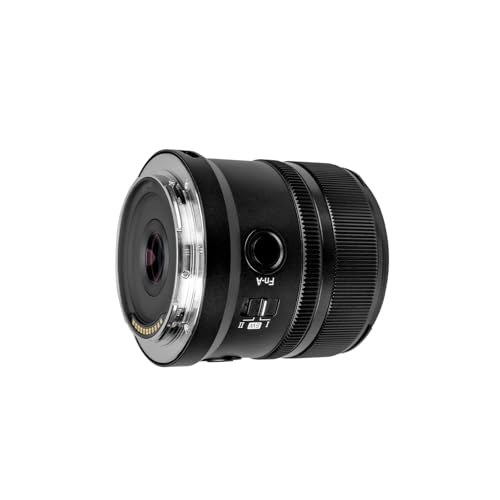
For Nikon Z-series mirrorless cameras, this 11mm prime with a bright f/1.8 aperture offers excellent low-light performance and a wide field of view. It’s best for urban landscapes and interior photography where light is variable. A potential drawback is that it is a prime, so no zoom flexibility within the 11mm range.
Buying Guide
What’s the difference between DX, F, and Z mount for these lenses?
DX lenses are designed for Nikon APS-C bodies and provide a narrower field of view on full-frame cameras. F-mount lenses are for traditional DSLRs, while Z-mount is for Nikon’s mirrorless line. Choose based on your camera body to ensure compatibility and optimal image quality.
When should you choose a fisheye over a rectilinear wide lens?
Fisheye lenses create dramatic perspective with strong barrel distortion and a full 180° view. They’re ideal for creative, immersive shots, skylines, and unique interiors. If you need straight lines and natural perspective, a rectilinear wide such as 11-16mm is a better fit.
What matters most: constant aperture or maximum flexibility?
A constant f/2.8 across the zoom range helps maintain exposure and depth of field in varied lighting and during shutter-prone conditions. If you need flexibility for framing, a variable or shorter zoom range with fast glass might be preferable.
Are coatings and build quality worth the extra cost?
Advanced coatings reduce flare and ghosting, especially in bright landscapes or backlit scenes. Robust builds improve handling for frequent use. Weigh these benefits against price and weight for your workflow.
What should you consider about close focusing and macro-like detail?
Several fisheye lenses offer close focusing; this enables macro-like detail in wide-angle shots. If close proximity to subjects is important, look for this capability in the product features.
How to compare lenses quickly?
- Mount compatibility with your camera body
- Aperture range and whether it is constant across the zoom range
- Special features: coatings, close focus, and distortion characteristics
- Intended use: landscapes, interiors, architecture, or creative fisheye work
FAQ
- Q: Which 11 mm Nikon lens is best for landscapes on a DX body? A: The Tokina 11-16mm f/2.8 AT-X116 Pro DX II is well-suited for APS-C sensors and offers a fast constant aperture.
- Q: Do fisheye lenses require post-processing for straight lines? A: Fisheye lenses intentionally bend lines; you may correct some distortion in post-processing depending on the look you want.
- Q: Is a prime 11mm better than a zoom for Nikon Z? A: If you want flexibility in framing, a zoom is advantageous; for maximum sharpness at a fixed focal length, a prime like 11mm f/1.8 is strong on Z-mount.
- Q: Can these lenses work on full-frame Nikon cameras? A: Some are designed for DX or F-mount; verify compatibility with your camera body before purchasing.
- Q: What’s the benefit of a fast f/2.8 across the range? A: It maintains brighter viewfinder brightness and better low-light performance across the zoom range.
- Q: Should I buy a lens with better coating if I shoot in bright sun? A: Yes, coatings help reduce flare and improve contrast in challenging lighting.