Best 12mm Wide Angle Lenses for Diverse Digital Cameras in 2026
Answering the buyer’s search, this guide highlights top 12mm wide-angle options across multiple mounts, including APS-C and full-frame mirrorless. These picks suit landscape shooters, architectural photographers, and night-sky enthusiasts seeking dramatic perspective, sharp edges, and reliable low-light performance. Each lens is best for a specific setup or style, with notes on who benefits most and potential limitations to consider before buying.
| Product | Brand | Mount / Camera Type | Key Benefit | Limitations |
|---|---|---|---|---|
| Nikon NIKKOR Z DX 12-28mm PZ VR | Nikon | Nikon Z DX (APS-C) | Versatile power zoom with VR image stabilization | DX format only |
| Laowa 12mm f/2.8 Lite Zero-D | LAOWA | Full-frame, E-mount | Ultra-wide 122°, minimal distortion | Full-frame design; weight and size to manage |
| Rokinon 12mm f/2.0 CS | Rokinon | Sony E-mount APS-C | Sharp, wide 98–110° view, strong low-light | Manual focus; no electronic contacts on some bodies |
| Samyang 12mm F2.0 AF for Canon RF-S | Samyang | Canon RF-S APS-C | Fast autofocus, bright F2.0 aperture | Specific to RF-S mount; size varies by body |
| Meike 12mm T2.2 Cine Lens | Meike | MFT (Micro Four Thirds) | Cinema-focused T2.2, shallow depth of field | Manual focus; cinema-specific features |
Nikon NIKKOR Z DX 12-28mm PZ VR

The Nikon NIKKOR Z DX 12-28mm PZ VR covers an expansive 12-28mm range with built-in Vibration Reduction equivalent to about 4.5 stops. This zoom is ideal for Nikon Z DX-format cameras used by travel photographers and event shooters who value fast, smooth zooming without changing lenses. The power-zoom feature offers 11 speeds, from subtle to near-instant, making it adaptable for dynamic scenes and video. Best for Nikon DX shooters who want flexibility in a compact, stabilized package.
Who it’s best for: Nikon Z DX users seeking a versatile ultra-wide zoom with stabilization for handheld video or stills.
Caution: This lens is designed for DX-format cameras; full-frame Z lenses or adapters are not applicable for this lens without crop-factor considerations.
Laowa 12mm f/2.8 Lite Zero-D

The Laowa 12mm f/2.8 Lite Zero-D delivers an ultra-wide 122° field of view with minimal distortion, making it exceptionally suited for landscapes and architectural photography. Its bright f/2.8 aperture enhances low-light performance and depth control for dramatic scenes. The lens is available for full-frame mirrorless cameras with an emphasis on edge-to-edge sharpness and clean, natural bokeh when stopped down or used wide open.
Who it’s best for: Landscape and architectural shooters preferring a wide, distortion-free wide angle with strong corner-to-corner sharpness.
Caution: Being a wide native full-frame prime, it is relatively heavy and may require careful handling on smaller bodies or rigs.
Rokinon 12mm f/2.0 CS
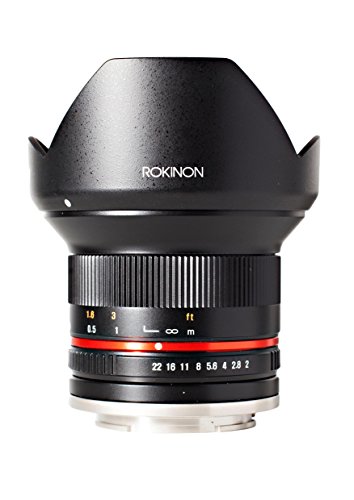
The Rokinon 12mm f/2.0 CS lens is designed for Sony E-mount APS-C cameras and provides a 98–110° viewing angle. Its fast f/2.0 aperture supports low-light environments while maintaining a wide depth of field for landscape and architectural photography. The lens emphasizes high optical quality with a compact build that suits street and travel shooters who prefer manual focus control. Best for Sony APS-C users who want a budget-friendly, sharp ultra-wide option.
Who it’s best for: Sony APS-C shooters who need a bright, compact ultra-wide prime with precise manual focus control.
Caution: Manual focus requires careful focus pulls; not ideal for fast action without focus peaking or assistive features on the body.
Samyang 12mm F2.0 AF for Canon RF-S

The Samyang 12mm F2.0 AF for Canon RF-S mounts delivers fast autofocus on APS-C Canon bodies, with a bright F2.0 maximum aperture for low-light performance and subject isolation. It covers a substantial 99.1° angle, making it well-suited for immersive landscapes, night photography, and interior architecture. Its autofocus helps streamline shooting when time is critical. Best for Canon RF-S users who want a bright, compact, auto-focused ultra-wide option.
Who it’s best for: Canon APS-C shooters seeking reliable autofocus with strong low-light capability in a compact ultra-wide lens.
Caution: Optimized for RF-S; compatibility and performance on full-frame RF bodies may vary.
Meike 12mm T2.2 Cine Lens

The Meike 12mm T2.2 is a cinema-focused ultra-wide designed for Micro Four Thirds cameras. Its T2.2 aperture provides a precise exposure control suitable for video, with a 92° field of view and minimal distortion. The cine lens construction supports smooth focus and consistent performance in video work. Best for MFT shooters who prioritize controlled depth of field and cinema-specific features in a compact package.
Who it’s best for: Micro Four Thirds video shooters needing a dedicated cine lens with shallow depth of field and manual control.
Caution: Manual focus and dedicated cinema workflow may require familiarity with T-stop-based exposure rather than f-stops.
Buying Guide
What matters most when choosing a 12mm lens?
Sensor size and mount compatibility drive your 12mm choice. On APS-C, 12mm yields an ultra-wide effect; on full-frame, it becomes a true ultra-wide with more dramatic perspective. Consider whether you need autofocus, stabilization, or a cine-friendly manual focus design.
What should you consider for landscape, architecture, or night photography?
Look for minimal distortion, sharp corners, and a bright aperture for night work. Lenses like the Laowa 12mm f/2.8 and certain 12mm models emphasize low distortion and edge-to-edge sharpness, which helps in stitching panoramas and maintaining consistent color and contrast.
Is stabilization or constant aperture more important?
Stabilization helps handheld shooting, especially in low light or video. If you shoot mainly on a tripod, a compact, sharp prime without stabilization can be lighter and more budget-friendly. For video, consider lenses with smooth zooms or stable autofocus performance.
Manual focus vs. autofocus
Manual focus lenses offer control and can be lightweight, but autofocus saves time in dynamic scenes. For Sony E APS-C or Canon RF-S bodies, autofocus-capable lenses like the Samyang 12mm F2.0 AF provide reliable performance for fast-paced shoots.
Budget and weight considerations
Ultra-wide lenses vary in weight and size. If you travel or shoot handheld for long periods, a lighter lens with a compact form factor improves ergonomics. Cine-focused lenses typically add weight and cost but deliver smoother focus and exposure control.
Technique tips
- Use hyperfocal distance to maximize depth of field at wide angles.
- For cityscapes and interiors, shoot with small apertures and stitch carefully for panorama shots.
- When using ultra-wide lenses, watch for perspective distortion near edges and correct in post-processing if needed.
FAQ
- What is the advantage of a 12mm lens on APS-C cameras?
On APS-C, 12mm provides an ultra-wide angle that emphasizes dramatic perspective while keeping the lens compact. - Do 12mm lenses work for night photography?
Yes, many models offer bright apertures (f/2.0–f/2.8) to gather light in low-light scenes. - Is autofocus necessary for ultra-wide primes?
Not always; manual focus can be precise, but autofocus increases speed in dynamic environments. - Which lens is best for travel photography?
For compact travel kits, consider lighter, stabilized zooms or compact primes like Laowa or Samyang variants. - Can these lenses be used for video?
Yes, especially models with smooth focus and stabilization, or cinema-oriented Meike lenses for controlled footage. - Should I choose a full-frame lens for an APS-C camera?
Full-frame lenses work on APS-C bodies with a crop factor; they often provide higher image quality but can be larger and heavier.