Best 180 Degree Camera for VR: Top 5 360°/180° VR Cameras for Immersive Capture
Answering the search intent for buyers seeking 180-degree VR capture: these five options balance wide field of view with practical usability, making them suitable for hobbyists, creators, and light security setups. Each product is evaluated for 180° performance, ease of use, and compatibility with common VR workflows. The list includes consumer-grade 360° cameras with strong 180° modes, plus dedicated fisheye lenses and dual-camera kits designed to deliver immersive VR content.
Buyer snapshot:
- Best all-around VR creators may prefer a ready-to-use 360° camera with a built-in 180° option.
- Better for enthusiasts who want stereoscopic 180° capture or dual-camera setups for true VR.
- Choose this if you need a compact, plug-and-play solution for quick VR content.
Summary table of selected products:
| Product | Best For | Key 180°/360° Feature | Notes |
|---|---|---|---|
| Samsung Gear 360 Real 360° | Casual creators, portable VR shooters | 360° capture with 180° wide-angle option | Lightweight, dust/water-resistant |
| Canon RF 5.2mm F2.8 L Dual Fisheye | Professional VR shooters | Stereoscopic 3D 180° VR capture | Requires compatible Canon body and workflow |
| Kodak PIXPRO SP360 4K Premier Pack | Beginner to intermediate VR content | 4K 180°/360° spherical capture | Starter kit with mounts and lenses |
| Kodak PIXPRO SP360 4K Dual Pro Pack | Back-to-back VR capture | Two cameras for true 360×360 VR | Complete mounting kit included |
| DCSEC HD 180 Degree Fisheye Dome | Security and indoor/outdoor monitoring | 180° ultra-wide fisheye with IR | 4-in-1 video output; blends with analog DVRs |
Samsung Gear 360 Real 360° High Resolution VR Camera
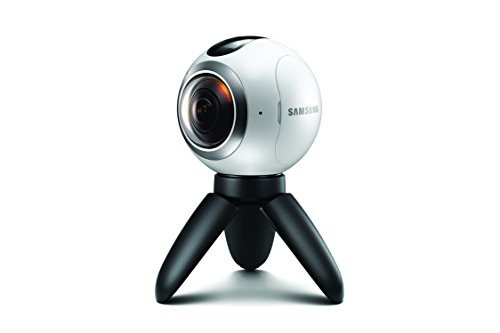
The Samsung Gear 360 offers a lightweight, compact form with full 360-degree video capture and a 180-degree wide-angle option for quicker VR shoots. Its dust and water resistance improves field usability, making it a practical choice for travel or outdoor shoots. Best for casual creators who want an all-in-one device without complicated setup. Caution: Newer models and software updates may affect compatibility with legacy VR headsets.
DCSEC HD 1080P 2MP 180 Degree Fisheye Dome Camera

This 180° fisheye dome is designed for security and monitoring environments, with a 1.7mm ultra-wide lens and IR night vision for up to 30 feet. It supports multiple video outputs (TVI/AHD/CVI/BNC) for flexible integration with existing DVRs. Best for users needing a wall- or ceiling-mounted VR-like monitoring view, or for security workflows that lean into immersive 180° inspection. Limitation: Not a consumer-grade VR camera; intended for surveillance ecosystems.
Canon RF 5.2mm F2.8 L Dual Fisheye Lens

This lens enables stereoscopic 3D 180° VR capture when paired with a compatible Canon camera with VR-ready firmware. It represents a high-end option for true 3D immersion, compatible with head-mounted displays like Quest 2. It is best for professional VR storytellers who want accurate depth and headset-ready content. Caution: Requires compatible Canon body and software workflow; not a standalone product.
Kodak PIXPRO SP360 4K Premier Pack VR Camera

These SP360 4K cameras deliver high-resolution 4K video and 235-degree lens coverage in a single shot, plus a complete starter kit with mounts and lens covers. Best for beginners wanting a full VR-friendly package that includes stabilization and mounting options. Better for quick setup and entry into VR content creation. Limitation: Some users may prefer more modern stabilization in current markets.
Kodak PIXPRO SP360 4K Dual Pro Pack VR Camera
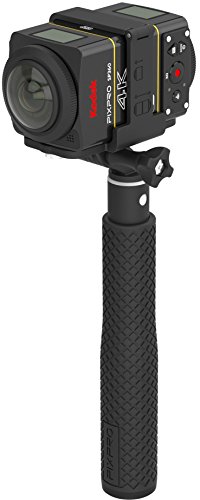
This dual-camera bundle supports 360-by-360 VR capture, producing true spherical views ready for VR playback. It includes a mounting base, extended selfie stick, suction mounts, a remote, and lens covers. Best for creators who want seamless multi-view VR content without extensive post-processing. Consideration: Two-camera setup increases complexity and storage needs.
Buying Guide: How To Pick The Right 180° VR Camera
Field of view vs. depth: Decide whether you want true 3D stereoscopic capture (dual-lens or dual-camera kits) or high-quality single-lens 180° capture for immersive but non-stereoscopic VR. Compatibility matters: Check your VR headset, computer, and editing software. For beginners, starter kits with mounts and USB connectivity simplify setup. For professionals, consider lenses and bodies designed for cinematic VR and post-production pipelines. Portability, weather resistance, and battery life are practical factors for on-location shoots.
Popular Use Cases
- Travel journals with immersive 180° or 360° views
- VR storytelling with 3D depth using stereoscopic rigs
- Security monitoring integrating VR-like panorama for quick situational awareness
FAQ
- What is the difference between 180° and 360° VR cameras?
180° captures provide a hemispherical view that is ideal for immersive viewing from a fixed position, while 360° captures cover a full sphere around the camera for complete VR playback. - Do I need a special headset for VR content?
Most VR content works with standard head-mounted displays like Oculus Quest 2 and similar devices, though some formats require specific app support. - Are dual-camera kits easier for beginners?
Dual-camera kits can yield true 360° spherical video but may require more setup and stitching; beginners may prefer single-lens or ready-to-use kits. - Can these cameras be used for surveillance?
Yes, some models are designed for security with IR night vision and multi-output formats but are not primarily consumer VR devices. - Is 4K necessary for VR?
4K can improve detail in VR, but bandwidth, storage, and processing requirements also increase; choose resolution based on your workflow and headset specs.