Best 3 Way Pan Head Options for Precise Camera Positioning
Answer: A 3-way geared pan head is ideal for photographers who need precise control over pan, tilt, and lateral movement, especially in studio, macro, architectural, or landscape work. This guide highlights top gear heads that balance micro-adjustments with robust build quality. The best picks are suited for professionals and enthusiasts who value repeatable positioning, smooth damping, and reliable Arca-Swiss compatibility. Read on to compare five strong contenders and find the right fit for your rig.
| Product | Best For | Load Capacity | Key Benefit |
|---|---|---|---|
| NEEWER TH15 3 Way Geared Head | Advanced hobbyists to professionals needing precise micro-adjustments | 6 kg / 13.2 lb | Two bubble levels and millimeter micro-adjustment |
| NEEWER TH16 3 Way Geared Head | Studio shooters needing extra quick-release versatility | 6 kg / 13.2 lb | Extra quick release plate and 360° pan with 3 bubble levels |
| K&F CONCEPT 3-Way Geared Tripod Head (B0F6YLMRCY) | Architectural and macro work requiring precise control | 6 kg / 13.2 lb | Four bubble levels and micro-adjustment for accuracy |
| ARTCISE 3-Way Geared Tripod Head (B0GTF316ND) | Macro, product, and studio work | 6 kg / 13 lb | Millimeter micro-adjustment with CNC aluminum construction |
| Benro 3-Way Arca Head HD2A | beginners to intermediates seeking reliable performance | 26.4 lb | Independent three-way adjustments and Arca-Swiss compatibility |
NEEWER TH15 3 Way Geared Head

Best for: photographers who want precise, millimeter-level adjustments with a robust damping system. Why selected: the TH15 offers a 3-axis layout with -45° to 90° frontal tilt and 360° pan, plus counterbalance and a φ25mm center column for versatile positioning. The dual mode quick switch provides large and fine adjustments, making it suitable for architectural or landscape framing where exact angles matter.
Limitations: the dual controls add complexity; beginners may need time to master the fine-tune knobs. The head uses an Arca-type plate, which is widely compatible but requires a compatible clamp on your tripod head.
K&F CONCEPT 3-Way Geared Tripod Head (B0F6YLMRCY)
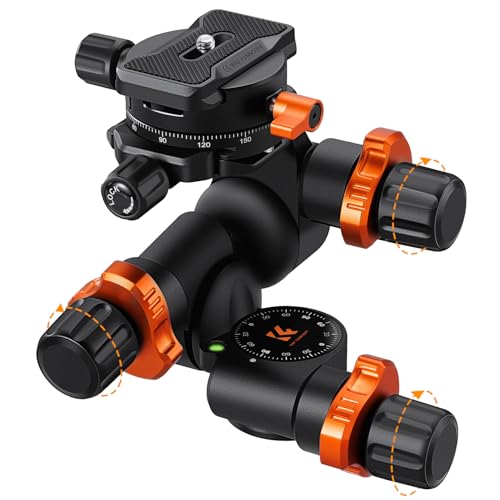
Best for: architectural and macro shooters who need precise micro-adjustments. Why selected: this head emphasizes ultra-precise 3-axis control with high-precision micro-adjustment knobs and multiple bubble levels for alignment. It supports up to 6 kg (13.2 lb) and uses a premium all-metal build for durable, long-term use.
Caution: additional bubble levels and scales can add setup time; ensure your tripod plate is compatible with the Arca-style system for seamless swapping between devices.
ARTCISE 3-Way Geared Tripod Head

Best for: photographers seeking a CNC aluminum, high-rigidity head with consistent micro-adjustments. Why selected: ARTCISE combines precise 3-axis gearing with robust damping, delivering reliable locking and repeatable framing for product and macro photography. It supports up to 6 kg and features solid CNC aluminum construction for stability on uneven surfaces.
Limitation: some users may prefer a larger range of tilt beyond -90° to 90° depending on their rig; verify compatibility with your camera’s height and lens combination before mounting.
Benro 3-Way Arca Tripod Head HD2A

Best for: users who want dependable 3-way control with a large load capacity for heavier camera setups. Why selected: Benro HD2A provides independent movement on three axes with precise positioning and an Arca-Swiss compatible QR plate, delivering stable support for larger bodies and lenses.
Limitation: while sturdy, the unit is heavier than some compact geared heads, which can impact travel and transport ease.
Buying Guide: How to Choose a 3-Way Geared Tripod Head
- Load capacity: Confirm your camera body and longest lens combination will fit within the head’s rated payload. If you frequently use heavy lenses, prioritize higher capacity (e.g., 6 kg/13.2 lb and above).
- Adjustment precision: Millimeter micro-adjustments and multiple knobs enable fine framing. Look for dedicated mode controls or fine-tune knobs to tailor the feel to your workflow.
- Pan and tilt range: A full 360° pan and broad tilt range assist in panoramic shoots and unusual angles. Check frontal tilt and lateral tilt specs to ensure compatibility with your shooting style.
- Locking and damping: Reliable locking prevents drift during long exposures. Damping and counterbalance systems smooth movements, improving repeatability during precise framing.
- Arca-Swiss compatibility: An Arca-type QR plate offers broad compatibility with many tripods and fluid heads. Ensure your current setup can accept the plate or comes with a suitable clamp.
- Additional features: Bubble levels, extra quick-release plates, and center-column design can add versatility. Consider whether you benefit from extra plates or bubble levels for alignment accuracy.
- Build material: Aluminum alloy provides a good balance of weight and rigidity. CNC-machined parts improve durability and tolerance control for long-term use.
- Portability vs. stability: Heavier heads commonly offer greater stability; lighter options enhance travel convenience. Choose based on how often you transport your gear and the surfaces you shoot on.
Frequently Asked Questions
- What is a 3-way geared tripod head? It is a tripod head with independent controls for pan, tilt, and side tilt, allowing precise adjustments in each axis, typically featuring micro-adjustment knobs.
- Why choose a geared head over a ball head? Geared heads provide repeatable, precise positioning essential for architecture, macro, and product photography, while ball heads prioritize quick adjustments and flexibility.
- What does Arca-Swiss compatibility matter? Arca-Swiss compatibility ensures broad compatibility with many tripod systems and quick-release plates for easier swapping between setups.
- What should I consider about load capacity? Always choose a head rated above the combined weight of your camera body, lens, and any accessories to avoid overloading and drift.
- Are extra quick-release plates useful? Yes, extra plates enable faster transitions between rigs or photobox setups without swapping the entire head.
- Is a higher number of bubble levels beneficial? Additional bubble levels simplify leveling on uneven surfaces, especially in outdoor or studio environments with multiple planes to align.