Best 35 or 50mm Lenses: A Practical Guide for Every Photographer
Choosing between a 35mm and a 50mm lens depends on your shooting style, camera system, and location. This guide presents five strong 50mm prime options and explains why each might fit your needs, whether you’re chasing sharp portraits, street photography, or versatile travel shots. For many shooters, a 50mm prime offers bright apertures, compact form, and natural perspective that’s great for indoor spaces and low light.
Summary table of selected products:
| Product | Brand | Best For | Key Benefit |
|---|---|---|---|
| Canon EF 50mm f/1.8 STM Lens | Canon | Canon DSLR users seeking affordable fast prime | Bright f/1.8, compact, great for portraits |
| Sony FE 50mm F1.8 | Sony | Sony full-frame mirrorless shooters | Lightweight, smooth bokeh, compact |
| Nikon AF-S FX 50mm f/1.8G | Nikon | FX-format Nikon DSLR users | Fast aperture, solid optical design |
| Nikon AF-S DX 35mm f/1.8G | Nikon | Nikon DX crop-sensor bodies | Wider angle equivalent, excellent value |
| YONGNUO YN50mm f/1.8 | YONGNUO | Budget-conscious shooters on Canon EF mount | Large aperture, autofocus, versatile |
Canon EF 50mm f/1.8 STM Lens

Best for: Canon DSLR users who want an affordable fast prime for portraits, low-light street work, and everyday shooting. The 50mm focal length offers a natural perspective close to human vision, while the f/1.8 maximum aperture enables sharp subject separation and good performance in dim conditions. Suitable for beginners to intermediate shooters building a versatile kit.
Why selected: This lens is a budget-friendly staple with a reliable image profile and compact build. It pairs well with entry- to mid-level Canon DSLRs and helps learners practice shallow depth of field without breaking the bank.
Limitation: It is a consumer-grade prime without advanced weather sealing, so avoid harsh weather without protection.
Sony FE 50mm F1.8 Standard Lens

Best for: Sony full-frame mirrorless shooters seeking a compact, lightweight prime with strong autofocus and pleasing bokeh. The large f/1.8 aperture provides shallow depth of field ideal for portraits and low-light situations.
Why selected: Its compact design makes it a perfect travel lens, and the 50mm focal length suits everyday photography. The 7-blade aperture contributes to smooth background blur that’s flattering for portraits.
Limitation: Might show more field curvature at wide open in some scenes; stopping down a touch can improve edge sharpness.
Nikon AF-S FX NIKKOR 50mm f/1.8G

Best for: Nikon DSLR shooters using FX-format bodies who want a fast, compact prime with broad compatibility and a classic field of view for portraits and street photography.
Why selected: The f/1.8 aperture and compact design deliver fast focusing and pleasing background blur. The optical system, including a SWM, supports quiet focus suitable for both stills and video work.
Limitation: This is an FX-format lens; on DX cameras, the effective field of view is slightly wider, which some users may prefer but others may find less “classic” for 50mm work.
Nikon AF-S DX NIKKOR 35mm f/1.8G
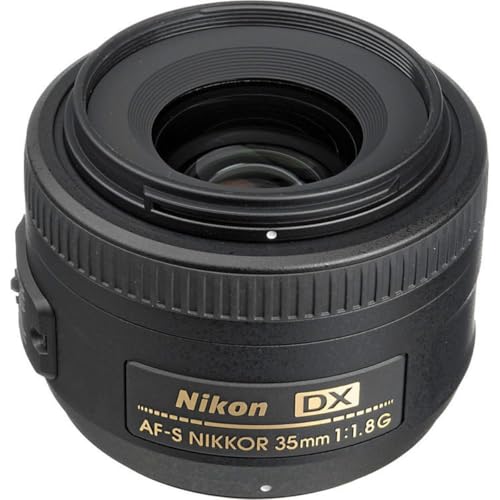
Best for: Nikon DX-format shooters who want a wider angle equivalent to about 52.5mm on a full-frame, making it ideal for street, indoor portraits, and landscapes on crop sensors.
Why selected: The 35mm focal length on DX cameras provides a practical field of view for everyday scenes. The f/1.8 aperture offers strong light gathering and expressive depth of field control.
Limitation: Not suitable for full-frame Nikon bodies without a crop-sensor cropped result; check compatibility if upgrading to full-frame later.
YONGNUO YN50mm F1.8 Lens (Canon EF Mount)
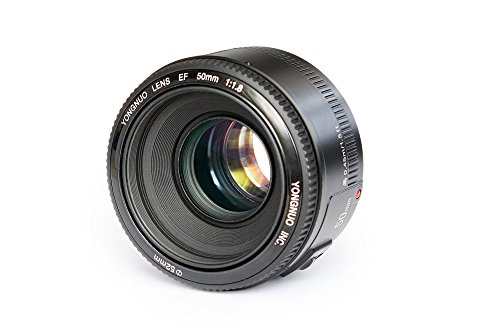
Best for: Budget-conscious photographers who want a full-featured 50mm prime for Canon EF-mount cameras, including autofocus and solid image quality for everyday use.
Why selected: The lens offers a large aperture for low-light shooting and shallow depth of field at a competitive price, making it popular for beginners growing into prime lenses.
Limitation: Third-party options may have variable field performance; verify adapter compatibility and potential focus accuracy on your body.
Buying Guide: 50mm Lenses And How To Choose
What makes a 50mm lens a good choice? It provides a natural perspective close to human vision, strong low-light performance, and a flattering focal length for portraits and street work. Consider the following when selecting a 50mm prime:
- Camera system: Ensure the mount matches your body (Canon EF, Sony E, Nikon F/FX, etc.).
- Aperture: Faster lenses (f/1.8 and below) deliver better low-light performance and shallower depth of field.
- Sensor format: On DX/APS-C bodies, a 50mm behaves like a short telephoto, while on FX/Full-frame, it remains a standard field of view.
- Autofocus performance: Some third-party lenses may vary by body. Look for lenses designed to work well with your camera’s AF system.
- Image quality: Evaluate sharpness, bokeh, and contrast in your typical shooting conditions; wide open performance matters more in portrait work.
- Size and weight: Compact primes are easy to carry and beneficial for travel and street photography.
FAQ
- What is the main difference between 35mm and 50mm lenses?
– A 35mm lens offers a wider field of view, making it better for landscapes and environmental portraits. A 50mm lens provides a more natural perspective and stronger subject separation, ideal for portraits and low-light shooting. - Which lens is better for low-light photography?
– Lenses with larger maximum apertures (f/1.8 or wider) perform best in low light, allowing faster shutter speeds and lower ISO. - Can I use a 50mm lens on a crop-sensor camera?
– Yes. On APS-C/DX bodies, a 50mm lens typically behaves like a 75–80mm equivalent, which is closer to a short telephoto in many scenarios. - Are third-party 50mm lenses reliable?
– Many are reliable and affordable, but performance can vary by model and camera body. Check autofocus speed, weight, and compatibility with your camera. - Is a 35mm lens still useful if I own a 50mm?
– Yes, a 35mm offers a wider perspective for street, documentary, and environmental portraits. Having both gives flexibility in different shooting situations. - What should I consider when buying a 50mm prime?
– Mount compatibility, aperture, autofocus performance, image quality, size, and price. Consider your typical shooting distance and subject matter.