Best 52mm to 49mm Step Down Rings for Lens Filters and Adapters
Looking to attach 49mm filters or accessories to a 52mm lens? This guide highlights the best 52mm to 49mm step down rings and similar adapters, helping you decide who benefits most from each option. These rings are ideal for photographers using standard 52mm lenses who want to use 49mm filters, caps, or step-down configurations without large changes to image quality. The selections below cover all-metal builds, precision threading, and lightweight design, with notes on suitability and any trade-offs.
Overview table of selected products:
- Fotodiox Metal Step Down Ring: 52mm to 49mm, all-metal, precise 0.75 pitch
- K&F CONCEPT 49-52mm Step-Up Ring (useful for future 52mm accessories)
- Fotasy 49-52mm Step-Up Ring: 49mm to 52mm (inverse direction, versatile)
- BETUYESS 52mm to 49mm Step-Down Ring: durable anodized aluminum
- GZNLY 52mm to 49mm Step-Up/Down Ring: aviation aluminum, wide compatibility
Fotodiox 52mm To 49mm Step Down Ring

Best for all-metal construction and precise threading. This Fotodiox model is designed to thread onto a 52mm lens and accept 49mm filters or adapters, making it ideal for photographers who want durability and reliable fit. The 0.75 pitch size helps ensure a snug, secure connection. Best for photographers prioritizing build quality over ultra-lightweight setups.
Who it’s best for: Professionals and enthusiasts who value robust metal design and consistent thread engagement. Why selected: It provides a straightforward, durable down-ring solution with minimal bulk. Caution: Some users may need to confirm compatibility with their exact 49mm filter stack due to slight tolerances in older lenses.
JOYTOLIN 52-49mm Ring Adapter

This adapter covers both step-up and step-down needs for mirrorless and DSLR lenses. It uses aviation-grade aluminum, reducing thickness and weight while maintaining strength. Best for travelers and setups requiring a light, versatile adapter that can also accept filters, covers, or converters. It’s especially suitable for users who may switch between different filter sizes.
Who it’s best for: Shooters who need a compact, multi-size solution with easy installation. Why selected: The design emphasizes lightweight durability and installation simplicity. Caution: Compatibility depends on lens thread accuracy and the included instruction clarity, which may vary by kit.
K&F Concept 49-52mm Step-Up Ring Adapter

Although marketed as a 49-52mm step-up ring, this aluminum alloy adapter is useful for converting a 49mm lens to accept 52mm accessories. It’s strong, durable, and easy to install, making it a solid pick for those who foresee expanding their filter kit to 52mm. Best for future-proofing and long-term use with 49mm lenses.
Who it’s best for: Filtration enthusiasts who will add larger 52mm accessories later. Why selected: Strong construction with smooth threading. Caution: It only converts from 49mm to 52mm; for the reverse direction, choose a true step-down ring.
BETUYESS 52mm To 49mm Step-Down Ring
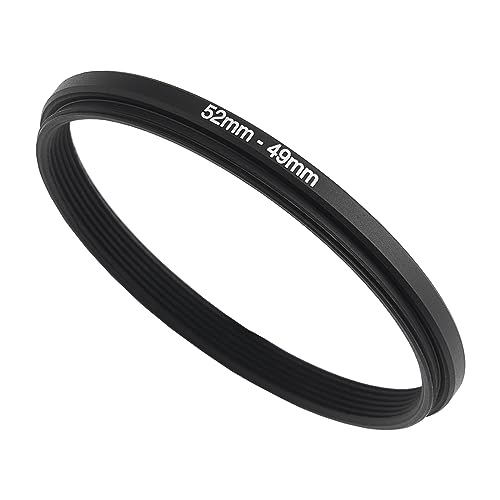
Made from anodized aluminum, this ring emphasizes durability and a slim, practical profile. It’s designed to prevent cross-threading with a tight fit and a minimal clearance footprint. Best for photographers who want a dependable down-ring that won’t add noticeable bulk to the front of the lens.
Who it’s best for: Shooters needing a sturdy, compact 52mm-to-49mm down-ring. Why selected: The anodized finish offers additional protection in active shooting environments. Caution: The instruction notes can be helpful to ensure correct threading if you’re new to adapters.
GZNLY 52mm To 49mm Step-Up/Down Ring
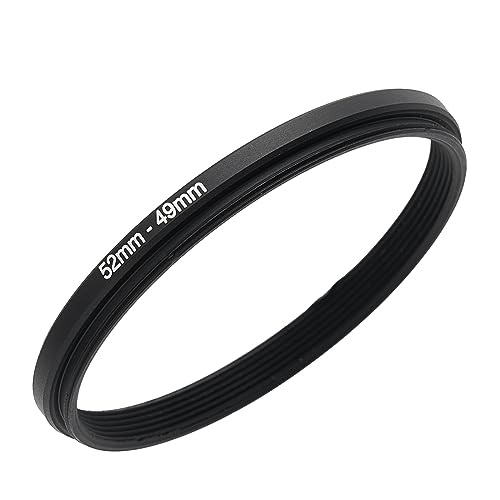
An aviation aluminum alloy adapter with wide compatibility, this ring can function as both a step-up and step-down ring depending on how you pair it with filters or accessories. Best for versatile kits and users who frequently swap between 49mm and 52mm components. Caution: Dual-direction use may require extra attention to ensure correct thread engagement with each accessory.
Buying Guide
What to consider when choosing a 52mm to 49mm step ring
- Ring type: Decide between true 52mm-to-49mm down rings and flexible step-up/step-down options. Down rings are simpler for using 49mm filters on 52mm lenses, while step-up rings are better if you own 49mm lenses and plan to use 52mm accessories later.
- Material and durability: Aluminum and anodized finishes provide strength with minimal added weight. Metal rings reduce risk of cross-threading and wobble compared with plastic options.
- Thread precision: Precise threading ensures a secure fit. Look for rings marketed with tight tolerances to prevent light leaks or lens movement.
- Weight and bulk: For travel or street photography, lighter rings reduce front-end weight and camera shake potential. Consider slim profiles where possible.
- Compatibility: Confirm lens thread size (usually printed on the lens barrel) and verify that the chosen ring matches both lens and accessory threads you intend to use.
- Limitations: Some rings may have tolerances that affect fit on older lens models. If you frequently swap between multiple lenses, prioritize rings with clear installation guidance and defined specs.
Frequently Asked Questions
- Can a 52mm to 49mm ring be used in reverse? Yes, some rings are designed to work in both directions, but you should verify the specific product’s compatibility for your lens and filters.
- Will using a step-down ring affect image quality? Step rings themselves do not change optics; however, the combined stack of filters or adapters can affect vignetting or exposure if very bulky.
- How do I find my filter thread size? Check the lens front or the lens cap for a number indicating the diameter in millimeters. It is usually printed on the lens barrel near the front element.
- What material is best for step rings? Aluminum alloys with anodized finishes offer a strong balance of lightness, durability, and corrosion resistance.
- Are there any risks with cheap off-brand rings? Inferior threading and poor tolerances can cause cross-threading, wobble, or lens damage. Choose rings with clear specifications and reputable brand names.
- When should I consider buying more than one ring? If you own multiple lenses with different front diameters, or you frequently mix lens filters and adapters, multiple rings can simplify gear changes and reduce attachment time.