Best Black and White Photo Developer Options for Film and Paper
Finding the right black and white photo developer depends on your workflow, desired grain, and the scale of your projects. This guide highlights five reliable options suited for hobbyist to semi-professional use. It covers traditional powder developments for films and papers, plus modern liquid formulas for convenience. The top picks are chosen for versatility, shelf life, and predictable results across common film types and print processes. The buyer intent focuses on ease of use, storage, and how each developer suits different processing needs.
| Product | Best For | Type |
|---|---|---|
| KODAK Dektol Black & White Paper Developer | Paper developers for tray processing and mixed media | Powder (paper) |
| Kodak D-76 Black & White Film Developer | General-purpose 35mm to medium format film processing | Powder (film) |
| Ultrafine MONOBATH Black and White Liquid Developer | Quick, all-in-one film development on set or in small labs | Liquid (film) |
| Kodak Professional T-Max Film Developer | High-contrast control and shadow detail for roll films | Liquid (film) |
| Kodak XTOL Black & White Film Developer | High-image quality at varied temperatures and dilutions | Powder (film) |
| Ilford ID-11 Fine Grain Developer | Versatile, large-volume processing with fine grain | Powder (film) |
KODAK Dektol Black & White Paper Developer, Powder to Make 1 Gallon

Dektol is designed for high-capacity paper development with a uniform development rate, making it a solid choice for classroom labs or small studios processing larger batches of prints. It is also suitable for tray processing of prints and can be used with some film applications, offering a flexible option for mixed workflows. Best for printers who value predictability and batch efficiency.
Who this is for: photographers who print regularly in batches and need consistent tonality across large runs. Why selected: reliable paper development with a straightforward dilution and handling profile.
Caution: powder forms require careful handling and measurement to maintain consistent results; store sealed to prevent moisture absorption.
Kodak D-76 Black & White Film Developer Powder to Make 1 Liter

D-76 is a classic general-purpose developer for film, known for yielding full emulsion speed and good shadow detail with normal contrast. It offers moderately fine grain and excellent development latitude, making it a go-to choice for many film formats. It can be replenished with LegacyPro L76-R replenisher for ongoing usage.
Who this is for: film shooters seeking dependable, versatile development with broad compatibility. Why selected: time-tested results across various film stocks with predictable tonality.
Caution: accuracy in mixing and temperature control matters; improper dilution can affect grain and contrast.
Ultrafine MONOBATH Black and White Liquid Film Developer

Ultrafine MONOBATH is a ready-to-use liquid developer designed for simplicity. It allows development of black-and-white film in one bath, which saves time and reduces complexity, especially useful for small studios or on-location processing. Best for quick turnaround and minimal equipment needs.
Who this is for: photographers who want fast, straightforward development without multi-bath steps. Why selected: convenience and speed while producing acceptable tonal range.
Caution: monobath formulas can offer less control over contrast and fine-grain characteristics compared to multi-bath systems; plan for limited flexibility in push/non-standard processing.
Kodak Professional T-Max Black & White Film Developer

T-Max Film Developer is formulated for high-quality shadow detail and contrast control. It’s intended for roll films and supports normal or push processing, enabling practitioners to extend exposure times for dramatic results or faster workflows without sacrificing image quality.
Who this is for: professionals working with roll film or those exploring higher-contrast look with controlled development. Why selected: refined tonal control with suitability for push processing.
Caution: requires careful monitoring of temperature and timing; higher contrast can occur with push processing if not managed properly.
Kodak XTOL Black & White Film Developer, Powder to Make 5 Liters

XTOL is an ascorbic acid-based developer known for very high image quality at full emulsion speed. It’s convenient with room-temperature mixing and provides stable performance across a broad range of temperatures and dilutions. This makes it suitable for varying lab conditions or field work.
Who this is for: users seeking high image fidelity and flexibility in dilution and temperature. Why selected: strong performance across temperatures with consistent grain and detail.
Caution: ascorbate-based developers can be sensitive to contamination; ensure clean handling to maintain results.
Ilford ID-11 Fine Grain Developer for Black and White Film, 1 Liter
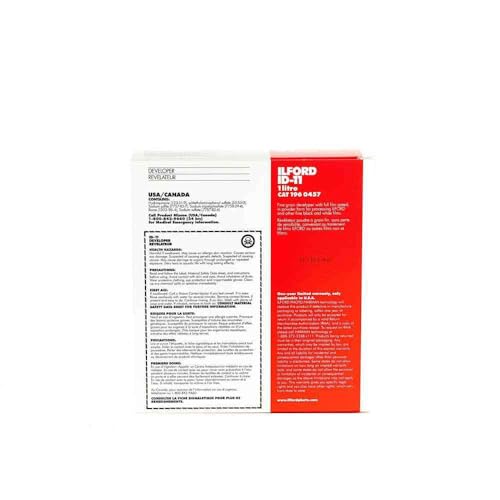
Ilford ID-11 provides a versatile, powder-based system designed for large volumes with fine grain outputs. It is positioned as an economical option for general-purpose black-and-white film processing, with the ability to serve as both developer and replenisher in a high-volume workflow. Best for studios processing multiple reels.
Who this is for: labs handling high volume with a need for reliable grain control. Why selected: long shelf life options and broad applicability to various films.
Caution: powder storage and precise mixing are essential to maintain consistent results over time.
Buying Guide: Key Considerations For Choosing A Black & White Developer
What type of film and print workflow do you use?
Powder developers are traditional and can be more economical for large batches, while liquid developers offer convenience and quick setup. For on-site processing or busy labs, consider whether a monobath or a multi-bath system best fits your speed and control needs.
How important is grain and contrast control?
Some developers emphasize fine grain and shadow detail (like XTOL and T-Max), while others favor a broader tonal range (D-76). If you shoot high-contrast subjects, choose a developer known for stable results across slight temperature variations and dilutions.
What are your storage and handling requirements?
Powder formulas typically have long shelf lives when stored dry, but require careful mixing. Liquid developers save time but may have shorter shelf lives once opened. Assess your space, storage climate, and batch size.
Do you need versatility across different film stocks?
Look for a developer with broad compatibility or clear replenishment options if you rotate between film types. Some options excel with particular stocks (T-Max, Ilford, Kodak lines) while others offer balanced performance across most common films.
What about temperature and dilution flexibility?
Developers with room-temperature mixing, stable results across a range of temperatures, or easy dilution schemes reduce the risk of inconsistent results. Consider your working environment and whether you can maintain precise temperature control.
Practical tips for choosing a developer
- Match the developer to your primary output: prints, negatives, or both.
- Consider your batch size: larger batches benefit from powder systems with high capacity.
- Plan for future growth: pick a system with replenishment options if you anticipate higher volume.
Frequently Asked Questions
- What is the difference between powder and liquid black-and-white developers?
Powder developers require mixing with water and offer long shelf life and cost efficiency for large batches. Liquid developers are ready to use and faster to set up, ideal for quick processing and smaller runs.
- Is a monobath suitable for professional use?
Monobath formulas are convenient for quick processing, but they generally offer less control over grain and tonal range compared to multi-bath systems. Best for on-location or time-constrained projects.
- How do I store unused developer?
Keep powder in a dry, sealed container away from moisture. Store liquid developers in a cool, dark place and seal tightly after each use to extend shelf life.
- Can I mix different brands together?
Mixing developers from different brands is not recommended; each formula has specific dilutions and temperature requirements that can lead to unpredictable results.
- What’s the best choice for high-resolution black-and-white negatives?
Developers emphasizing fine grain and stable emulsion speed, such as XTOL or Ilford ID-11, are typically favorable for high-resolution results.
- How important is temperature control in film development?
Temperature significantly affects development rate, grain, and contrast. Plan for a stable environment or choose a developer designed for a wide temperature range if control is limited.