Best Black and White Photography Camera Options for Bold, Timeless Imagery
Discover top cameras and gear that excel in black and white photography, from classic film options to modern digital cameras with B/W prowess. This guide highlights five picks that balance image quality, usability, and creative control, helping you capture striking monochrome photos across genres from street to portraiture.
| Product | Brand | Notes |
|---|---|---|
| 4K Digital Camera for Photography, 64MP Vlogging Camera | VJIANGER | Versatile digital option with high resolution and 4K, supports web cam use |
| 1 Shot Point and Shoot 35mm Film Camera | 1 Shot | Reusable half-frame film camera, ships with B/W film bundle |
| Holga 120N Medium Format Film Camera (Black) | HOLGA | Classic toy camera known for distinctive BW grain and vignetting |
| Camera Color Correction White Balance Card | Pixiss | Important for accurate black and white tonal balance |
| EMART 5-in-1 Photo Reflector | EMART | Lighting control for dramatic B/W portraits and scenes |
4K Digital Camera For Photography By VJIANGER
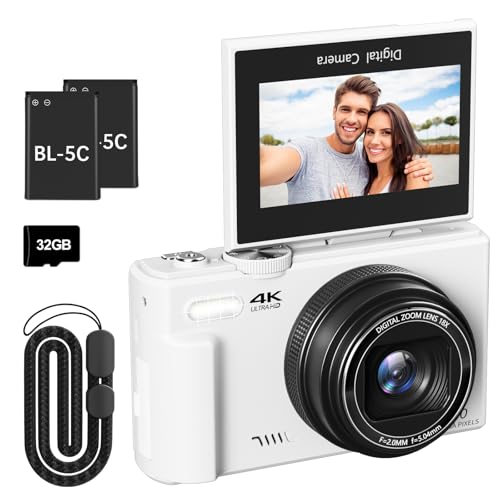
The VJIANGER camera delivers 4K resolution and a 64MP sensor in a compact body with a 3″ flip screen and 18x digital zoom. Built-in fill light, microphone, and speaker support versatile shooting conditions, including low light routines often used for monochrome street photography. It doubles as a webcam when connected to a PC, enabling easy streaming or documentation of B/W projects. WiFi facilitates quick transfer and remote control via a smartphone app, expanding workflow flexibility for on-the-go monochrome shooters.
ESOXOFFORE Kids Camera Instant Print

This instant-print camera targets younger photographers with a 1080P video mode and instant 1-second black-and-white print options. While designed for kids, it demonstrates the appeal of instant monochrome output and playful filters. The built-in 2.4″ screen and multiple shooting modes, including time-lapse and filters, offer approachable ways to explore black-and-white aesthetics before upgrading to more advanced gear. The safe materials and shockproof construction support durable, hands-on learning in B/W experimentation.
1 Shot Point And Shoot 35mm Film Camera

This retro, half-frame 35mm film camera is designed for simplicity and portability, making it ideal for capturing classic black-and-white images on the go. The included one roll of 18-exposure B/W film adds immediate monochrome potential, while the compact form factor facilitates street and travel photography. The camera’s focus-free operation and lightweight build are well-suited for beginners exploring tonal range, contrast, and texture in BW photography.
Pixiss Color Correction White Balance Card Set

Color calibration is essential when converting color images to monochrome or when achieving consistent tonal balance in B/W photography. The Pixiss set includes 18% gray, white, black, and a 24-step gradient, enabling precise exposure and white balance across a range of lighting conditions. While not a camera itself, this tool supports accurate tonal transitions and repeatable BW renditions in post-processing or in-camera tonal judgment.
EMART 5-in-1 Photo Reflector

The EMART reflector offers five surfaces—gold, silver, white, black, and translucent—along with a soft light panel. For black-and-white portraiture or still-life work, light control is critical. The translucent panel softens harsh sun, white brightens shadows, and black reduces light to sculpt form. Its foldable design and portable bag make it convenient for field shoots, interior studios, and on-the-go B/W lighting experiments.
Macolink White Balance Grey Card

This 18% gray card supports quick white balance adjustments and exposure accuracy, a practical companion for B/W workflows. Its neutral matte surface minimizes reflections, helping shooters establish consistent tonal baselines across environments. It’s compatible with DSLRs, mirrorless cameras, and film rigs, making it a flexible addition for monochrome photographers seeking dependable color-to-tone translation.
Buying Guide: Key Considerations For Black And White Photography
- Choose your base: Film versus digital. Film (especially 35mm and medium format) offers unique grain and tonal responses that many black-and-white purists prize. Digital cameras give you immediate feedback and extensive post-processing control, ideal for modern B/W techniques.
- Sensor and tonal range: For digital, look for good dynamic range and high ISO performance that preserves detail in shadows and highlights when converting to monochrome. For film, consider film emulsions and developer choices that yield particular contrast and grain patterns.
- Lens and texture: The choice of lens affects contrast, edge sharpness, and textures. Wide angles emphasize scene texture, while prime lenses often deliver crisper tonality for portraits. Vintage glass can introduce characteristic flares and bokeh.
- Lighting control: Monochrome images rely heavily on lighting, contrast, and shadow shaping. Reflectors, diffusers, and controlled artificial light help sculpt depth when shooting B/W portraits or scenes.
- Post-processing approach: Decide whether to shoot in RAW/negative and convert in post, or shoot directly in monochrome. Calibration tools and test shots help maintain intended tonality across your work.
- Practicality and costs: Film workflows incur ongoing film and development costs, while digital approaches require investment in memory, processing software, and potentially software plugins for BW conversion and grain addition.
- Historical and stylistic goals: If your aim is classic BW aesthetics, study works from iconic photographers and experiment with tonal curves, contrast, and texture mimicking traditional development styles.