Best Bulbs for Photography Lighting: Choose the Right Daylight or Softbox Bulbs
Answering the common question, these bulbs are designed to deliver consistent daylight-like color (around 5500K) for photography and video work. They work well with softboxes, umbrellas, and standard E26/E27 sockets. The top picks below are suited for portrait work, product shoots, and small studios. Each option is chosen for reliable color accuracy, steady output, and practical lifetime. This guide also highlights who each bulb is best for and why it fits various lighting setups.
Selected products overview
| Product | Best For | Key Benefit |
|---|---|---|
| EMART Full Spectrum 105W (2-Pack) | Beginner studios, budget-friendly kits | High output with solid CRI and broad compatibility |
| 2Pcs 85W Daylight CFL (2-Pack) | Compact setups, portable boxes | Strong 5500K light with good CRI |
| EMART 2 x 45W 5500K | Softbox kits, small rooms | Lightweight, reliable daylight for portraits |
| 135W 5500K CFL Daylight | Mid-size studios, needs extra brightness | Higher lumen output for larger setups |
| AQIRUI 2 x 85W 5500K CFL | Balanced color and efficiency | Good lumen with energy efficiency |
EMART Full Spectrum Light Bulb, 105W 5500K (2-Pack)

Best for: Entry-level studios and upgrade projects needing bright daylight coverage. The 105W bulbs deliver about 5800 lumens with a CRI of 80–85, and they fit standard E26/E27 sockets. The 5500K daylight tone blends with ambient light for soft, shadow-minimized results. Use in softboxes or umbrella setups for portraits and product shoots.
Why selected: High output and broad compatibility make these a solid all-around choice for beginners and budget-minded shooters. They’re suitable as direct replacements or long-term upgrades in a lighting kit.
Caution: Longer use can produce heat; ensure ventilation and fixture compatibility with 105W equivalent power draw.
2Pcs 85W Daylight CFL Bulbs, 5500K (Softbox Kit)
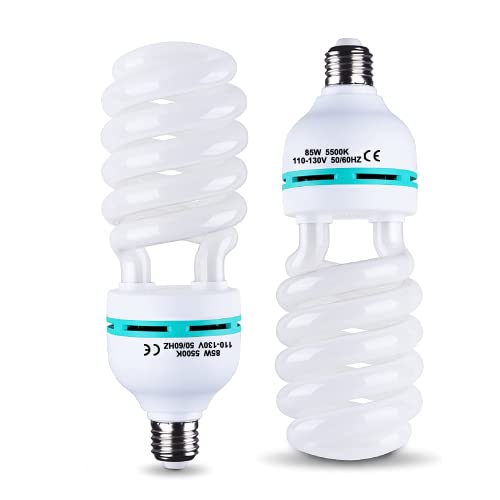
Best for: Medium-sized shoots and compact studios requiring solid daylight without excessive power. Each 85W bulb outputs around 6000 lumens with a CRI of 85–90, helping colors read accurately in skin tones and product textures.
Why selected: Strong color rendering with high lumen output in a balanced power range. The 8,000-hour lifespan makes them a practical daily option for busy shoots.
Caution: Ensure fixtures support the total wattage when using two bulbs in a single softbox or kit.
EMART 2x45W 5500K Spiral CFL Bulbs
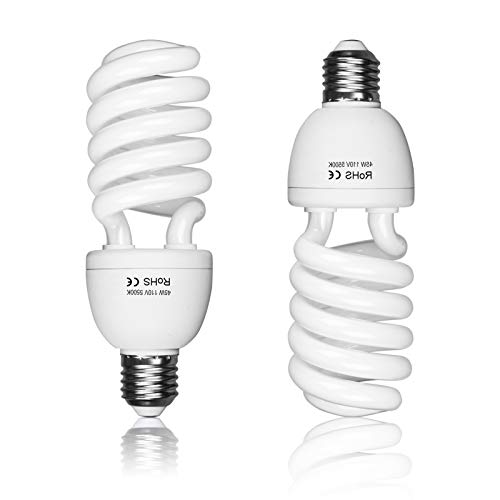
Best for: Softbox lighting kits and home studios needing a lightweight daylight option. The 45W bulbs deliver smooth daylight at 5500K with no flicker or noise and about 8,000 hours of life.
Why selected: A lower-wattage alternative that reduces heat while maintaining color accuracy, ideal for smaller spaces or for stacking multiple lights in a compact setup.
Caution: Lower output means you may require two or more bulbs to reach the brightness of higher-wattage options for large product shoots.
Skytex 2Pack 85W, 2700-6400K LED Softbox Bulbs
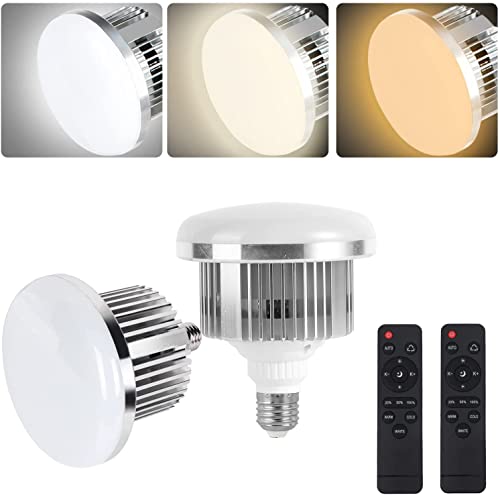
Best for: Photographers needing a dimmable and adjustable white balance range. The three-mode color temperature range (2700–6400K) plus dimming increases versatility across scenes, with a long LED lifespan and durable ABS construction.
Why selected: Flexible temperature range lets you replicate different lighting environments without swapping bulbs. The long lifespan reduces replacement frequency in busy studios.
Caution: LED-based bulbs can have different brightness in warm vs. cool settings; verify compatibility with your softbox timers and dimmers before use.
AQIRUI 2 x 85W 5500K Fluorescent Bulbs

Best for: Photographers needing bright daylight with efficient energy use. Each 85W CFL has a total equivalent output around 800W incandescent, delivering about 6,000 lumens at 5500K with a long lifespan of roughly 8,000 hours.
Why selected: High-efficiency, strong brightness, and even color rendering help keep shots consistent across sessions. The standard E27 socket makes compatibility broad.
Caution: CFLs may take a moment to reach full brightness after power-on; plan for a brief warm-up if you are timing shots precisely.
Buying Guide: Key Purchase Considerations
- Color temperature needs: For true daylight-looking skin tones, target 5500K; for warmer portraits, consider lower Kelvin values in 2700–4200K ranges.
- Brightness and lumen output: Higher lumens reduce the need for wide-aperture settings; balance with noise and heat considerations in your space.
- CRI and consistency: A CRI of 80–90 is typical; higher CRI improves color accuracy in fabrics and skin tones.
- Power and socket compatibility: Ensure bulbs fit standard E26/E27 sockets and match your fixture’s wattage rating.
- Lifetime and maintenance: Longer-rated lifespans reduce replacement frequency in busy studios.
- Flicker and noise: Opt for bulbs advertised as no flicker and quiet operation to avoid banding in video frames.
- Use case considerations: Softbox and umbrella setups benefit from softer shadows; large-area shoots may require higher-wattage bulbs or multiple lights.
Frequently Asked Questions
- What color temperature should I choose for portrait photography?
– Choose around 5500K for daylight-balanced images that resemble natural light; adjust with white balance if needed. - Is CRI important for photography lighting?
– Yes. A CRI of 80–90 helps colors render accurately on skin and fabrics. - Do CFL bulbs work with softboxes?
– Yes, most CFLs are compatible with standard softbox setups via E26/E27 sockets. - How many bulbs do I need for a small studio?
– It depends on space and subject. Start with two lights for even key and fill, add a backlight if needed. - Are LED options better than CFL in photography lighting?
– LED bulbs offer energy efficiency and longer lifespans, with consistent color and less heat; consider them if available in your budget.