Best Wide Angle Lenses for C-Mount and Beyond: Top Picks for 2026
When you’re chasing dramatic perspectives, a wide angle lens is essential. This guide highlights top wide angle options that deliver expansive fields of view, sharp corners, and reliable autofocus or manual performance for both stills and video. While some lenses target specific mounts, these selections emphasize versatility, image quality, and value for American shooters seeking dynamic landscapes, architecture, or vlogging footage.
Below is a quick reference to the featured products. The table summarizes key points such as mount compatibility, focal length, maximum aperture, and notable strengths to help you compare at a glance.
| Product | Brand | Mount / Compatibility | Focal Length / Aperture | Notable Strength |
|---|---|---|---|---|
| Sony E 11mm F1.8 APS-C | Sony | APS-C E-mount | 11mm / F1.8 | Compact ultra-wide with fast AF |
| VILTROX 13mm F1.4 (Fujifilm X-mount) | VILTROX | Fujifilm X-mount (APS-C) | 13mm / F1.4 | Bright aperture for wide landscapes and environments |
| Meike 8mm F3.5 Fisheye (Canon EF) | Meike | Canon EF (APS-C) | 8mm / F3.5 | Fisheye-to-wide field of view option |
| Rokinon AF 14mm F2.8 (Canon EF) | Rokinon | Canon EF (Full-Frame and APS-C) | 14mm / F2.8 | Ultra wide with strong optical design |
| VILTROX 9mm F2.8 Z-mount | VILTROX | Nikon Z-mount (APS-C) | 9mm / F2.8 | Very wide perspective for Z-series |

The following sections provide deeper, objective insights into each lens, focusing on practical usage, optical traits, and how they might fit into common shooting workflows.
Sony E 11mm F1.8 APS-C Ultra-Wide Prime
The Sony E 11mm F1.8 is a compact, lightweight ultra-wide prime designed for APS-C cameras. Its large F1.8 aperture supports low-light work and shallow depth of field when desired, while the 11mm field of view offers sweeping backgrounds for landscapes, architecture, and vlogging. Internally focusing design helps maintain balance during operation and reduces changes in length when focusing. The lens enables close focus for close-up subjects, making it versatile for both video and stills. Autofocus is described as fast and quiet, suitable for run-and-gun shooting and content creation.
VILTROX 13mm F1.4 For Fujifilm X-Mount
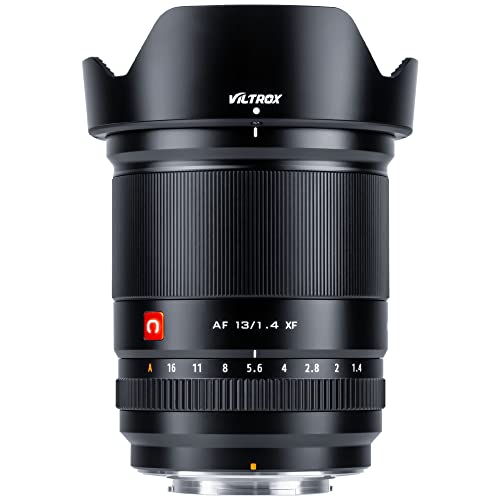
This ultra-wide APS-C lens for Fujifilm X-mount features a bright F1.4 aperture to deliver expansive scenes with pronounced background separation. The STM autofocus motor supports quick and quiet performance, making it suitable for video and stills alike. It also supports eye detection focus and firmware upgrades via USB, adding practical longevity. The combination of a wide angle and a bright aperture makes it an effective tool for environmental portraits, cityscapes, architecture, and landscape photography where depth and perspective are key.
Meike 8mm F3.5 Ultra Wide Fisheye for Canon EF

The Meike 8mm F3.5 is a manual focus fisheye-style ultra-wide for Canon EF APS-C cameras. It requires users to enable manual focus on the camera and may demand a shift in technique compared to auto-focused lenses. The fisheye-like field of view offers dramatic distortion and is often chosen for creative shots, macro-style close-ups in wide scenes, and experimental photography where a spherical perspective is desired. This option emphasizes a balance between ultra-wide reach and a budget-friendly entry point into wide-angle creativity.
Rokinon AF 14mm F2.8 For Canon EF

The Rokinon AF 14mm F2.8 provides a versatile option for full-frame and APS-C Canon bodies. Its broad 116.6° field of view is well-suited for landscapes, interior architecture, and night photography. The lens employs a multi-element optical design aimed at minimizing distortion and chromatic aberration, with a fast aperture of F2.8 to aid low-light shooting and depth-of-field control. It is positioned as a robust option for those who want reliable performance across different Canon body formats without compromising optical quality.
VILTROX 9mm F2.8 Z-Mount
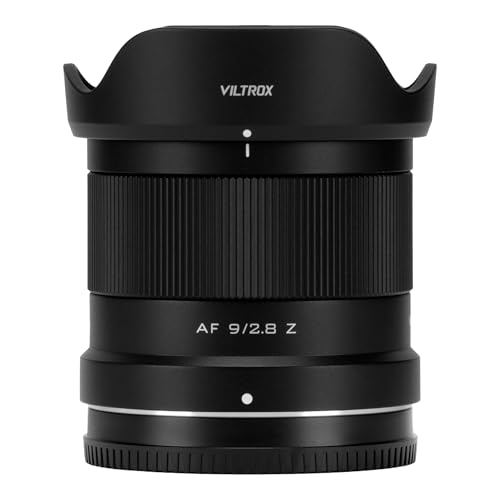
The VILTROX 9mm F2.8 for Nikon Z-mount targets APS-C bodies with an ultra-wide perspective and compact design. The lens offers a 113.8° field of view, making it suitable for landscapes, vlogging, and architectural work. The optical assembly includes elements designed to control distortion and maintain sharpness from center to edge. An emphasis on close focusing (around 0.13m) expands its utility to creative near-field shots, while autofocus support helps maintain efficiency in dynamic shooting situations.
Buying Guide: Key Purchase Considerations
Choosing a wide-angle lens involves balancing field of view, image quality, and practical use. Consider these factors to select the best match for your setup:
- Mount compatibility: Verify the lens mount aligns with your camera system (F-mount, E-mount, Canon EF, Fuji X, Nikon Z, etc.). Some lenses work on multiple bodies via adapters, but performance may vary.
- Sensor size and format: APS-C lenses behave differently on crop sensors versus full-frame bodies. Ensure your camera’s sensor size suits the lens’ intended field of view.
- Aperture and light: A bright maximum aperture (F2.8 or faster) helps with low-light shooting and background separation. Ultra-wide lenses often prioritize breadth over extreme bokeh, but fast apertures add flexibility for night scenes and vlogs.
- Autofocus versus manual: Autofocus is advantageous for dynamic subjects and video; manual focus can be preferred for precise control in landscape and architectural photography.
- Distortion and optics: Wide-angle lenses can exhibit distortion at the edges. Look for designs with corrective elements and glass types that minimize color fringing and ghosting.
- Size and weight: If you travel or shoot handheld, a compact, lightweight lens improves handling and reduces fatigue during long sessions.
- Weather sealing and build quality: For outdoor use, weather resistance helps protect against dust, moisture, and temperature changes.
- Firmware and upgrades: Some brands offer firmware updates to improve autofocus behavior or compatibility with newer camera bodies. USB upgrade support can extend the lens’s lifespan.
- Budget and value: Consider the total cost of ownership, including maintenance, lens caps, and any necessary adapters. Some third-party options balance price and performance well for hobbyists and professionals.
Across these options, the Sony E 11mm F1.8 and the VILTROX 13mm F1.4 for Fujifilm X-mount stand out for users seeking prime performance with fast glass and reliable autofocus. For enthusiasts exploring creative distortion, the Meike 8mm fish-eye and the Rokinon 14mm provide distinct perspectives. The Nikon Z system benefits from the VILTROX 9mm F2.8 for ultra-wide shots on APS-C bodies, while the 7artisans 10mm F3.5 offers a lightweight alternative for travel and vlogging.