Best Camera Adapters for Microscopes: Find the Right Microscope Attachments for Your Phone
Looking for a camera adapter for a microscope that lets you capture clear images with a smartphone? This guide compares top picks for common microscope tube sizes (especially 23.2mm) and different camera interfaces. Best for students, hobbyists, and lab professionals who want quick, portable documentation of specimens. Each option is evaluated for fit, ease of use, and potential limitations to help you choose wisely.
| Product | ||
|---|---|---|
| Celticbird Smartphone Camera Adapter | Compact setups with 23.2mm tubes | Built-in 16X eyepiece for quick imaging |
| Walfront 0.5× C Mount Lens Adapter | Precise control and affordable options | Blue anti-reflective coating for clear viewing |
| AmScope CA-CAN-SLR-III | Canon cameras and silver-based rigs | 2X magnification with standard 23.2mm mounting |
| Liccx 0.35X C-Mount Adapter | Broad field of view for trinoculars | Low magnification, wide coverage |
| SOLOMARK Smartphone Camera Adapter | Versatile phone compatibility | Built-in 16X eyepiece and 23.2mm compatibility |
Celticbird Smartphone Camera Adapter for Microscope Eyepiece Tube 23.2mm

Best for: Users who need a simple, all-in-one solution for 23.2mm tubes with built-in eyepiece. The design supports various phone widths from 2.2″ to 3.9″, making it versatile for many popular models. Why chosen: This adapter combines a secure mechanical fit with an integrated WF16X eyepiece, reducing the number of separate components.
Caution: Measure the inside diameter of your microscope tube to ensure compatibility. The adapter is designed for 23.2mm tubes, and other sizes may require an alternative mounting method.
Walfront 0.5× C Mount Lens Adapter Set

Best for: Budget-conscious labs and hobbyists who need a compact lens tube with a blue anti-reflective coating for improved light transmission. Why chosen: The 0.5× reduction design provides a balanced field of view and magnification, with easy handling and a compact footprint.
Limitation: Data indicates straightforward construction, but long-term wear on threaded connections should be monitored in frequent-use environments.
AmScope CA-CAN-SLR-III Canon Camera Adapter

Best for: Users with Canon bodies seeking a stable, durable 2X magnification adaptor for microscopes. Why chosen: It matches a 23.2mm T-mount standard and offers a predictable, metal-built solution for Canon cameras, expanding compatibility with common lab gear.
Caution: The magnification depends on the camera sensor; higher-CMOS sizes may alter effective magnification in practice compared to other setups.
Liccx 0.35X Microscope Adapter for Trinocular Stereo

Best for: Observers who want a wider field of view on trinocular stereo microscopes. Why chosen: The 0.35X design along with a C-mount interface supports observing larger specimens or broader details, with a solid all-metal build.
Limitation: The 38mm microscope connection is a specific fit; confirm your trinocular diameter before purchase to ensure a proper seal.
SOLOMARK Smartphone Camera Adapter for Microscope Eyepiece
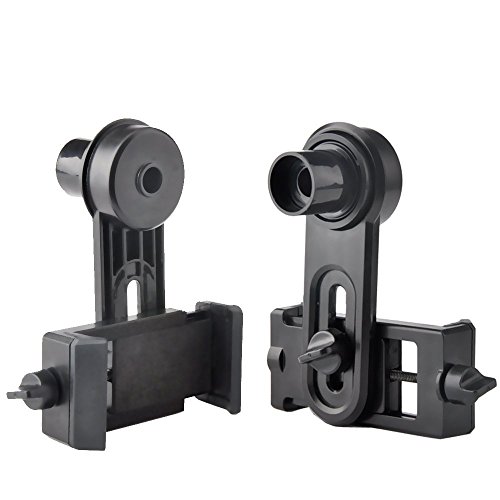
Best for: Users who want a straightforward adapter with a built-in 16X eyepiece and wide phone compatibility. Why chosen: This model emphasizes ease of use, supporting a broad range of devices from iPhone to Android with a 23.2mm fit requirement.
Caution: Ensure your phone size falls within the 2.2″ to 3.9″ width range, and verify the tube diameter before purchasing to avoid a loose connection.
Buying Guide
What to consider when choosing a camera adapter for a microscope:
- Tube diameter compatibility: Most adapters list 23.2mm as a standard; verify your microscope’s eyepiece or optical tube diameter before buying.
- Camera interface: Decide if you need a direct phone mount, a C-mount, or a T-mount to connect to a DSLR or mirrorless body. This affects magnification and image quality.
- Built-in eyepieces vs. external optics: Some adapters include a built-in WF16X eyepiece, saving setup steps, while others rely on the microscope’s own eyepiece optics.
- Magnification range: Lower magnification (e.g., 0.35X or 0.5X) broadens the field of view; higher magnification works better for detailed views, depending on sensor size.
- Build quality: All-metal housings with coated optics offer durability and better light transmission, important for clear imaging in dim specimens.
- Phone compatibility: If you plan to use multiple devices, choose adapters with adjustable width ranges or universal clamps that fit a wide array of phones.
- Limitations and compatibility notes: Some adapters depend on the microscope’s tube size; others are better suited to trinoculars or specific brands. Always check mounting standards and user measurements.
FAQ
- What is a camera adapter for a microscope used for?
A camera adapter enables you to attach a camera or smartphone to a microscope so you can capture images or videos of specimens without using the eyepiece directly.
- Which adapter fits a 23.2mm microscope tube?
Several options in this guide, including the Celticbird and SOLOMARK, are designed for 23.2mm tubes. Always measure your tube diameter before purchasing.
- Do I need a C-mount adapter for a digital camera?
A C-mount adapter is common for attaching many digital cameras or sensors to microscopes. It ensures a secure, standard connection, but check compatibility with your camera body.
- Can I use a phone with any microscope?
Phone compatibility depends on the adapter’s width range and mounts. Look for a model that supports the broadest phone width your devices have.
- Is higher magnification always better for smartphone imaging?
No. Higher magnification reduces the field of view and can require better lighting. Choose a magnification that fits your observation goals and equipment.
- How do I choose between built-in eyepiece and external optics?
Built-in eyepieces offer quick setup and fewer parts, while external optics may offer more flexibility with different microscope models and higher optical quality in some cases.