Best Camera Adapters for Microscopes: Easy Smartphone Microscope Upgrades
Looking to turn a standard microscope into a connected, smartphone-ready imaging device? This guide highlights five camera adapters that work with common 23.2mm optical tubes or eyepiece barrels, making it easy to capture photos and videos through your microscope. Best for hobbyists, students, field scientists, and educators who want quick, affordable smartphone attachment solutions.
Overview table of selected products:
| Product | Best For | Key Benefit |
|---|---|---|
| Celticbird Smartphone Camera Adapter | General microscopy and educational use | Built-in 16X eyepiece for immediate magnification |
| AmScope CA-CAN-SLR-III | Canon camera users | 2X magnification, sturdy metal build |
| Liccx 0.35X C-Mount Adapter | Expanded field of view | 0.35X reduction for trinoculars |
| SOLOMARK Smartphone Adapter | Wide device compatibility | Supports a broad range of phones with built-in eyepiece |
| WintopScope C Mount 0.5X Adapter | Industrial inspection and measurement | All-metal, low distortion |
Celticbird Smartphone Camera Adapter for Microscope Eyepiece Tube

The Celticbird adapter is designed for microscopes with a 23.2mm optical tube or eyepiece barrel and supports phones 2.2″ to 3.9″ wide. It includes a built-in WF16X eyepiece, enabling immediate magnification without additional accessories. Best for students and educators who want a compact, all-in-one solution for classroom demonstrations or light fieldwork.
Who this is best for: A classroom or hobbyist needing a simple, plug-and-play setup with built-in eyepiece magnification. Why selected: It consolidates attachment and magnification into one unit, reducing setup steps.
Caution: Measure your microscope’s inner diameter to ensure compatibility; some tubes may fall outside the 23.2mm specification.
Microscope Adapter 0.5× C Mount Lens Adapter Set 23.2 Turn 30mm/23.2mm

Walfront’s 0.5× C Mount Lens Adapter is built for 23.2mm interfaces and supports 30mm as well. It’s compact and easy to integrate with existing lens tubes, offering a blue anti-reflective coating for improved transmittance. Best for users who want a light, practical adapter for quick imaging and modest magnification changes.
Who this is best for: Laboratory or educational settings needing a compact, easy-to-use adapter with decent light transmission. Why selected: The blue AR coating helps maintain image clarity, particularly in bright lighting conditions.
Caution: Performance depends on camera sensor size and microscope setup; some cameras may require additional alignment to achieve sharp focus at the new magnification.
AmScope CA-CAN-SLR-III Canon Camera Adapter

The AmScope CA-CAN-SLR-III is a Canon camera adapter offering 2X magnification with a metal construction. It attaches to microscopes via a 23.2mm T-mount standard, enabling brighter, more detailed captures with compatible Canon cameras. Best for users who already own a Canon DSLR or mirrorless body and want reliable integration.
Who this is best for: Canon camera users seeking a robust, dedicated adapter. Why selected: The 2X magnification aligns well with common observation objectives for clear, crisp images.
Caution: Magnification depends on camera sensor size and microscope optics; actual results may vary with different CMOS sensors.
Liccx 0.35X Microscope Adapter for Trinocular Stereo

Liccx offers a 0.35X camera eyepiece adapter designed for trinocular stereo microscopes. It expands the field of view while maintaining a 25mm camera interface on one end and a 38mm microscope connection diameter on the other. Best for observers who need a wider view without losing essential depth cues in stereo setups.
Who this is best for: Users performing macro-to-microscopy tasks who want a broader field of view. Why selected: The 0.35X reduction provides a wider perspective, useful for scanning larger specimens or quick surveys.
Caution: Noise and distortion can increase at lower magnifications; ensure the camera sensor and lighting are appropriate for the wider view.
Lens Adapter 23.2mm Microscope T Mount Tube for E Mount

Serounder’s adapter features an M42x0.75 interface with a 23.2mm microscope connection. Made of alloy and designed for easy separation and replacement, it’s a practical choice for those who want a sturdy, flexible option for adapting different camera bodies to a microscope tube. Best for users who want modularity and durability in a mid-range adapter.
Who this is best for: Field researchers or students building versatile setups with interchangeable camera bodies. Why selected: Alloy construction and modular design support long-term use and adaptation to various gear.
Caution: Ensure thread compatibility with your specific camera mount; misalignment can affect image quality.
Smartphone Camera Adapter – Microscope Eyepiece Tube 23.2mm
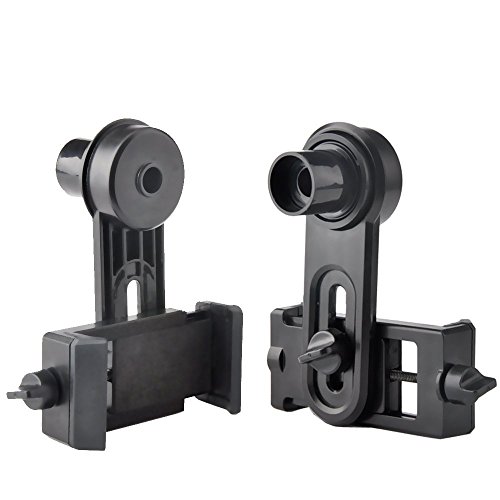
SOLOMARK’s adapter is designed to fit 23.2mm optical tubes and supports many phone widths from 2.2″ to 3.9″. It includes a built-in 16X eyepiece for added magnification. Best for quick setup with broad device compatibility, ideal for students and educators who need a versatile tool for classroom demonstrations.
Who this is best for: Educators and students seeking broad phone compatibility and a ready-to-use magnification option. Why selected: The wide phone range and built-in eyepiece simplify teaching demonstrations and quick field checks.
Caution: The built-in eyepiece may limit customization for advanced users who prefer separate eyepieces or higher magnification levels.
Buying Guide
What to consider when choosing a camera adapter for a microscope:
- Compatibility: Confirm the telescope’s tube size (usually 23.2mm). Some adapters support multiple diameters; others are fixed. Check your phone width and sleeve compatibility as well.
- Magnification needs: Decide whether you need a built-in eyepiece, or if you will rely on the microscope’s native magnification combined with your camera’s sensor.
- Attachment type: T-mount, C-mount, or direct eyepiece adapters each impact ease of use and alignment. A stable mount reduces blur and drift during imaging.
- Build quality: Metal housings and anti-reflective coatings enhance durability and image clarity, especially under bright illumination.
- Field of view vs. detail: Higher magnification improves detail but narrows the field of view. A lower magnification adapter is useful for surveying samples, while higher magnification is suitable for sample inspection.
- Reliability and alignment: Look for adapters with straightforward alignment and secure threading to minimize drift during use.
FAQ
- Will these adapters work with any smartphone? Most adapters support a broad range of phones, but size and camera placement can affect fit. Check the width range and mounting method first.
- Do I need a built-in eyepiece? Not always. Built-in eyepieces offer immediate magnification, while separate eyepiece options provide more flexibility with magnification levels.
- Can I use these adapters with a digital SLR or mirrorless camera? Yes, several adapters (noted in listings) support DSLR or mirrorless via C-mount or T-mount interfaces.
- How does magnification affect image quality? Higher magnification increases detail but reduces brightness and field of view. Adequate lighting and a stable setup are essential.
- Is aluminum or metal construction important? Yes, metal adapters are typically more durable and offer stable alignment in comparison to plastic variants.
- Do I need a separate lens or objective for optimal results? Often, the adapter suffices for basic imaging, but specialized tasks may require additional objectives or macro lenses depending on the microscope system.