Best Camera Bracket for Tripod: Top Picks for Vertical or Horizontal Shots
Photographers increasingly rely on L-shaped camera brackets to switch quickly between vertical and horizontal framing without losing level. This guide highlights five top options that balance durability, compatibility, and ease of use for beginners and professionals alike. Each pick emphasizes Arca-Swiss compatibility, sturdy construction, and smooth switching between orientations.
Summary of chosen products
| Product | Brand | Key Benefit |
|---|---|---|
| DSLR L Bracket with Quick Release | Vikii Store | Wide camera compatibility, aviation aluminum, quick vertical/horizontal switch |
| Real Single L Bracket | TOSICAM | Simple mounting, improved stability, portrait/landscape switch |
| SmallRig Tripod Bracket | SMALLRIG | Versatile tripod/monopod use, 360° ball head, broad device compatibility |
| UTEBIT 11 Inch Flash Bracket | UTEBIT | Long dual-mount design, sturdy load capacity, flexible attachment |
| Generic DSLR L Bracket | Generic | Solid CNC aluminum build, broad camera compatibility, Arca-ready |
The following sections review each product’s strengths, compatibility, and what kinds of shoots they suit best. The aim is to help you choose a bracket that minimizes setup time while preserving balance and image quality across tripods, gimbals, and stabilizers.
Vikii DSLR L Bracket

The Vikii L bracket is designed for both vertical and horizontal shooting, enabling quick transitions from landscape to portrait without the need for a ball head. It emphasizes compatibility with a broad range of cameras, including Canon, Nikon, and Sony bodies, as well as popular stabilizers and gimbals. Construction uses aviation aluminum and precision CNC machining to deliver a lightweight yet strong mount that supports long, durable use. The bracket is positioned as a versatile daily-use partner for photo walks, studio setups, and field assignments where quick framing changes matter.
Key considerations: The broad device compatibility helps with mixed gear kits, but users should verify exact camera model support and ensure the quick-release plate integrates cleanly with their stabilizer system. Weight handling and balance are strong points, with a focus on minimizing additional bulk in travel scenarios.
(Real Single One) L Bracket

The Real Single L Bracket focuses on a simplified linkage without extra screws for linking, promoting straightforward setup and stable alignment. It notes that mounting is optimized for Arca Swiss quick-release plates and provides guidance for adapting to other base plates. While designed to enhance vertical shooting, it also enables smooth horizontal shooting for broader shooting scenarios. The bracket is positioned as especially compatible with Ronin and Zhiyun stabilizers when used with the appropriate quick-release system. The emphasis is on stability and ease of use in dynamic shoots.
Key considerations: This bracket shines in single-camera workflows and on stabilized rigs, but users should confirm compatibility with their specific base plate and ensure proper mounting procedure to maintain balance. It is not intended to replace the stabilizer’s own quick-release plate.
SmallRig 71″ Tripod Bracket

SmallRig’s 71″ Foldable Tripod Bracket is designed for broad compatibility with cameras, tripods, and even mobile devices via standard threaded holes. It offers a dual-functionality design that can convert into a monopod, which supports versatile shooting on the go. The 360-degree ball head fosters flexible composition, and the central pole can invert for low-angle or macro work. This makes it a strong choice for travelers, event photographers, and videographers who need a versatile support system that travels well and adapts quickly to changing scenes.
Key considerations: While highly adaptable, users should verify payload ratings for their camera and lens combination, especially when adding telephoto gear. If you frequently shoot at extreme angles, ensure the included head and clamps provide sufficient rigidity to prevent drift during long takes.
UTEBIT 11-Inch Flash Bracket
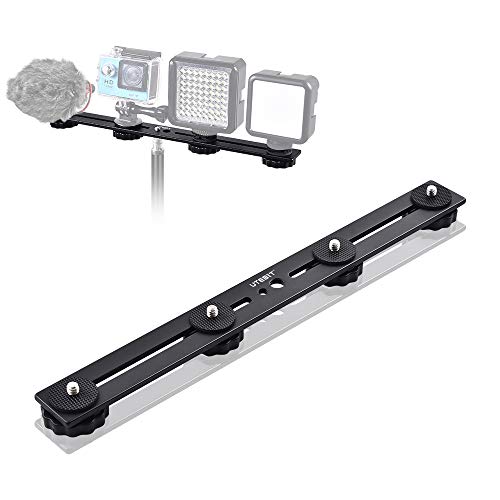
The UTEBIT 11-inch dual camera mount bracket is designed for flash or light-mocused setups, extending attachments to the middle of a dual bracket. It features standard 1/4-inch and 3/8-inch threading in the center, allowing multiple devices—cameras, lights, or microphones—to mount simultaneously. Aluminum construction supports a robust load capacity, making it a practical choice for on-location shoots with lighting gear. The long reach can help achieve more dynamic lighting angles without compromising camera balance.
Key considerations: This bracket excels in lighting-heavy configurations, but it’s important to confirm compatibility with your existing light stands and ensure the weight distribution remains stable when adding accessories. For portraits or product shoots, consider how the extra reach affects mounting balance and cable management.
Generic DSLR L Bracket

This generic L bracket emphasizes instant vertical-to-horizontal switching with a solid aluminum build and multiple 1/4-inch screw holes. It supports common camera bodies across Canon, Nikon, Sony, and more, including stabilizers and gimbals. The CNC-crafted design targets durability and lightweight performance, offering a straightforward solution for photographers who want a reliable L-bracket without extra frills. The included mounting options make it a practical option for budget-conscious buyers seeking Arca compatibility and dependable function.
Key considerations: Fit and finish can vary among generic brands. Verify the exact dimensions of the camera base and the available mounting holes to ensure a snug fit with your model. If you frequently swap gear, confirm how easily the plate attaches to your tripod or stabilizer harness to preserve balance.
Buying Guide: Key Purchase Considerations And Comparisons
- Compatibility: Check that the bracket fits your camera brand and model, and confirm it supports Arca-Swiss or your stabilizer’s quick-release system. If you use a Manfrotto or other base plate, verify any required adapters.
- Material and Durability: Aluminum brackets offer good strength-to-weight ratios. CNC machining tends to deliver precise fits and long-term reliability, crucial for frequent vertical/horizontal switching.
- Weight and Portability: If you travel often, prioritize foldable designs or lightweight builds that don’t burden your carry-on or camera bag.
- Load Capacity: Consider your camera body, lens, and accessories. Choose brackets that exceed your typical total setup weight to avoid flex or drift during action.
- Switch Mechanism: A smooth, reliable vertical-to-horizontal transition reduces post-processing time. Avoid brackets with overly stiff or wobbly joints unless you need extreme rigidity for heavy gear.
- Accessory Support: Look for multiple 1/4″- and 3/8″-thread locations for microphones, lights, monitors, or external rigs. Arca compatibility is a major plus for quick changes on modern tripods and gimbals.
- Stability With Stabilizers: If you rely on gimbals like Ronin or Zhiyun, ensure the bracket can mount securely without interfering with the stabilizer’s base plate or locking mechanisms.
- Portability vs. Rigidity: Some brackets emphasize ultra-light design at the cost of minimal payload. Balance your need for mobility with the gear you routinely carry.
- Price-to-Performance: Higher-priced brackets often offer precision and durability, but mid-range options frequently deliver excellent value for hobbyists and semi-professionals.
In practice, choose a bracket that aligns with how you shoot most often. If you predominantly shoot portraits and events, prioritize fast, reliable vertical-to-horizontal switching and a robust quick-release system. If you travel with a light rig, a foldable or monopod-capable bracket can save space while preserving versatility. For lighting-intensive workflows, a long dual-mount bracket can simplify gear placement without compromising camera balance. Always verify compatibility with your specific tripod, stabilizer, and base plate to ensure seamless operation on location.