Best Camera for 11 Year Olds: Safe Picks for Budding Photographers
Looking for a kid-friendly camera that fits an 11-year-old’s abilities and spark of creativity? The right choice blends easy operation, durable design, and kid-safe features. Below are five compact, beginner-friendly options that work well for pre-teens, with notes on who they suit best and any practical limits to consider. This guide helps parents compare features quickly and choose a camera that encourages imaginative photography without complexity.
| Product | Best For | Why It Stands Out |
|---|---|---|
| Lecran Digital Camera | Beginner kids and pre-teens | Compact, anti-shake, 44MP photo capability, 1080P video, creative filters |
| CAMKORY Digital Camera (Blue/Black) | Everyday travel and easy use | Simple interface, dual-purpose 1080P video, long battery life |
| Makolle Kids Camera | Young children to early tweens | 180° flip lens, 8MP photos, 1080P video, kit with accessories |
| PROGRACE Underwater Action Camera | Active kids and outdoor adventures | Waterproof, 32GB card, bike mount, colorful filters |
| Gtonster 44MP Digital Camera | Teens with interest in photography basics | 44MP stills, 1080P video, 16x zoom, smile detection |
Lecran Digital Camera

The Lecran camera targets beginners with an anti-shake function and a CMOS sensor that supports clear Full HD 1080P video and 44MP photo resolution. This compact option includes a 32GB card and a 16x digital zoom, making it easy for kids to zoom in on distant subjects. Best for:
– Kids who want straightforward operation and immediate results.
– Beginners who benefit from built-in filters and date stamping for memory keeping.
Why selected: It emphasizes safe materials and simple controls, while offering creative filters to foster experimentation without extra gear. The included lanyard and battery support casual outings. Caution: 16x digital zoom can reduce image sharpness when zoomed in on certain scenes; encourage steady hands or stable support for best results.
CAMKORY Digital Camera (Blue)
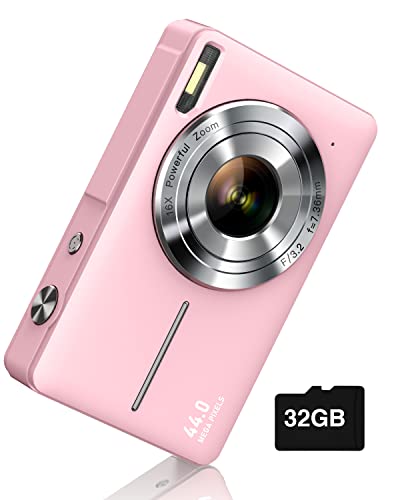
The CAMKORY camera provides a user-friendly experience with automatic color processing and easy-to-use menus. It is portable for travel and ships with two batteries for extended play. Best for:
– Children who prefer a simple, automatic shooting experience over manual adjustments.
– Parents who want longer shooting sessions without frequent recharging.
Why selected: Its ergonomic design and large LCD are approachable for kids, with energy-saving features for trips. Limitation: Some users may want more advanced controls as skills grow, which this model minimizes to preserve simplicity.
Makolle Kids Camera

The Makolle camera features an upgraded 180° flip lens for easy selfies and a robust 1000mAh battery offering 2-3 hours of shooting. It includes a 32GB card and a tripod, making it a ready-to-go starter kit for travel or daily use. Best for:
– Younger kids or beginners who enjoy creative selfies and framing options.
– Families looking for a complete package with accessories.
Why selected: The flip camera design lowers the barrier to regular photo play, but caution: the device is designed for casual use and may not suit parents seeking higher resolution or more advanced features.
Gtonster Digital Camera

The Gtonster camera focuses on teen-friendly features with 44MP photo resolution, 1080P video, and 16x digital zoom. It also offers face detection and smile capture for easier portrait photography. Best for:
– Tweens starting to explore photography as a hobby.
– Users who want straightforward auto modes with fun capture options.
Why selected: It balances image quality and ease of use, but users should be mindful that digital zoom can reduce sharpness; framing with natural light improves results.
ROQIOO Kids Digital Camera

Note: This ROQIOO model highlights a high-performance CMOS sensor and 16x digital zoom suitable for aspiring photographers aged 8-13. Best for:
– Kids who want a compact camera with a simple interface and zoom capability.
– Families seeking a light device for everyday use. Caution: Some versions emphasize specific age ranges; verify the model’s recommended age before purchase.
Buying Guide: Key Purchase Considerations
- Age-appropriate controls: Choose models with simple menus, large buttons, and auto modes to reduce frustration for early tweens.
- Durability: Look for shockproof or rugged housings, non-toxic materials, and secure lens protection for active kids.
- Battery life and charging: Prefer models with longer battery life or removable batteries to support longer outings.
- Storage: A 32GB SD card is common; ensure the device can handle the card type and has easy transfer options.
- Image quality and features: 1080P video and 44MP photo capabilities offer sharp images, while features like anti-shake, face detect, and filters encourage creativity.
- Portability and accessories: Neck straps, tripods, or bike mounts can extend usage scenarios beyond casual shots.
- Future growth: If the child’s interest grows, consider a model with more manual controls or higher photo resolution.
Frequently Asked Questions
- What age is best for a kid’s camera?
– Typically ages 6-12 benefit most from simple, auto-mode cameras, while older kids may enjoy models with more features and controls. - Do kid cameras require a separate SD card?
– Many include a card (e.g., 32GB). If not, be ready to add a compatible card for storage. - Is waterproof or action-ready important for a kid camera?
– For active outdoor use, a waterproof or rugged option can prevent damage during play and travel. - Should I prioritize video or photo resolution?
– For beginners, strong video (1080P) plus good stills (44MP) helps a child capture both moments and memories. - Will a higher zoom improve results for kids?
– Zoom helps reach distant subjects, but digital zoom can reduce sharpness; encourage stable shots and use natural light. - What accessories matter most?
– A lanyard, protective case, and tripod can improve handling and expand how a camera is used in different environments.
These selections offer practical, beginner-friendly options for an 11-year-old’s first photography experiences. Each model emphasizes ease of use, portability, and kid-safe design while supporting creative exploration through filters, frames, and simple video capture.