Best Wildlife Lens Picks for 2026: Long Reach, Fast Focus, and Handheld Freedom
Answering the question “which camera lenses are best for wildlife?” with practical guidance for American shooters. This guide highlights five lenses that balance reach, stability, and portability for wildlife, nature, and birds in the wild. It explains who each lens suits best and why, with clear, objective comparisons. Whether you shoot with Canon RF-mount mirrorless bodies or versatile APS-C setups, you’ll find options for handheld use, fast AF, and weather-friendly handling.
Summary of selected products:
- Canon RF 200-800mm f/6.3-9 IS USM — Best for extreme reach and handheld shooting on full-frame.
- Canon RF100-400mm f/5.6-8 IS USM — Best travel-friendly zoom with strong stabilization.
- Tamron 18-300mm f/3.5-6.3 Di III-A VC VC — Best all-in-one for APS-C mirrorless, travel-ready.
- TAMRON SP 150-600mm F5-6.3 Di VC USD G2 — Best for flexible telephoto performance with advanced stabilization.
- Canon RF 75-300mm f/4-5.6 — Best compact telephoto zoom for wildlife on RF mirrorless bodies.
Canon RF 200-800mm F6.3-9 IS USM: Ultra-Long Telephoto Zoom

Best for extreme reach in a compact footprint, this lens covers 200–800mm with an optical stabilization system that supports handheld use. It’s a strong choice for wildlife observers who need distance without a heavy, multi-lens kit. The lens is compatible with Extender RF1.4x and RF2x, providing additional focal flexibility at all zoom settings.
Who it’s best for: wildlife photographers needing maximum reach in a single, more portable super-telephoto option; outdoor enthusiasts who shoot handheld or with lightweight tripods.
What to know: the ultralong end is ideal for birds and distant mammals, but the maximum aperture can be tighter at 800mm, which may require sufficient light or higher ISO in dim conditions.
Canon RF100-400mm F5.6-8 IS USM: Versatile Telephoto Zoom

Best for travel-friendly wildlife photography on Canon RF mirrorless cameras, this compact zoom covers a flexible 100–400mm range with optical image stabilization. It delivers solid image quality with a modest footprint, making it ideal for hikers and nature photographers who need quick setup and reliable performance.
Who it’s best for: photographers who want a light, versatile telephoto lens for day trips, birding near trails, and outdoor wildlife where weight matters.
What to know: at the longer end, 400mm, performance can be influenced by light; pairing with good light or upgrading to a higher-end body helps maximize stabilization benefits.
Tamron 18-300mm F/3.5-6.3 Di III-A VC: All-in-One for APS-C

Best for travel and versatile wildlife shooting on APS-C mirrorless bodies, this all-in-one zoom spans a broad range and includes Vibration Compensation. Its compact design reduces the need to swap lenses in the field, making it a practical option for hikers and casual wildlife observers who still want a capable focal range.
Who it’s best for: travelers or beginners who want a single lens to cover landscapes, animals, and nearby birds without swapping lenses.
What to know: at 18mm, wide angle performance is good for scenery, but at 300mm, you’ll rely on the stabilization system to keep shots sharp in handheld use.
TAMRON SP 150-600mm F5-6.3 Di VC USD G2: Pro Telephoto Reach

Best for flexible telephoto shooting with advanced stabilization, this lens offers a longer reach (150–600mm) suitable for distant wildlife and birds. It features improved autofocus speed and vibration compensation for steadier handheld shots.
Who it’s best for: wildlife enthusiasts who want strong reach without switching lenses, plus improved AF and stabilization for handheld use in open habitats.
What to know: heavier than compact zooms; consider a sturdy support system for extended handheld sessions, especially at the 600mm end.
Canon RF 75-300mm f/4-5.6: Compact Telephoto Zoom
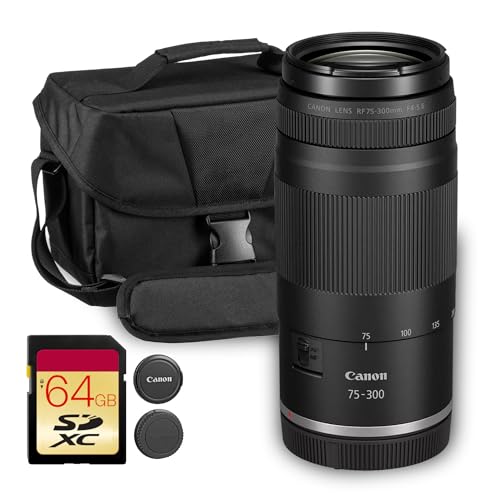
Best for lightweight wildlife outreach on RF-mount full-frame or APS-C bodies, this compact telephoto zoom provides a versatile 75–300mm range with a practical weight and smooth autofocus. It’s an approachable entry point for wildlife enthusiasts who value portability.
Who it’s best for: photographers seeking a budget-friendly, travel-friendly telephoto tool for outdoor subjects, including birds and distant mammals.
What to know: the variable aperture design means brighter scenes at shorter focal lengths, but you may need higher ISO as you zoom in toward 300mm in low light.
Buying Guide: How To Choose The Right Wildlife Lens
- Focal Length and Reach: For birds and distant wildlife, longer focal lengths (200–800mm) offer more frame filling capability without proximity. Shorter zooms (100–400mm, 75–300mm) suit closer subjects or quick setups where weight matters.
- Image Stabilization: Stabilization helps in handheld shooting at long reach. Look for IS/VC/OSS terminology tied to the focal length you’ll use most often.
- Weight and Handling: Longer telephotos can be heavy. If you plan long shoots on foot, prioritize lighter designs or consider support gear like monopods.
- Camera System Compatibility: Ensure mount compatibility (RF, EF, or others) and consider extenders for extra reach if available for your system.
- Light Conditions: Wide apertures help in low light but often come with heavier, bigger lenses. Balance aperture with reach and stabilization for your typical shooting environment.
- Travel and Portability: All-in-one zooms are convenient for travel, while prime-inspired long zooms excel in sharpness and speed. Choose based on how often you swap lenses in the field.
- Budget and Durability: Weather-sealing and build quality matter in outdoor environments. If budget is a constraint, start with a versatile zoom and upgrade later as needed.
Frequently Asked Questions
- What lens is best for birding on a Canon RF system? A long-range zoom like 200–800mm or 150–600mm offers reach without frequent lens changes, ideal for birds in open habitats.
- Do I need a dedicated telephoto lens or can I use a kit lens? For wildlife at distance, dedicated telephotos provide sharper images and better autofocus at long focal lengths compared to most kit lenses.
- Is image stabilization essential for wildlife photography? Yes, especially at long focal lengths or in dim light. Stabilization helps maintain sharpness during handheld shooting or panning.
- Should I choose a compact lens over a super-telephoto? Choose based on your typical subjects and travel style. Compact lenses are easier to carry; super-telephotos offer more reach for distant subjects.
- Can extenders increase reach without reducing image quality? Extenders can add reach, but they may reduce aperture and autofocus speed. Verify compatibility with your lens and camera system.
- What’s the best starting lens for beginners? A versatile 100–400mm or 75–300mm can be a practical entry point, balancing reach, weight, and price while you learn wildlife composition.