Best Camera Shutter Release Cords for Crisp Shots
Get steadier, sharper images with dedicated shutter release cables designed for your camera. This guide highlights five reliable options and explains who each is best for, so you can choose the right cord for minimizing shake, framing long exposures, or studio shooting. Ideal buyers include hobbyists seeking budget-friendly options, professionals needing reliable mechanical releases, and travelers who value compact, coiled designs.
| Product | Best For | Length | Key Benefit |
|---|---|---|---|
| HTBMALL 2.5mm-C3 Cable | Canon shooters seeking broad compatibility | Varies | 2.5mm to C3 connectivity for multi-flash setups |
| JJC Mechanical Shutter Release (Fuji/Sony/Lecia) | Cross-brand long-exposure users | Coiled varies | Locking function for stability |
| HTBMALL 2.5mm-N3 Cable | Nikon DSLR users | Varies | Connects trigger to camera to control focus and shutter |
| Pastlla Threaded Release Cables (40cm/100cm) | General mechanical cameras | 40 cm / 100 cm | Bulb-lock and heavy-duty build |
| Keabroir 2.5mm to 3.5mm Coiled Cable | All major brands with mixed 2.5/3.5mm jacks | Coiled up to 50 cm | Coiled design reduces clutter and extends reach |
HTBMALL 2.5mm-C3 Camera Remote Control Shutter Release Cable

This 2.5mm-to-C3 cable targets Canon EOS users and many Canon-compatible flash triggers. It enables a direct connection between a camera and a flash trigger, helping reduce camera shake during shutter release. The dual compatibility makes it best for photographers who frequently pair external flash units with Canon bodies. A potential limitation is that broader flash compatibility may depend on your specific flash model.
JJC Mechanical Shutter Release Cable with Bulb-Lock

Designed for Fuji, Sony, Lecia and related cameras, this mechanical release helps minimize camera shake for long exposures, macro shots, and bulb settings. It features a locking mechanism to maintain a steady hold during extended frames. Best for multi-brand shooters who want a robust, physical release with a locking option. Caution: verify thread compatibility with your specific camera model before purchasing.
HTBMALL 2.5mm-N3 Cable For Nikon DSLRs

This N3 release cord is tailored for Nikon DSLRs, connecting a remote trigger to the camera and enabling both focus and shutter control via the trigger. It’s best for Nikon shooters who want reliable remote operation without Bluetooth or wifi delays. A limitation may be compatibility with non-Nikon bodies or newer intermediate models; check your camera’s remote port type before use.
Pastlla 39.4″ Threaded Release Cable

Long, vibration-free cable with a bulb-lock design provides stability for long exposures and bulky studio setups. Best for digital and traditional film cameras with threaded release ports. Consider this option if you need a longer reach for tripod setups or studio tables; the longer length may require careful cable management during movement.
Pastlla 15.7″ Threaded Release Cable
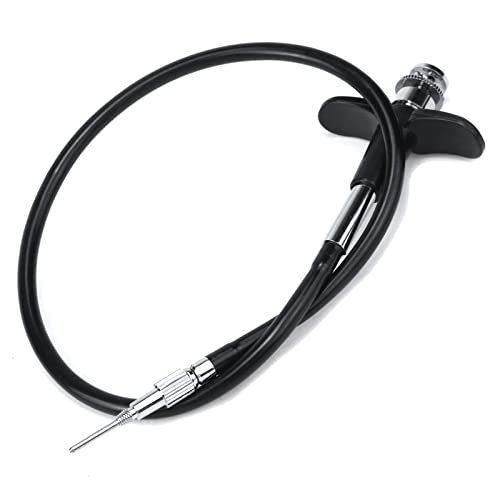
Compact and suitable for travel or on-location shoots, this 40 cm cable offers a practical length with a similar threaded, bulb-lock design. Best for photographers who want a lighter, easily portable option without sacrificing shutter control. Limitation: shorter reach may be less ideal for high-angle or hard-to-reach camera placements.
Keabroir 2.5mm To 3.5mm Flash Sync Cable

This coiled cable supports both 2.5mm and 3.5mm jacks, making it versatile across Canon, Nikon, Sony, and other DSLRs. It enables remote shutter release and speedlight control, and its spring design enables extension up to about 50 cm while retracting compactly for storage. Best for mixed-brand setups or photographers who prefer a single cable for multiple bodies. Caution: ensure correct jack size for your specific accessory to avoid fit issues.
Buying Guide: Key Considerations For Shutter Release Cables
- Compatibility: Check your camera brand and model for port size (2.5mm vs 3.5mm vs C3) and threaded versus non-threaded designs.
- Length and Reach: Short cables suit on-camera use; longer cables help with studio setups and group shots but require cable management.
- Locking Mechanism: A bulb-lock or locking release minimizes drift during long exposures; assess whether your shooting style benefits from a lock.
- Durability: Look for metal connectors and robust plastics, especially for travel and outdoor shoots.
- Coiled vs Straight: Coiled cords reduce tangling and clutter; straight cords provide fixed reach with fewer moving parts.
- Signal Type: Some cables operate purely as mechanical releases; others offer multi-function control including focus via a trigger.
- Portability: For travel, lighter and shorter options may be preferable; consider how you pack cables with other gear.
FAQ
- Do shutter release cables work with all cameras?
Shutter release cables are generally designed for specific port types and camera families. Verify the connector size (2.5mm, 3.5mm, or C3) and whether the camera supports a tripod-mounted remote release.
- When should I choose a coiled cable?
Coiled cables extend during use and retract for storage, minimizing tangling. They are ideal for studios or field work where reach changes frequently.
- Is a longer cable better for long exposures?
A longer cable can help if you need distance from the camera to your trigger or to avoid vibrations caused by pressing the trigger near the lens. Balance length with manageability.
- Can I use a single cable for multiple brands?
Cables with multiple jack sizes (2.5mm and 3.5mm) or cross-brand compatibility can work across brands, but always confirm port compatibility with your specific camera model.
- What is the benefit of a threaded release with a bulb-lock?
Threaded releases with bulb-lock provide a secure, vibration-free hold, reducing movement during long exposures and macro shots.
- Are these cables suitable for both digital and film cameras?
Many are compatible with traditional film cameras that use standard threaded ports, as well as many digital bodies. Always check the product details for compatibility with your camera type.