Best Cameras With HDMI Output for Clear Video
For creators and security setups alike, cameras with HDMI out provide reliable, high-quality video feeds for live streaming, monitoring, and recording. This article reviews five top options that support HDMI output, covering 1080p to 4K capabilities, varifocal lenses, and easy USB/HDMI integration. Each entry includes essential features, wiring options, and how the model fits different use cases—from classroom broadcasts to professional surveillance. Use the buying guide to compare angles, zoom, and compatibility with your preferred display or recording system.
| Product | Brand | HDMI Output | |
|---|---|---|---|
| MOKOSE HDMI Camera, 1080P/4K | MOKOSE | HDMI output 1080p/4K with auto/manual white balance | 2.8-12mm varifocal lens |
| ELP 4K USB HDMI Camera | ELP | HDMI output up to 4K, USB-C power | 5-50mm focal range |
| IFWATER 1080P HDMI Camera | IFWATER | HDMI + USB simultaneous; 1080P HDMI | 2.8-12mm lens with up to 4X optical zoom |
| SDTNOVA HDMI USB3.0 Security Camera | SDTNOVA | HDMI output 1080P, USB3.0 | 2.8-12mm varifocal with YUY2 |
| Tenveo VLoop PTZ Camera | Tenveo | HDMI/USB3.0, 1080P60 | 11X optical zoom |
MOKOSE HDMI Camera With Varifocal Lens

The MOKOSE HDMI Camera delivers flexible 2160P30/25/24 and 1080P60/50/30/25 video through HDMI, with an 8MP 1/2.8″ CMOS sensor for high-definition image quality. The 2.8-12mm manual varifocal HD lens supports both optical and digital zoom, enabling precise framing for surveillance or streaming. White balance can be set automatically or manually, and the camera supports a cross-line feature to assist alignment during critical tasks. This model is designed for real-time transmission with low compression and low loss, reducing latency in professional settings.
ELP 4K USB HDMI USB Camera

The ELP 4K camera combines USB and HDMI outputs, supporting 4K ultra-clear recording with a 5-50mm variable focus lens. The device is powered via USB-C and can display on HDMI-enabled displays while also feeding a USB-C connected computer. Its wide focal range makes it suitable for distant surveillance or close-up demonstrations, delivering a maximum resolution of 3840×2160 at 30fps. The compact design targets both professional streaming and desktop conferencing environments.
IFWATER 1080P HDMI Camera With 4X Zoom

The IFWATER model supports HDMI and USB simultaneous outputs, with a USB-C power supply and a 2.8-12mm lens enabling 2X digital and up to 4X optical zoom. HDMI output targets 1080P, while USB can push 2160P. It can drive H.264/MJPEG/YUY2 formats and offers up to 50% more compression efficiency over older codecs, improving bandwidth usage and storage demands for live streaming and remote teaching applications.
SDTNOVA HDMI USB3.0 Security Camera
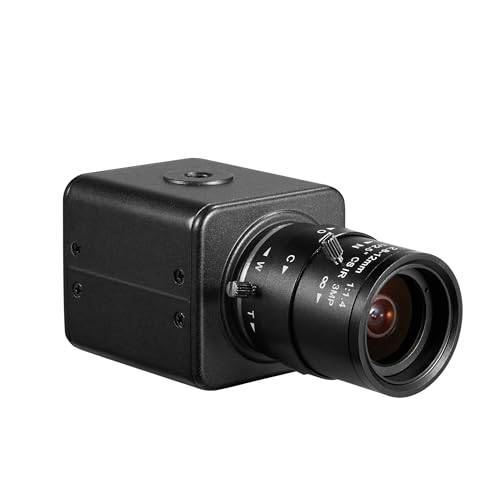
SDTNOVA offers a 1080P USB3.0 and HDMI manual zoom camera with a 2.8-12mm varifocal lens and YUY2 1080P 60fps output. Resolution is switchable via remote control, and the device emphasizes low compression and real-time transmission. It employs a high-quality 1/2.8″ IMX307 sensor and supports H.264/MJPEG/YUY2 compression, with UVC compatibility for Windows, Linux, Mac, and Raspberry Pi environments. This model suits security monitoring and live streaming needs where remote operation matters.
Tenveo VLoop 11X PTZ Conference Camera

The Tenveo VLoop features 11X optical zoom and FHD 1080P at 60fps, designed for conference and live streaming use. It supports USB3.0 and HDMI outputs, with a wide 1/2.8″ CMOS sensor and a 2.38MP lens. The PTZ capabilities include remote control of pan and tilt with presets, enabling smooth close-ups of speakers and presenters. Note that it does not include an internal microphone, so external audio gear is often paired for complete setups. It is well-suited for corporate meetings and streaming events needing flexible framing.
Buying Guide: Key Considerations For HDMI-Out Cameras
HDMI-out cameras vary in sensor type, lens options, and connectivity. When choosing, consider resolution compatibility with your displays or capture devices, frame rate needs (1080p vs 4K), and whether you require USB passthrough for PC or classroom use. Varifocal lenses give versatility for tight rooms or dynamic environments, while fixed-focus cameras are simpler but less flexible. PTZ models add remote control and presets ideal for conferences. Also evaluate low-light performance, compression formats (H.264/MJPEG/YUY2), and whether UVC compatibility enables plug-and-play with major operating systems. Finally, ensure that your power supply matches device requirements (USB-C power versus dedicated adapters) for reliable operation.
In practice, match the camera’s HDMI output capability to your recording or display setup. For streaming, 1080p at 60fps provides smooth motion, while 4K output benefits large displays or post-production. If remote operation matters, prioritize cameras with motorized zoom, remote white balance, and lens control via a compact interface. If budget or space is limited, a capable 1080p model with a good autofocus or manual zoom can still deliver professional results.