Best Thermal Imaging Cameras for Clear, Quick Inspections in 2026
Answering the buyer’s search for a reliable camera with thermal imaging, this guide highlights five top options suited to different professionals and homeowners. Choose this if you need detailed thermal data for electrical work, plumbing leaks, or HVAC diagnostics. Choose better for portability, or for detailed analysis on a PC. This article explains who each product is best for and why it was selected, with practical buying tips and a quick comparison table.
| Product | Best For | Key Benefit | Limitations |
|---|---|---|---|
| TOPDON TC004 Mini Thermal Imaging Camera | Tech-savvy inspectors; field technicians | High-resolution TISR up to 240×240 with 25Hz refresh | Smaller battery may require planning for long runs |
| Flagfront YXI96 Thermal Camera | General building inspections; home DIYers | Clear 240×240 imaging with real-time temp alarms | Basic software integration compared to PC-centric options |
| GT14S Thermal Imaging Camera (AccuMEMS) | Dynamic inspections; technicians needing motion tracking | Center/Hot/Cold modes with thermometer readings | Compact design may limit long-term grip comfort |
| FOXWELL RT280 Thermal Imager | Electrical and mechanical inspections | Wide resolution and strong data transfer with PC analysis | Requires PC software for full reports |
| HF96 Thermal Camera with AI Scene Detection | HVAC, electrical and building inspections | AI scene detection plus live 240×240 clarity | Moisture readings not included; firmware updates needed |
TOPDON TC004 Mini Thermal Imaging Camera

The TOPDON TC004 Mini blends extended thermal clarity with practical field features. It starts at 128×128 thermal imaging and enhances to 240×240 via TISR technology for richer details. A 25Hz refresh rate and a 40° x 30° field of view deliver smoother images, useful for homes, electrical panels, and mechanical components. The camera supports automatic photo capture when temperatures cross preset thresholds and stores up to 8,000 photos on 512MB of internal memory, with multiple color palettes to match work conditions. Temperature measurement ranges from -4°F to 842°F (-20°C to 450°C) with an accuracy of ±3.6°F/2%. Best for professionals who need quick, high-contrast visuals in tight spaces or on moving targets, with an onboard alert system for faster diagnostics.
Who it’s best for: field technicians and service pros who need a compact, capable thermal camera with smart alerts and sufficient storage. Why chosen: strong resolution upgrade path, practical alerting, and flexible palette options. Caution: compact form factor may limit grip comfort for prolonged use.
Flagfront YXI96 Thermal Camera

The Flagfront YXI96 focuses on reliable 240×240 imaging with a broad -4°F to 1022°F (-20°C to 550°C) range and a 25Hz refresh rate. Its built-in temperature alarm helps pinpoint abnormal heat sources quickly, while the device displays highest, lowest, and center temperatures for real-time tracking. Users can adjust distance and emissivity to improve measurement accuracy, making it versatile for home leak detection, automotive checks, and circuit inspections. This camera is well suited for contractors and DIYers who want straightforward, accurate measurements with clear on-screen guidance. Caution: while accurate, emissivity settings require proper calibration for very reflective surfaces.
GT14S Thermal Imaging Camera (AccuMEMS)
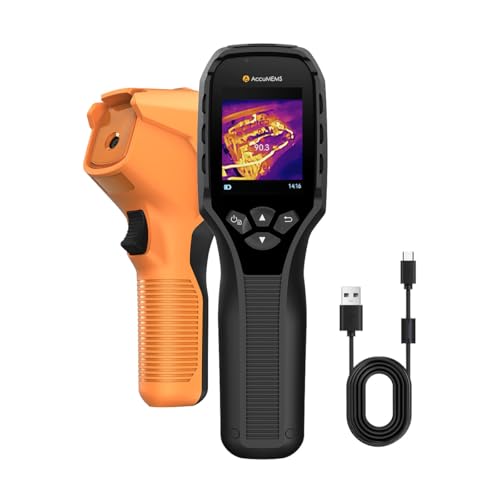
The GT14S combines thermal imaging with Center/Hot/Cold modes and Thermometer Mode for fast, on-the-spot readings. With a lightweight 240g body and a 25Hz refresh rate, it supports real-time monitoring of moving targets without losing detail. It offers seven color palettes for quick visual interpretation and adjustable emissivity and distance settings to enhance accuracy across diverse applications. Best for technicians who frequently inspect moving equipment or need rapid, point-and-shoot readings. Caution: compact design may reduce grip comfort for lengthy inspections, and no Mac compatibility for raw data transfer is noted.
FOXWELL RT280 Thermal Imaging Camera

The RT280 offers a larger 320×240 thermal sensor with TISR-enhanced 240×180 effective resolution and a 25Hz frame rate. A 2.8-inch LCD enables direct viewing, and built-in PC analysis supports line, area, and 2D/3D thermal imaging for reporting. With 8GB internal storage, it can archive substantial image and video data for later review. Best for professionals who frequently document findings and generate reports, especially when PC-based analysis is a key part of the workflow. Caution: Mac users might need Windows-based software for full feature access.
HF96 Thermal Camera With AI Scene Detection

HF96 integrates AI Scene Detection (IntellFault) to identify water leaks and insulation gaps automatically, using deep learning to speed inspections. It combines thermometer, thermal camera, and laser pointer in one device, with a live 240×240 display and 50mK sensitivity to highlight subtle heat patterns. Best for HVAC and building envelope assessments where quick, automated scene interpretation saves time. Caution: this model does not provide moisture readings; users should rely on other tools or manual confirmation for moisture depth.
Buying Guide: Key Considerations For Your Thermal Camera Purchase
- Resolution and clarity: Higher native and enhanced resolutions (e.g., 240×240 or 256×192 with TISR) deliver more detail, helping identify small hotspots.
- Refresh rate: 25Hz is common and adequate for most inspections; faster rates are helpful for moving targets.
- Temperature range and accuracy: Ensure the device covers your typical working temperatures and offers reliable accuracy (look for ±2–3% or a narrow degree variance).
- Measurement features: Thermometer mode, emissivity adjustment, and distance-to-target settings improve measurement reliability across materials.
- On-device storage and PC integration: Decide between cameras with large internal storage or those designed to export to PC software for reporting.
- Alerts and alarms: On-screen warnings and temperature alarms can streamline diagnostics in busy work environments.
- Ease of use and ergonomics: Weight, grip, and display size influence comfort during extended inspections.
- AI and scene detection: Models with automated anomaly detection save time but verify results with manual checks when needed.
- Compatibility and ecosystem: Check for device-to-device compatibility, app support, and whether updates are available for firmware enhancements.
Frequently Asked Questions
- What is TISR in thermal cameras?
– TISR stands for Thermal Image Super Resolution, which enhances lower-resolution captures to higher effective detail for clearer images. - Do I need a camera with motion tracking?
– If you inspect moving equipment or search for hotspots during operation, a 25Hz or faster camera helps maintain image clarity. - Can I transfer images to a PC for reports?
– Many models support PC analysis via software; some include built-in storage for archiving, while others require external transfer. - Is AI scene detection reliable for leaks or insulation issues?
– AI scene detection can highlight likely problem areas, but it should be verified with direct measurements and professional judgment. - Which camera is best for a homeowner?
– For homeowners, a compact model with clear alerts and simple operation is typically preferable, such as the Flagfront or TOPDON Mini when ease of use is a priority. - Do thermal cameras require special training?
– Basic operation is straightforward, but accurate interpretation benefits from training in emissivity, distance, and heat transfer Principals for correct results.