Best Cameras for Telescope Eyepieces: Clear, Portable Astrophotography Eyepiece Cameras
Answering the search intent for buyers seeking telescope eyepiece cameras, this guide highlights five practical options that fit a range of skill levels and observing goals. These devices attach to standard eyepieces, offer onboard or app-based control, and deliver live viewing, stills, and video. Best choices vary by whether you want simple plug-and-play operation, higher-resolution imaging, or extended wireless control for field use. The table below compares key aspects to help you select quickly.
Product Quick Reference
| Product | Best For | Key Benefit |
|---|---|---|
| Unalace 64GB Digital Eyepiece | Beginners to intermediate | 2K video, built-in WiFi hotspot, app control |
| SVBONY SV105 | Beginner astronomers | Low setup, easy transfer to PC/Laptop |
| Telonixium 4K Wireless Eyepiece | Owners needing high-res and remote viewing | 4K video, 2.8″ screen, wide eyepiece fit |
| YUEHISY WiFi Eyepiece | Hobbyists on a budget | 1080P video, 2.8″ display, app link |
| SVBONY SV305C Pro | Astrophotography learners | IMX662 sensor, high-speed USB3.0 |
Unalace 64GB Digital Eyepiece Camera
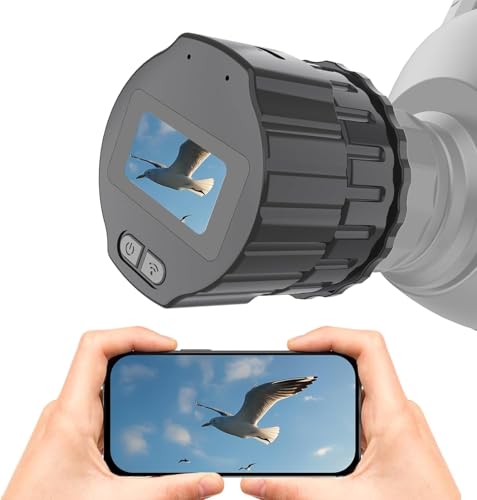
The Unalace eyepiece integrates 2K video and 16MP stills with wireless control. It supports 25–50mm eyepieces and offers a built-in WiFi hotspot for direct smartphone connection. Best for budding deep-sky observers and species monitoring where a hands-free recording workflow helps capture events like meteor trails or birds at a feeder.
- Best for: Beginners who want simple setup and mobile control.
- Why selected: Combines video and stills with offline app control, reducing the need for extra hardware.
Caution: Ensure your telescope supports 25–50mm eyepieces; no external GPS or advanced guiding features are specified.
SVBONY SV105 Telescope Camera
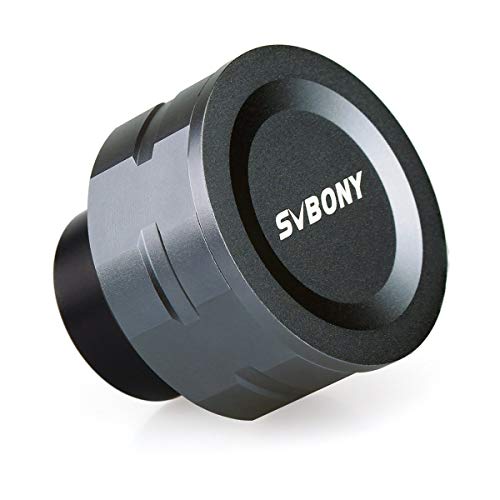
The SV105 is a beginner-friendly electronic eyepiece designed for lunar and planetary imaging. It transfers real-time views to a laptop or PC and supports plug-and-play operation, with reference to Sharpcap Capture for Windows and AstroDMx Capture for Linux. Best for newcomers who want immediate, screen-based guidance and easy data transfer.
- Best for: Beginners who want a straightforward entry into planetary imaging.
- Why selected: Quick setup, no driver required, and simple real-time observation.
Caution: Requires compatible software on your computer for full control and capture; not a standalone high-precision imager for deep-sky work.
Telonixium 4K Wireless Telescope Camera

This 4K eyepiece camera features a rotatable 2.8-inch IPS mini screen, a universal fit for 23mm–60mm eyepieces, and dual-device WiFi for remote observation. Ideal for astrophotographers seeking high-detail live views, planet photography, and flexibility across telescope and monocular setups.
- Best for: Observers who want high-resolution live feed and broad eyepiece compatibility.
- Why selected: 4K video with a large, color-accurate display helps precise focusing and framing.
Caution: Real-time WiFi range is limited; ensure you stay within the 32-foot line of sight for multiple-device connections.
YUEHISY WiFi Telescope Camera

This Eyepiece uses a built-in WiFi connection and a 2.8-inch display for 1080P live view and recording. It supports 1.25″ interfaces and 23.2mm microscope interfaces, making it a versatile option for quick, portable observation of celestial and terrestrial targets.
- Best for: Budget-conscious observers who want an integrated display and app-based control.
- Why selected: Simple mounting and wireless sharing via the app for quick captures.
Caution: The 1080P resolution is adequate for beginners; advanced planetary imaging may require higher sensitivity sensors.
SVBONY SV305C Pro Telescope Camera

The SV305C Pro uses the IMX662 sensor with USB 3.0 for high-speed data transfer and a 2MP sensor output, suitable for astro-imaging enthusiasts who want more sensitive imaging and smoother video. Best for: learners who aim to progress to more detailed planetary or lunar imaging and want faster data handling.
- Best for: Learners advancing beyond basic captures and exploring higher-quality imaging.
- Why selected: High frame rate and low readout noise improve image clarity in dim scenes.
Caution: Requires compatible software and careful exposure settings to maximize details in faint targets.
Buying Guide: Key Considerations When Choosing a Telescope Eyepiece Camera
- Resolution and sensor sensitivity: Higher resolution helps with detailed planetary and lunar images; sensitivity matters in dim skies.
- Eyepiece compatibility: Most devices fit 23–60mm or 25–50mm ranges. Confirm your telescope’s eyepiece diameter before buying.
- Connectivity and control: Decide between built-in WiFi with a phone app, USB connection to a computer, or direct display on the unit.
- Display and framing: A larger, color-accurate screen aids focusing and composition; consider rotatable or fixed displays based on your observing style.
- Portability and power: Battery life, weight, and wireless range affect field use and tonight’s observing session.
- Software compatibility: Some cameras pair with specific software (e.g., SharpCap, AstroDMx). Check compatibility if you plan to process images on a PC.
FAQ
- Do I need a PC to use these eyepiece cameras?
Not always. Some models support direct app control via WiFi, while others require a computer for full imaging workflows. Check the product details for your chosen model. - What is the best resolution for beginners?
1080P to 2K video is typically sufficient for learning, while higher-end models offer 4K for more detail. Consider your telescope’s optical quality and the targets you want to image. - Can these cameras work with any telescope?
Most announce compatibility with standard eyepiece diameters (23–60mm or 25–50mm). Verify your telescope’s eyepiece size and mounting groove before purchasing. - Are there limitations to wireless operation?
WiFi range and device pairing can limit how far you can observe. For remote locations, plan for line-of-sight within the stated range. - What targets are best for eyepiece cameras?
Planets, the Moon, and bright deep-sky objects are common starting targets. Some cameras perform better in low light than others, depending on sensor sensitivity. - Is more expensive always better?
Not necessarily. For beginners, a mid-range camera with easy setup and reliable app control often provides the best value. Upgrading should match your imaging goals and telescope quality.