Best Dash Cams With HDR Built in for Clear, Reliable Evidence
If you’re shopping for a dash cam with built-in HDR, you’re looking for clear, balanced footage in all lighting—from bright sun to dark tunnels. The top picks below balance HDR performance with wide coverage, easy connectivity, and reliable parking monitoring. This guide helps buyers choose the right model for daily commuting, road trips, or安心 driving, with a quick product table and practical buying tips. Each entry highlights who it’s best for and why it stands out in HDR-rich recording scenarios.
| Product | HDR Strength | Best For | Note |
|---|---|---|---|
| Coolcrazy 4K Dash Cam | STARVIS Night Vision + WDR | Drivers needing 4K front + rear, strong night performance | Includes large storage and GPS |
| 70mai A410 Dash Cam | HDR Front + Rear | Budget-conscious users seeking solid HDR | 2.5K+1080P quality in compact package |
| LNDU V820 4K Dash Cam | HDR on both cameras | High-resolution front with reliable rear view | Built-in 5GHz WiFi, GPS |
| 70mai A510 Dash Cam | STARVIS 2 + HDR | Excellent night footage and broad coverage | 1944P+1080P, 64GB included |
| 70mai A800SE Dash Cam | 4K Front + 1080P Rear, Dual HDR | High-detail, flexible mounting, 24H parking | Includes 128GB card |
Coolcrazy 4K Dash Cam Front and Rear

Best for drivers who want ultra-high resolution footage and robust night vision. This dual-dash setup records in 4K UHD with a 170-degree front and 150-degree rear field of view. It uses STARVIS night vision and large-aperture WDR to reduce glare and reveal details in low light. The 60fps frame rate ensures smooth motion for license plates and signs, while 128GB storage and a built-in GPS aid long-term evidence keeping. G-Sensor locks critical clips during events. A caution: 4K files consume more storage; ensure you have ample space for extended parking mode recordings.
Best for: Those needing top-tier daytime and nighttime clarity with dependable parking protection and geo-tracking.
70mai Dash Cam Front and Rear A410

This model delivers solid HDR performance with a 2.5K front and 1080P rear feed. The 125-degree wide angle captures multiple lanes, helping with plate recognition and scene context. It includes a 64GB card for immediate use and supports Wi-Fi for quick downloads and app access. Best for drivers who want reliable HDR imaging without the highest resolution, and who value straightforward app integration. Caution: HDR benefits are strong, but rear coverage is slightly narrower than some dual-camera competitors.
Best for: Everyday drivers who want dependable HDR footage in a compact, affordable package.
LNDU V820 4K Front and Rear Dash Cam
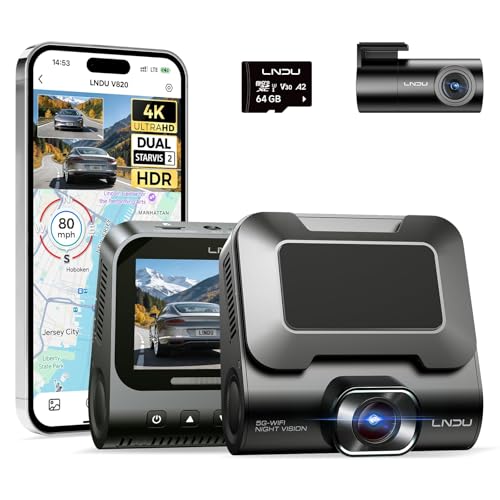
Designed for high-resolution clarity with dual STARVIS 2 sensors, this dash cam records 4K front and 1080P rear with HDR support on both cameras. Built-in 5GHz WiFi facilitates fast data transfer and GPS for location tagging. It’s a strong choice for drivers who want real-time location awareness and HDR-balanced footage in varying light. Limitation: remote viewing requires a connected device and (optional) 4G box not included, so plan connectivity accordingly.
Best for: People who need high-detail daytime footage and reliable navigation/location tagging.
70mai A510 Dash Cam

With 1944P front and 1080P rear recording, HDR, and STARVIS 2 sensors, the A510 offers strong night-vision performance and clear daytime detail. The 140-degree front view and 130-degree rear view minimize blind spots. It includes a 64GB card and GPS. Best for drivers who want wide coverage and crisp HDR in mixed lighting. Caution: For longer trips, consider larger storage or cloud options for extended footage retention.
Best for: Road trippers and daily drivers who require strong HDR fidelity and broad coverage at night.
70mai A800SE 4K Front + 1080P Rear Dash Cam
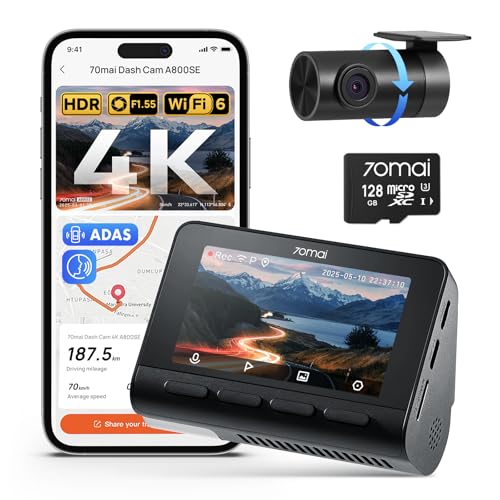
This model pairs 4K front recording with a flexible 1080P rear camera, offering wide angle coverage and dual HDR to handle bright light and glare. It includes a 128GB card for longer sessions and supports 24-hour parking mode with loop recording. Best for drivers needing multiple-angle evidence with rich HDR, while avoiding gaps in footage during extended parking periods. Caution: The rear unit’s width may require careful mounting to avoid obstruction in some vehicle interiors.
Buying Guide: HDR Dash Cam Considerations
- Resolution vs. storage: Higher HDR-capable cameras often record at 4K; ensure your memory card size and vehicle usage justify the data load. Prefer models with loop recording and a G-Sensor.
- HDR performance: Look for front and rear HDR, STARVIS or similar night-vision sensors, and wide dynamic range to balance bright and dark areas in single scenes.
- Field of view: A wider lens captures more of the road but can distort edges slightly. Common ranges are 125–170 degrees front; consider rear coverage as well.
- Connectivity: Built-in WiFi or 5GHz options simplify file transfer and app control. GPS is valuable for location stamping and speed data.
- Parking mode: 24H monitoring is beneficial, but may draw more power. Confirm whether the unit supports hardwiring or a separate power kit.
- Storage expansion: Check card compatibility and maximum supported capacity. Many models include a card but plan for upgrades to 256–512GB if needed.
- Mounting and size: Ensure the unit fits your dash layout and does not obstruct airbags or driving views. Some models offer cabin-view recording as an option.
FAQ
- What does HDR in dash cams do?
HDR balances bright and dark areas to deliver clearer license plates, signs, and details in challenging lighting.
- Is 4K necessary for dash cams with HDR?
Not always. 4K provides extra detail, but many drivers prioritize reliable HDR and good daytime/night performance over maximum resolution.
- Do I need 24H parking mode?
Yes for extended parked footage, but it may require a hardwire kit or additional power considerations.
- What is STARVIS and why does it matter?
STARVIS is a high-sensitivity image sensor that improves night vision, reducing noise and improving detail in low light.
- Can HDR cameras record both front and rear with HDR?
Some models offer HDR on both cameras; check specifications to confirm dual-HDR capability.
- How much storage should I plan for?
Consider the resolution, frame rate, and parking duration. Start with 64–128GB and upgrade if needed.