Best Budget Lenses for Astrophotography: Affordable Options for Starry Night Photos
Finding affordable lenses that perform well in low light is essential for aspiring astrophotographers. This guide highlights five cost-conscious options that balance brightness, sharpness, and versatility. Each choice is linked to Amazon for quick evaluation, with notes on suitability for beginners and more advanced shooters alike. Consider your camera system, target night sky subjects, and required field of view when choosing.
| Product | Brand | Notes |
|---|---|---|
| Canon RF16mm F2.8 STM | Canon | Ultra wide, fixed F/2.8 |
| SVBONY SV105 Telescope Camera | SVBONY | Beginner astro-imaging option |
| MOVE SHOOT MOVE Dew Heater Strip | MOVE SHOOT MOVE | Accessory for dew prevention |
| 500mm/1000mm Telephoto Lens for Canon | Big Mike’s | Long focal length for distant subjects |
| Sigma 16mm f/1.4 DC DN Contemporary (Sony E) | Sigma | Fast wide for Sony users |
Canon RF16mm F2.8 STM Lens — Ultra Wide for EOS R

The Canon RF16mm F2.8 STM is an ultra-wide fixed focal-length prime designed for EOS R series mirrorless cameras. Its bright maximum aperture of f/2.8 helps gather light during night sky sessions, enabling shorter exposures and reduced star trailing. The stepping motor (STM) delivers smooth, quiet autofocus—useful when framing star fields or shooting video during astronomy sessions. This compact option expands your field of view for expansive Milky Way shots or wide-field star trails while keeping weight manageable for longer sessions.
SVBONY SV105 Telescope Camera for Beginners
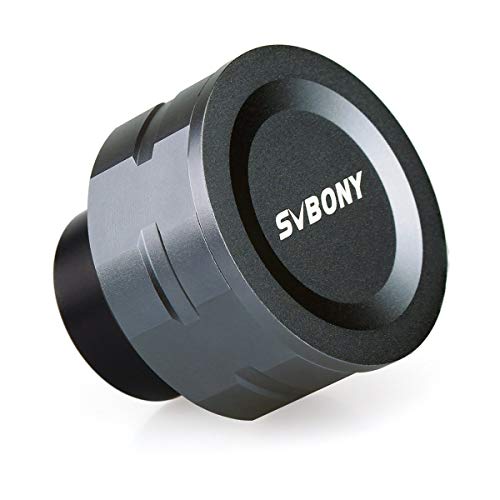
The SVBONY SV105 is designed as a beginner-friendly entry point into astronomical imaging. It uses an IMX307 color sensor and functions as an electronic eyepiece that can connect directly to a laptop for real-time viewing and capture. While not a high-end dedicated astrophotography camera, the SV105 is suitable for lunar and planetary shots and quick moon-planet videos. It supports Windows with Sharpcap Capture and Linux with AstroDMx Capture, plus Android via USB Camera, making it a flexible starter kit for hobbyists exploring the night sky.
MOVE SHOOT MOVE Dew Heater Strip for Lenses

This flexible dew heater strip helps prevent condensation on lenses and telescope optics during cold nights, a common challenge in astrophotography. The neoprene-wrapped heater remains pliable at subfreezing temperatures, reducing heat loss and maintaining image quality during long exposures. The device provides fast warming to approximately 167°F with an integrated temperature regulator offering three levels. It’s compatible with a range of lenses and telescope barrels and helps ensure steadier captures from dew and fog that can ruin star images.
Big Mike’s 500mm/1000mm Telephoto Lens for Canon

This high-power telephoto lens offers substantial reach for wildlife, landscapes, or celestial subjects when paired with a camera body. The 500mm focal length, with the option to double via a 2x teleconver ter to reach 1000mm, opens opportunities for distant astrophotography such as star clusters or planets with appropriate tracking. The lens is designed for Canon EOS DSLR compatibility with EF-mount compatibility, emphasizing robust optical performance and a practical extension for night sky photography with careful exposure planning and tripod support.
Sigma 16mm f/1.4 DC DN Contemporary for Sony E
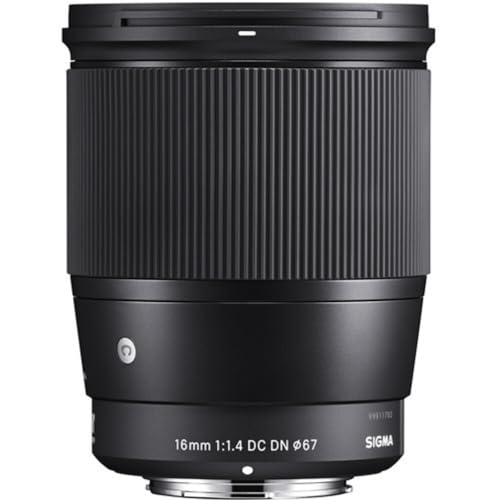
The Sigma 16mm f/1.4 DC DN Contemporary is a wide prime for Sony E-mount cameras, delivering exceptional low-light performance due to its bright f/1.4 aperture. This lens is well-suited to night sky photography, including Milky Way core shots and star-field landscapes, where a wide field of view and strong light-gathering ability are critical. Its optical design emphasizes high image quality with sharp corners and minimal coma at wide apertures, making it a strong choice for astrophotographers using Sony systems.
Rokinon 135mm F2.0 Telephoto Lens for Canon
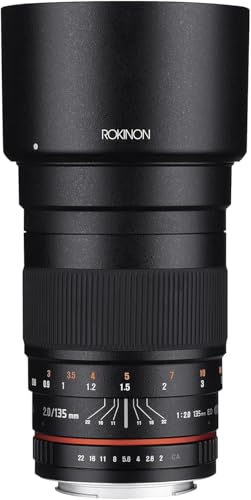
The Rokinon 135mm F2.0 is a fast telephoto option that can bring distant celestial targets into view with detail. It’s compatible with full-frame and APS-C formats and offers a wide aperture range of f/2.0 to f/22. The lens features Ultra Multi-Coated (UMC) optics to minimize flare and maintain contrast across a night sky scene. With a relatively modest working distance, it’s a practical step up for astrophotographers looking to isolate star clusters or bright deep-sky objects against a dark sky.
Buying Guide: Key Purchase Considerations for Budget Astrophotography Lenses
- Sensor compatibility: Ensure the lens or camera system matches your gear (Canon RF, Sony E, etc.).
- Aperture and light gathering: Wider apertures (lower f-number) capture more starlight but may demand careful focusing and coma management at the edges.
- Focal length choices: Ultra-wide lenses maximize sky coverage; telephotos reveal details on planets or distant clusters. Consider necessary framing and tracking capabilities.
- Optical quality vs. budget: Look for coatings, anti-reflection performance, and how coma is controlled at wide angles. Sigma and Rokinon offerings often balance cost and quality well.
- Focusing mechanisms: STM and similar motors help with video, but astrophotography often relies on manual focusing. Check for easy infinity focus and smooth handling in cold temps.
- Dew prevention: Dew and fog jeopardize captures in damp conditions. Dew heaters and strips can stabilize sessions, especially in higher humidity or winter nights.
- Mount and stability: Tripod and tracking mounts are crucial for long exposures. A stable base reduces star trails and ensures sharp images over time.
- Software compatibility: Some cameras pair with specialized capture apps (SharpCap, AstroDMx) for real-time viewing and stacking. Ensure your setup supports your workflow.
- Expandability: Consider accessories like teleconverters, filters, and additional lenses to broaden your night-sky toolkit without a large upfront investment.
- User experience: For beginners, a starter kit with clear manuals and widely supported drivers makes learning smoother and reduces setup time.
In evaluating options, balance the field of view, brightness, and image quality against your budget and planned astrophotography style. The listed lenses and accessories cover a spectrum from ultra-wide landscapes to distant planetary shots, offering flexible paths into celestial imaging without overspending.