Best DSLR With Mic Input: Top on-Camera Mics for Clear Video Audio
Answering the need for quality on-camera audio, these mics connect to DSLR setups to deliver clear, professional sound. Best for vloggers, documentary shooters, and hobbyists who want plug-and-play audio without extra recorders. The top picks below are optimized for DSLRs with 3.5mm mic inputs and offer power from plug‑in power or camera jacks. See a quick product snapshot table to compare core specs at a glance.
| Product | Best For | Key Benefit |
|---|---|---|
| COMICA CVM-V30 LITE (Black) | Vloggers and interviewers | Plug‑in power, universal 3.5mm compatibility |
| Movo VXR10 | Travel shooters | Solid build, no batteries, wide device compatibility |
| Deity V-Mic D4 Mini | Compact setups | Aux 3.5mm input for lav mics and flexible plugging |
| Movo X1‑Mini | Multi-device creators | 3.5mm and USB‑C options, durable build |
| Movo VXR10‑PRO | Professional micro‑vloggers | Rycote Lyre shock mount, plug‑and‑play |
COMICA CVM-V30 LITE Video Microphone

The COMICA CVM-V30 LITE is a compact on‑camera shotgun mic designed for DSLR rigs, cameras, and smartphones with a 3.5mm mic jack. It uses plug‑in power from the camera or phone, avoiding battery draw and reducing handling noise. A key feature is the universal compatibility that allows quick switching between camera or phone modes without extra adapters. This makes it well suited for quick interviews, YouTube vlogs, and run‑and‑gun filming where simplicity matters. Best for creators who want a lightweight, easy setup with dependable on‑camera audio.
- Pros: No battery required, easy plug‑and‑play setup, effective shocks to reduce vibration noise.
- Cons: Some users may prefer a longer cable or higher‑end capsule for very noisy environments.
Movo VXR10 Shotgun Microphone

The Movo VXR10 provides a compact shotgun option for DSLR users needing clear focus on voice with decent isolation from background noise. Built for durability, its aluminum body resists wear in field shoots. It ships with cable options to connect to cameras and phones, though some newer devices may require adapters. This mic is best for creators who need a ready‑to‑go solution that travels well and still delivers professional voice clarity on a DSLR or smartphone.
- Pros: Solid build, easy to carry, universal fit with included cables.
- Limitations: Some smartphone models require adapters for optimal compatibility.
Deity V‑Mic D4 Mini
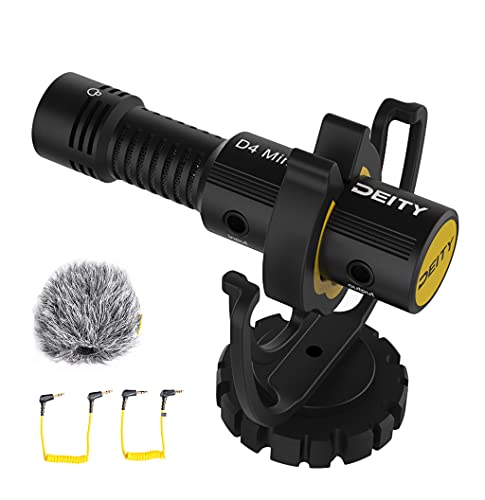
The Deity V‑Mic D4 Mini is a compact, battery‑free on‑camera mic powered by the camera’s plug‑in power, with a 3.5mm AUX input that enables feeding audio from an external lavalier or receiver. It includes a TRS to TRRS cable to work with smartphones, expanding its use beyond cameras. This mic suits creators who want flexibility to add lav mics or wired accessories without changing rigs or carrying extra power sources.
- Pros: Battery‑free, versatile input options, compatible with phones via included cable.
- Limitations: Some users may need adapters or dongles for certain devices beyond standard 3.5mm jacks.
Movo X1‑Mini Video Shotgun Mic

The Movo X1‑Mini is designed for cross‑device use, including iPhone, Android devices, cameras, and laptops. It supports 3.5mm analog audio input and digital USB‑C output, offering flexible recording paths for creators who work across platforms. With a sturdy aluminum build and integrated shock mount, it reduces handling noise and provides reliable sound in on‑the‑go shoots. It is best for multi‑format creators who need one mic for several rigs.
- Pros: Universal compatibility, durable construction, dual output options.
- Limitations: Some setups may require adapters for newer devices or digital modes depending on the device interface.
Movo VXR10‑PRO Professional Microphone

The Movo VXR10‑PRO is a refined shotgun mic built for professional video creators. It emphasizes focused supercardioid pickup to isolate the subject’s voice from background noise. It includes an advanced shock mount (Rycote Lyre) to virtually eliminate handling noise and vibrations. It draws power from the connected device, making it plug‑and‑play with cameras or smartphones. This microphone is best for filmmakers and content creators who require studio‑like clarity on set without heavy gear.
- Pros: Superior isolation, high‑quality shock mount, plug‑and‑play simplicity.
- Limitations: The sonic edge may be less forgiving in very windy or reflective environments without proper wind protection.
Buying Guide: How to Choose the Right DSLR Mic with a Mic Input
What matters most for DSLR mics with mic inputs?
Key considerations include compatibility with your camera’s 3.5mm jack, power type (plug‑in vs. battery), and the mic’s pickup pattern. A super‑cardioid design helps limit ambient noise while focusing on the subject. A plug‑in power mic reduces battery management and is ideal for longer shoots. For crowded environments, a model with a quality shock mount helps minimize handling noise.
Should you prioritize universal compatibility or device specificity?
Universal mics simplify gear lists when you shoot across multiple devices. If you mostly film with a DSLR, prioritize camera compatibility and a stable 3.5mm connection. If you also shoot with phones or tablets, look for mics that ship with TRS to TRRS cables or adapters to ensure seamless use on all devices.
What about wind, wind protection, and weather?
On‑camera mics may pick up wind noise. Choose a mic with an integrated shock mount and consider adding a windscreen or deadcat when shooting outdoors. The right wind protection helps preserve voice intelligibility in breezy environments.
How to assess audio quality without hands‑on testing?
Look for mics offering compact form factors with sturdy construction and plug‑in power. For Vloggers and interviewers, prioritize a mic that excels at voice clarity and minimal ambient noise. For on‑the‑go creators, a rugged build and universal compatibility are valuable.
What makes a mic “best for” different users?
Best for vloggers: lightweight, USB‑C or 3.5mm flexible, easy cable management. Better for interviewers: tighter pickup pattern and wind protection. Choose this if you need reliable audio in dynamic shoots. Avoid this if you require long‑range pickups or XLR compatibility without adapters.
FAQ
- What is the advantage of a plug‑in powered on‑camera mic?
It reduces battery management and often minimizes handling noise because the mic draws power directly from the camera. - Do I need adapters for my smartphone?
Some mics include TRS to TRRS cables to work with phones; others may require a separate adapter or dongle depending on your phone’s 3.5mm jack and digital inputs. - Is a higher price always better for DSLR mics?
Not always. Value comes from how well the mic matches your camera, shooting style, and environment. Look for the best balance of build, compatibility, and noise rejection. - What pickup pattern should I choose?
Supercardioid or cardioid patterns offer better isolation from ambient sound, which is helpful in busy environments. - Can I use these mics with cameras that have USB‑C inputs only?
Some mics provide USB‑C or USB‑A outputs; others rely on 3.5mm jacks. Check device compatibility and cables included to avoid nonfunctional setups.