Best Full-Frame Telephoto Lenses for High-Reach Photography
For photographers aiming to capture distant action, wildlife, or sports with pristine clarity on a full-frame body, a telephoto zoom lens is essential. This guide highlights five top full-frame telephoto lenses available on Amazon, explaining what each one brings to the field, from fast apertures to versatile focal ranges. Read on to compare build quality, optical performance, stabilization, and autofocus toward making a well-informed purchase.
The table below summarizes five selected lenses, including key focal ranges, maximum aperture, and standout features. Use this at-a-glance reference to pair with your photographic needs.
| Product | Brand | Focal Range | Max Aperture | Key Features |
|---|---|---|---|---|
| Sony FE 70-200mm F2.8 GM OSS II | Sony | 70-200mm | f/2.8 | XD Linear Motors, constant f/2.8, advanced coatings, movie-friendly focus control |
| Canon RF 70-200mm F2.8L IS USM | Canon | 70-200mm | f/2.8 | Image stabilization, lightweight for its class, fast AF |
| Sony FE 200–600mm F5.6–6.3 G OSS | Sony | 200-600mm | f/5.6-6.3 | Internal zoom, powerful reach, five ED elements, Nano AR coating |
| Tamron 150-500mm F5-6.7 Di III VC VXD | Tamron | 150-500mm | f/5-6.7 | VC stabilization, VXD focus, compact for its range |
| Tamron 70-180mm F2.8 Di III VC VXD G2 | Tamron | 70-180mm | f/2.8 | Very fast AF, compact and light, strong stabilization |
Sony FE 70-200mm F2.8 GM OSS II Review
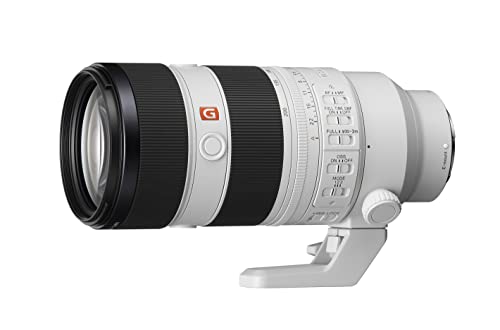
The Sony FE 70-200mm F2.8 GM OSS II is a high-performance telephoto zoom designed for full-frame E-mount bodies. It uses two aspherical elements and one XA (extreme aspherical) element to maintain resolution across the frame, with two ED and two Super ED elements to minimize chromatic aberration. Nano AR II coating reduces flare, while XD Linear Motors deliver fast, silent AF suitable for both stills and video. The lens supports extenders for added reach, though those are sold separately. Movie-friendly design minimizes focus breathing and axis shift while zooming, with independent focus, zoom, and iris rings.
Nikon Z5 II with Telephoto Zoom Lens

The Nikon Z5 II kit emphasizes full-frame performance with a 24.5 MP BSI-CMOS FX-format sensor and EXPEED 7, delivering up to 30fps in some modes and robust autofocus detection across multiple subject types. It features up to 7.5 stops of built-in IS and improved low-light AF down to -10 EV. An immersive electronic viewfinder and dual SD UHS-II slots support fast, reliable field work, while the telephoto zoom capability adds versatility for wildlife and sports capture on Nikon’s Z mount.
Canon RF70-200mm F2.8 L IS USM

Canon’s RF 70-200mm F2.8 L IS USM is a fast, versatile telephoto zoom with a bright f/2.8 aperture across the zoom range. It features optical image stabilization, a compact build for its class, and the rugged, weather-sealed construction typical of Canon L series lenses. The RF mount enables fast autofocus and excellent collaboration with Canon’s latest mirrorless bodies, especially for sports and wildlife shooters who need reliable performance in varying light.
Tamron 150-500mm F5-6.7 Di III VC VXD

The Tamron 150-500mm Di III VC VXD is a long-range telephoto zoom designed for full-frame Sony E-mount. It combines substantial reach with a compact, portable design and a VXD fast autofocus system. Built-in VC stabilization helps in handheld shooting, and the optical design aims to minimize aberrations across the zoom range. This lens offers a balanced option for wildlife and sports photographers who require extended reach without carrying very large gear.
Tamron 70-180mm F2.8 Di III VC VXD G2

The Tamron 70-180mm F2.8 Di III VC VXD G2 is a compact, fast-standard telephoto zoom for Sony α. It pairs a constant f/2.8 aperture with a refined VC stabilization system and a high-speed focus mechanism for both stills and video. Its reduced weight and size make it a practical choice for travel and field work where a lighter setup matters, while retaining excellent image quality and subject isolation at mid-telephoto lengths.
Buying Guide
When choosing a full-frame telephoto lens, consider these factors to match your shooting style and camera system:
- Distance and subject distance: For wildlife and sports, longer reach (200–600mm) helps you stay distant yet intimate with action; for portraits or closer action, 70–180mm can provide flattering compression and background separation.
- Aperture and light: Constant f/2.8 lenses excel in low light and offer shallow depth of field at longer focal lengths, but they’re heavier and more expensive. Variable or slower apertures save weight and cost for casual use.
- Autofocus performance: Look for fast, accurate AF with subject-tracking, especially for moving subjects. Lenses with linear motors or dedicated focusing mechanisms generally perform better for video and action.
- Stabilization: Image stabilization helps when shooting handheld at long focal lengths. Some lenses include optical IS, and in-body stabilization complements lens stabilization in many camera bodies.
- Weight and handling: Telephoto primes and pro zooms can be heavy. Consider a monopod or tripod collar if you shoot long sessions or in wildlife scenarios.
- Compatibility and ecosystem: Ensure the lens mount matches your camera system (Sony E, Canon RF, Nikon Z, etc.). Native lenses typically offer the best autofocus performance and weather sealing.
- Cost of ownership: Telephoto zooms with stabilization and fast AF tend to be pricier. Assess whether you need professional-grade weather sealing and build quality for field use.
Across the five lenses highlighted, you’ll find options that balance reach, speed, and portability for different kinds of full-frame shooting. If you primarily shoot wildlife or sports at a distance, the longer reach of the Sony 200–600mm or Tamron’s 150–500mm may be preferred. For studio or event photography with reliable subject tracking, the Canon RF 70-200mm and Sony 70-200mm GM II remain strong all-around choices. The Tamron 70-180mm G2 provides a compact, fast alternative for those who value travel-friendly gear without sacrificing image quality.