Best Infrared Wildlife Cameras With Motion Sensor for Wildlife Monitoring
For outdoor security and wildlife observation, infrared trail cameras with motion sensors provide reliable nighttime monitoring without disturbing animals. This guide highlights five top options known for strong night vision, fast trigger speeds, and durable builds. Each entry includes key imaging capabilities, detection ranges, and practical uses for wildlife tracking, hunting, and property security. Compare features, reliability, and power options to choose the right camera for your terrain and local wildlife activity.
| Product | Brand | Key Highlight | Night Vision Range |
|---|---|---|---|
| GardePro E5S Trail Camera | GardePro | 64MP stills, 1296p HD video | Up to 100 ft |
| Meidase P70 Trail Camera | Meidase | No-Glow IR night vision | Up to 100 ft |
| GardePro E6 Trail Camera | GardePro | Wi‑Fi for easy setup | Not specified |
| MAXDONE Trail Camera | MAXDONE | 4K video, solar charging | Not specified |
| GardePro A3 Trail Camera | GardePro | No Glow night vision, 64MP | Up to 100 ft |
These cameras cover a range of needs—from high-resolution daytime imagery to robust no-glow nighttime performance and solar-assisted power options. Each model is designed to withstand weather and operate autonomously, reducing the need for frequent site visits. The list below focuses on infrared, motion-triggered cameras that deliver reliable results for wildlife monitoring, hunting, and property surveillance.
GardePro E5S Trail Camera Review

The GardePro E5S delivers 64MP still images and 1296p HD video, with an optical lens featuring a large f/1.6 aperture and a high-sensitivity image sensor that captures more light at night. Its night vision supports up to 100 feet, and H.264 video encoding ensures compatibility with common media players. A pre-activated motion detection system enables a fast 0.1s trigger speed and a 90-foot detection range, reducing missed moments during nighttime activity. Built for rough outdoor conditions, this model is a strong all-around choice for wildlife observation and hunting setup.
Meidase P70 Trail Camera Overview

The Meidase P70 features crystal-clear 64MP photos and 1296p HD video, with an f/1.6 aperture lens for strong low-light performance. It uses No-Glow IR night vision with 100-foot effective range to minimize disturbance to wildlife. The camera offers a rapid 0.1s trigger speed and a reliable motion detection system that recognizes motion quickly, making it ideal for capturing fast-moving wildlife and shy deer without alerting animals to the presence of the camera.
GardePro E6 Trail Camera With Wi-Fi

The E6 emphasizes wireless convenience, offering a low-power Wi-Fi and Bluetooth connection with the GardePro Mobile app, enabling easy remote operation and status checks. It features a wide 110° field of view, 48MP stills, and 1296p HD video, with H.264 encoding for compact file sizes. The camera supports stable data transfer to a connected device and maintains reliable operation with a dedicated antenna to minimize Wi-Fi dropouts in the field.
MAXDONE Trail Camera With Solar Power
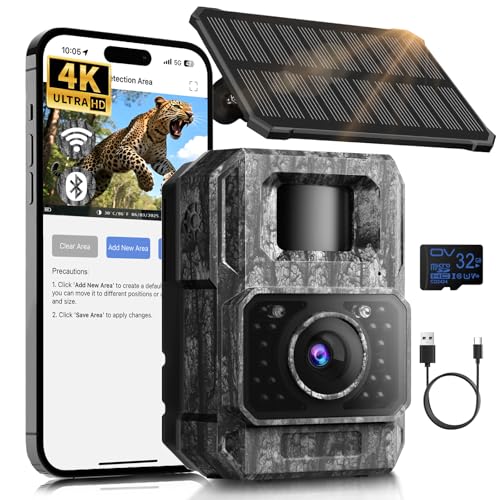
MAXDONE blends solar charging with a rechargeable 6000mAh lithium battery, enabling longer operation in remote locations. The camera supports 4K video and 64MP photos, delivering high-resolution daytime imagery and detailed nighttime footage. A detachable solar panel and multiple charging modes help extend field life, while a WiFi and Bluetooth pairing option allows quick data transfers via the TrailCamGO app, making it practical for long-term scouting and surveillance.
GardePro A3 Trail Camera Review

The GardePro A3 uses Sony Starvis sensors and a premium lens to produce high-quality color images in low light and robust night vision out to 100 feet. It records 1080p or 1296p video and includes a micro microphone for clearer sound. The camera’s light-off infrared system helps preserve nocturnal behavior while capturing vivid nighttime activity, making it suitable for wildlife surveys and stealth surveillance in rural or forested settings.
Buying Guide: Key Purchase Considerations
- Night vision range and quality: Look for No-Glow LEDs or infrared systems that minimize animal disturbance while delivering clear footage at your typical observation distance.
- Trigger speed and recovery: A faster trigger (0.1s or faster) improves chances of capturing fast-moving wildlife; recovery time affects how many frames you can record after a trigger.
- Image and video resolution: Higher megapixels and 4K or 1296p video offer more detail but require more storage; balance with your storage strategy.
- Power options: Solar charging, rechargeable batteries, and low-power Wi-Fi can reduce field maintenance; consider climate and sun exposure when planning solar setups.
- Wireless features: Built-in Wi-Fi or Bluetooth with a mobile app simplifies configuration and real-time monitoring, especially in remote locations.
- Durability and weather resistance: IP66 or higher ratings ensure resilience against rain, dust, and temperature changes; rugged housings are beneficial for long-term outdoor use.
- Field placement and ethics: Position cameras to minimize human encounters and avoid interfering with wildlife; ensure legal compliance and property permissions before deployment.
- Storage and data management: Consider whether the camera uses microSD cards, cloud options, or local backups; plan for data retrieval frequency to prevent overwriting important clips.
In evaluating these infrared wildlife cameras, prioritize the balance between night-time performance and maintenance needs. Choose models with proven trigger speed, solid build quality, and power options that fit your deployment site. The selections above provide versatile choices for different monitoring goals—from discreet nocturnal observation to robust, app-enabled field management.