Best Low Glow Trail Cameras for Quiet Night Monitoring
Trail cameras with low glow or no glow flash are ideal for discreet wildlife monitoring, security, and formal scouting without spooking animals. This guide highlights five top choices that balance image quality, night performance, and connectivity. Each model offers distinct strengths—from nationwide cellular access to advanced night vision—so you can pick the best fit for your needs.
| Product | Brand | Key Features |
|---|---|---|
| Moultrie Edge 2 Cellular Trail Camera | Moultrie | Auto Connect 4G LTE, 36MP photos, 1080p video, low glow flash |
| VOOPEAK Trail Camera | VOOPEAK | WiFi connectivity, 32MP photos, 1080p video, low glow IR |
| GardePro A3S Trail Camera | GardePro | 64MP images, 1296p video, 100ft no-glow night vision |
| Moultrie Edge 3 Cellular Trail Camera | Moultrie | Multi-carrier Auto-Connect, 40MP, GPS, AI buck detection |
| Moultrie Edge 3 Solar Kit Trail Camera | Moultrie | Solar kit, 40MP, Auto-Connect, AI buck detection |
Moultrie Edge 2 Cellular Trail Camera

The Moultrie Edge 2 uses Auto Connect nationwide 4G LTE compatibility to simplify setup on major U.S. networks without manual SIM swaps. Support is U.S.-based, and the camera targets reliable field performance with straightforward service options. Its high-resolution imaging captures 36MP photos with 1080p video that includes HD audio, improving the clarity of wildlife activity day or night.
Night and day footage benefit from a low glow flash that remains unobtrusive to wildlife. The camera emphasizes scouting freedom with flexible data plans starting at modest monthly rates, enabling year-round monitoring without long-term contracts. This model is suitable for users who want strong connectivity with minimal ongoing commitments.
VOOPEAK Trail Camera

This model focuses on instant connectivity with Wi-Fi for direct phone access via the Waskame app. It ships with a pre-installed 32GB SD card and batteries, allowing rapid deployment out of the box. The 32MP image capability paired with 1080P HD video delivers detailed night footage using a 130° wide angle, and the low glow infrared LEDs minimize disturbance to wildlife while extending their active windows.
The playbook emphasizes ease of use: plug-and-play installation, quick mounting straps, and real-time monitoring without constant SD card handling. Real-time sharing and near-field transfers reduce the need to pull memory cards, making it a practical option for hunters and wildlife observers who value swift setup and immediate insights.
GardePro A3S Trail Camera
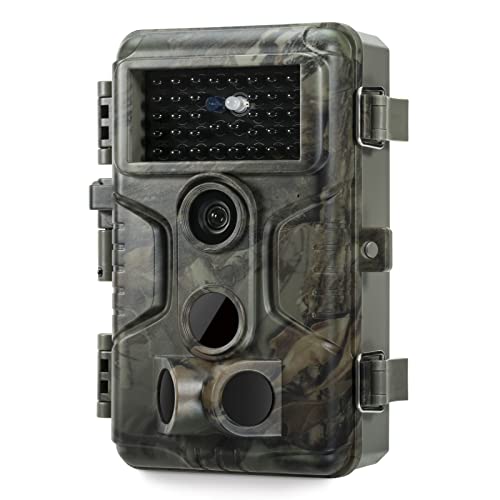
The A3S comes with a Sony Starvis sensor and no-glow infrared LEDs that deliver crisp images up to 100 feet at night, prioritizing stealth and clarity in low-light conditions. The 64MP sensor provides striking still images, supported by a high-quality optics system and advanced tuning to enhance overall image fidelity.
Video recording supports HD quality with H.264 encoding, and an integrated microphone captures natural sound for a more immersive wildlife view. Its balance of high-resolution stills and detailed video makes it suitable for both qualitative wildlife analysis and property surveillance where discretion is valued.
Moultrie Edge 3 Cellular Trail Camera

The Edge 3 extends multi-carrier Auto-Connect across four major U.S. networks for seamless data transmission and quick setup. It includes onX Hunt integration with a three-month Elite membership, enabling premium maps, land data, and camera integrations to optimize scouting. The camera supports high-resolution 40MP photos and 1080p video, with GPS-based features and AI buck detection for more precise wildlife tracking.
Typical use scenarios include monitoring large properties, chasing trail activity, and coordinating camera placements with geographic data. Its suite of features emphasizes connectivity, geolocation intelligence, and hunting-focused tools, making it a robust option for serious observers and land managers.
Moultrie Edge 3 Solar Kit Trail Camera

This variant pairs the Edge 3 with a built-in solar kit, helping extend field operation in remote locations. It maintains multi-carrier Auto-Connect and 40MP HD photo capture with 1080p video and low glow flash. The solar option reduces downtime for field deployments, particularly in areas with limited access to power sources.
As with the standard Edge 3, the model emphasizes durability and reliability in outdoor environments, with rugged construction designed to withstand varying weather conditions while delivering consistent monitoring results and AI-powered wildlife detection features.
Buying Guide: Key Purchase Considerations
- Connectivity: Consider whether you prefer cellular with Auto-Connect across multiple carriers or local Wi-Fi for direct monitoring. Cellular plans vary by provider and data usage, so factor in your scouting frequency and field location.
- Image and Video Quality: Higher MP counts and 1080p or 1296p video deliver crisper footage, especially in low light. Balance resolution with storage capacity and battery life.
- Night Vision: Low glow vs no glow affects wildlife disturbance and image clarity. No glow is typically stealthier, while low glow can extend range in darker settings.
- Trigger Speed: Faster trigger speeds (0.1s range) reduce missed shots, important for fast-moving wildlife.
- Power and Durability: Solar kits and rugged housings help in remote or long-term surveillance. IP ratings (e.g., IP66) indicate water and dust resistance.
- GPS and Mapping: Features like onX Hunt integration add value for land navigation, public/private land data, and camera placement optimization.
- Memory and Storage: Pre-installed SD cards and internal memory options affect how much footage you can store before offloading.
- Ease of Use: Out-of-the-box setup, app usability, and quick mounting options influence initial convenience and ongoing monitoring efficiency.
- Privacy and Ethics: Ensure operation complies with local regulations and property rights, particularly with no-glow devices that operate stealthily.
When selecting a low glow or no glow trail camera, weigh the importance of connectivity against image fidelity, night performance, and field practicality. If frequent remote monitoring is essential, a cellular model with Auto-Connect and service flexibility offers the most convenience. For close-range, stealthy surveillance, a high-resolution no-glow unit with robust night vision and a strong optics system may be preferable. Solar-assisted options are ideal for long-term deployments in locations with limited power access.