Best Micro Four Thirds Macro Lenses and Accessories for Close-Up Photography
For enthusiasts using Micro Four Thirds (MFT) cameras, achieving sharp macro detail often means choosing the right combination of lenses, extension tubes, and helicoid adapters. This guide highlights five relevant options that help you extend your macro capabilities on MFT bodies, from dedicated macro lenses to handy extension tubes and focusing helicoids. Each pick is paired with its key features to help you compare options and assemble a versatile micro four thirds macro setup.
Summary of Selected Products
- Meike MK-P-AF3A Automatic Extension Tube For Olympus Panasonic Micro Four Thirds
- JJC Micro 4/3 Auto Focus Macro Extension Tube Set
- TTArtisan 35mm F1.4 APS-C Macro (M4/3 Mount) Lens
- 7artisans 60mm F2.8 II APS-C Macro for M4/3 Mount
- Fotasy M42 to M4/3 Focusing Helicoid Adapter
Meike Automatic Extension Tube For M4/3 System

Meike’s MK-P-AF3A extension tube is designed specifically for interchangeable MFT lenses. Built with a metal auto-focus capable body and plastic interior, this tube enables closer focusing without introducing a heavy lens stack. It’s ideal for compact macro work when you want to push lens focus closer to your subject. The electronic contacts support autofocus after installation, which can significantly speed up your macro workflow. This tube is an affordable way to convert ordinary zooms or primes into macro-capable gear, expanding your close-up possibilities without purchasing a dedicated macro lens.
JJC Micro 4/3 Auto Focus Macro Extension Tube Set

The JJC macro extension tube set combines aluminum for the camera mount and brass for the lens mount with a high-quality ABS tube. This construction supports sturdy build quality while maintaining light weight. The tubes shorten the minimum focusing distance, turning almost any lens into a macro lens and helping you capture fine details up close. The setup supports full autofocus and auto exposure, making macro shooting practical without manual-only constraints. It’s a flexible option for those who want to retrofit existing lenses for macro tasks without splurging on new glass.
TTArtisan 35mm F1.4 Macro-Style Lens For MFT Mount

TTArtisan’s 35mm F1.4 is a compact, lightweight prime that brings a fast f/1.4 aperture to Micro Four Thirds systems via an APS-C designed lens adapted for MFT. While not a dedicated macro, its close focusing performance (with a minimum distance around 0.28 m) and bright aperture make it a strong option for shallow depth of field and creative macro-like close-ups when paired with extension tubes or a helicoid. The lens uses a durable aluminum alloy, ensuring robust build quality for field work. It’s especially appealing for shooters who want a still-high-quality prime with good low-light performance and the ability to frame tighter macro-style compositions.
7artisans 60mm F2.8 II Macro For M4/3 Mount

This 60mm macro lens from 7artisans is designed for M4/3 cameras with macro capability and a 1:1 magnification. It features a manual focus design, a bright f/2.8 aperture, and includes an internal optical arrangement of 11 elements in 8 groups with 9 diaphragm blades. The minimum focusing distance is about 175mm, enabling close-up shots with clear subject separation and pleasing background blur. The design emphasizes portability and solid optical performance, and the lens uses high-quality materials to maintain sharpness across the frame, making it a practical pick for portraiture and macro detail alike when working with MFT bodies.
AMOPOFO 55mm To M4/3 Macro Ring Reverse Adapter
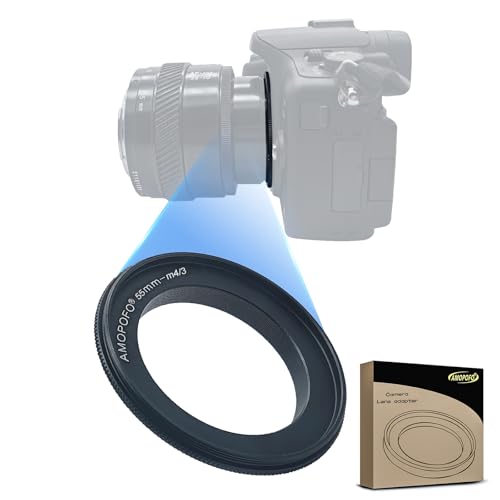
The AMOPOFO reverse ring enables macro shooting by reversing a 55mm lens and mounting it to an M4/3 body via the adapter. This technique is popular for achieving high magnification at very close distances. The setup is straightforward: remove the lens, attach the reverse adapter to the camera, and screw the lens onto the adapter by its filter threads. This option is best for photographers who want extreme magnification in a compact package with minimal additional optics, though it requires manual control and careful handling to maintain focus accuracy and exposure control.
Buying Guide: Key Purchase Considerations For MFT Macro Gear
- Purpose and magnification: For true macro with 1:1 reproduction, prioritize dedicated macro lenses (like 60mm options) or high-quality macro tubes/helicoids. If you mainly need close-ups, extension tubes and reverse rings offer flexible, budget-friendly paths.
- Optical quality and compatibility: Check the mount compatibility with Micro Four Thirds bodies and whether the accessory maintains autofocus or requires manual focusing. Aluminum and brass components tend to offer durability; ABS tubes keep the kit lighter.
- Working distance and minimum focus: Shorter minimum focusing distance enables closer subject capture; consider 0.28m or similar metrics for better close-up detail. Conversely, larger focal lengths (e.g., 60mm) sustain working distance while keeping magnification practical.
- Weight and balance: Extension tubes and helicoids add weight and alter balance. If you frequently shoot handheld, balance and grip will influence comfort and stability.
- Image quality and color: Macro setups can introduce vignetting or color fringing if not matched well. Look for tubes and adapters designed for MFT to minimize optical compromises.
- Cost vs. value: Extension tubes and helicoids are budget-friendly when compared to premium macro lenses. Weigh the cost against expected magnification, autofocus performance, and build quality to choose wisely.
In macro work within the Micro Four Thirds ecosystem, the combination of tubes, a reliable lens, and an adjustable focus accessory often yields the best results. For quick conversions, a couple of extension tubes paired with a standard lens can produce surprising macro magnification. For more control, a real macro lens (like 60mm) paired with a focusing helicoid can deliver sharp detail and flexible working distance. The options above cover both pathways, enabling you to tailor a macro setup that aligns with your subject matter, shooting style, and budget.