Best Night Vision Nature Cameras for Wildlife Watching and Outdoor Monitoring
Answering the needs of outdoor enthusiasts and wildlife observers, these night vision nature cameras deliver reliable motion-activated recording, long-range infrared, and rugged durability. The top picks below are best for wildlife monitoring, hunting prep, backyards, or property security. Each entry notes who it’s best for and why it stands out, with practical cautions where applicable. A quick buyer table follows to compare key traits at a glance.
| Product | Best For | Key Benefit |
|---|---|---|
| MAXDONE Solar Trail Camera | Solar-powered monitoring, consistent energy | Rechargeable battery with solar charging, 4K/64MP capture, 65 ft night vision |
| Punvoe Trail Camera | Wide-angle wildlife surveys | 64MP/4K with 130° field of view and fast trigger |
| WOSORTS Trail Camera (56MP) | Budget-friendly high-res scouting | 0.2s trigger, 80 ft night range, LCD screen |
| GardePro E5S | Low-light environments | 64MP photos, 1296P video, IP66 durability |
| Meidase P70 | Clear night footage | 64MP photos, 100 ft no-glow infrared |
MAXDONE Solar Trail Camera with 4K Video and 64MP Photos

The MAXDONE camera is designed for energy-efficient outdoor monitoring. It features a built-in 5200mAh rechargeable battery with solar charging, making maintenance minimal. It supports WiFi6 and Bluetooth for fast app control within a short range, and delegates data locally to protect privacy. Night vision reaches up to 65 feet with 64MP photo output and 4K video, suitable for wildlife at dawn, dusk, and night. Best for remote locations where battery life matters and privacy is a priority.
Who it’s best for: outdoor enthusiasts who need long-term operation without frequent battery changes and want private, local data access. Caution: built-in hotspot is not compatible with home WiFi networks.
WOSPORTS Trail Camera with 56MP 4K and Night Vision

The WOSPORTS model emphasizes a balance of high resolution and practical features. It records 56MP photos and 4K video with a 0.2-second trigger speed and a 2.0-inch LCD color screen for quick on-site viewing. It uses 32 infrared LEDs to provide an 80-foot flash range, helping minimize visitor disturbance while capturing sharp night footage. Best for budget-conscious wildlife watchers who want quick review on site.
Who it’s best for: hunters, scouts, and homeowners seeking crisp daytime and night imagery without extra gear. Caution: no specified solar charging or cellular options; needs regular power source or batteries.
Punvoe Trail Camera 64MP with 100 ft Night Vision

The Punvoe camera delivers 64MP photos and 4K video with a 130° wide-angle view and 100-foot low-glow night vision. A 0.1-second trigger and adjustable PIR sensitivity help capture fast wildlife while reducing false positives. This makes it well-suited for expansive trails and property surveillance. Best for users who want broad coverage and detailed nighttime footage. Caution: requires SD card for storage.
WOSODA Two-Pack Trail Cameras with Night Vision

The WOSODA pair emphasizes quick responses and clear images in a compact package. Each camera supports 48MP photos with 1080P video, delivering high-quality daytime details and black-and-white nighttime shots. Included 2 x 32GB memory cards provide ready-to-use storage. Best for multi-site monitoring where simultaneous coverage is helpful. Caution: performance varies in extreme weather; consider extra protection in harsh climates.
GardePro A3S Trail Camera (Non-Cellular)
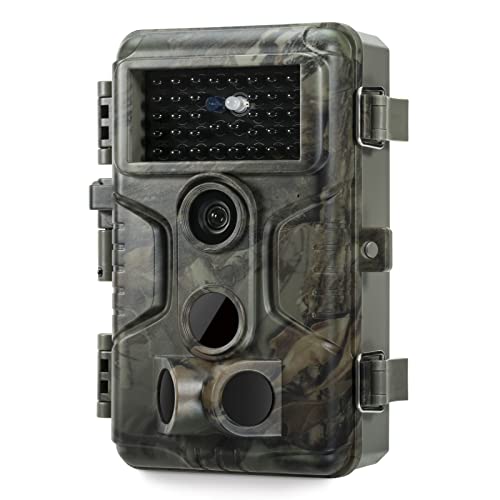
The GardePro A3S focuses on low-light performance with a Sony Starvis sensor. It captures 64MP photos and 1296P HD video with sound, offering clear footage when lighting is limited. Its non-cellular design prioritizes low power use and minimal disturbances, making it a good fit for quiet backyards and remote wildlife surveys. Best for observers who value high-quality nighttime capture without cellular connectivity. Caution: non-WiFi operation means manual data retrieval on SD cards only.
GardePro E5S Trail Camera (Non-Cellular)

The E5S advances with 64MP photos and 1296P HD video, plus a 0.1-second trigger and 100-foot no-glow night vision. It’s rugged and weather-resistant with IP66 protection, suitable for harsh outdoor environments. Best for wildlife watchers needing reliable night footage in challenging weather. Caution: heavier unit may require sturdier mounting.
VOOPEAK 4G LTE Cellular Trail Camera with Night Vision

This cellular model emphasizes easy setup and remote monitoring. It includes a pre-installed SIM card and includes 100MB of free data to start. It supports solar charging and offers both color daytime footage and infrared night vision. Best for remote sites where cellular access improves real-time monitoring. Caution: a data plan is required for remote viewing beyond initial free data. Storage card not included.
Meidase P70 Trail Camera
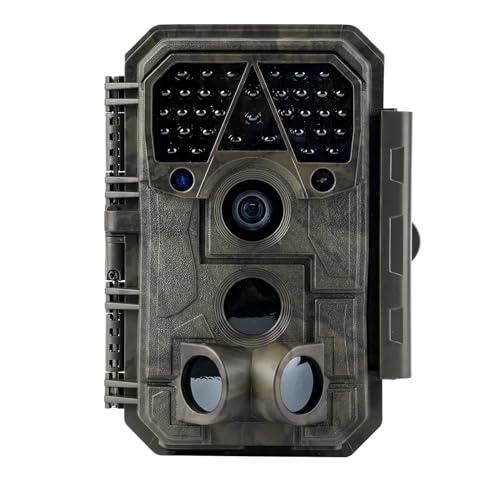
The Meidase P70 delivers 64MP photos and 1296P video with no-glow 100-foot infrared. It emphasizes fast 0.1-second trigger and a wide detection angle to capture more wildlife activity. Best for observers who need sharp nighttime footage with minimal disturbance. Caution: non-WiFi/non-cellular operation means manual data retrieval is necessary.
Buying Guide: Night Vision Nature Camera Essentials
What should you consider when choosing a night vision nature camera?
- Power Source: Do you need solar power, removable batteries, or cellular power options for remote sites?
- Night Vision Range: How far do you expect wildlife to appear at night, and does the camera offer low-glow infrared or color night modes?
- Trigger Speed and Sensitivity: Fast triggers capture quick movements; adjustable PIR sensitivity helps reduce false alarms.
- Storage and Video Quality: Look for 4K or 2K video options and high MP photos for clearer wildlife detail; consider memory card requirements.
- Durability: IP ratings (IP66, IP67) indicate weather resistance; choose units rated for your climate.
- Connectivity: Cellular, WiFi, and app controls affect remote viewing and setup ease; privacy considerations matter for data transfer.
- Field of View: A wide-angle lens reduces blind spots and increases coverage along trails.
Frequently Asked Questions
- What is the difference between no-glow and low-glow night vision?
- Do these cameras require WiFi to work?
- What should I consider for outdoor placement?
- Is a solar-powered camera reliable all year round?
- How important is trigger speed?
No-glow uses infrared LEDs that are invisible to animals, while low-glow emits a faint light that may be visible to sensitive wildlife but can provide clearer footage at longer distances.
Some models are non-cellular and non-WiFi, relying on SD cards, while others offer cellular or WiFi connectivity for remote viewing.
Choose weather-rated housings, proper mounting points, and consider sun exposure, wind, and potential interference from trees or brush.
Solar power reduces battery maintenance but depends on sun exposure and weather; consider backup charging options in heavy cloud seasons.
Faster triggers (sub-0.2 seconds) reduce missed moments, especially for fast-moving wildlife or small animals that pass quickly.