Best No-Flash Game Cameras for Quiet Wildlife Monitoring
No-Flash game cameras are ideal for wildlife observers who want discreet, nighttime footage without startling animals. This guide focuses on five reliable options that emphasize no-glow technology, stealthy operation, and solid image quality for American buyers. The top picks cover varying needs—from single-camera setups to compact mini designs and cellular models for remote monitoring. Whether you’re tracking deer, coyotes, or elusive nocturnal species, these no-flash cameras offer dependable performance and clear evidence of wildlife activity.
| Product | Best For | Key Benefit |
|---|---|---|
| Meidase P70 (Non-Cellular, Non-WiFi) | Budget-friendly solo setups | 64MP photos, 1296p video, 100ft no-glow night vision |
| OUTDOOR EXPERT Game Camera 20MP Mini | Compact, portable monitoring | IP66 waterproof, 20MP photo quality, 80ft night range |
| Meidase 2 Pack P70 | Multi-camera layouts | Same 64MP/1296p with no-glow night vision |
| Cuddeback CuddeLink Black Flash LL-3A | Silent multi-camera networks | No-glow 75ft LEDs, fast ¼ sec trigger |
| TACTACAM Reveal Ultra Cellular | Remote monitoring with live view | 4G cellular, GPS, no-glow/low-glow flash |
Meidase P70 Non-Cellular Trail Camera
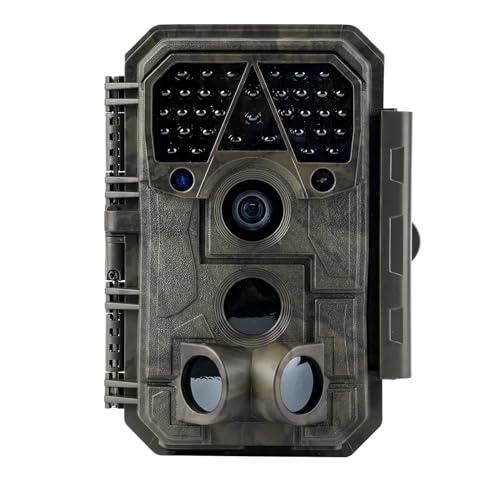
Best for solo, budget-conscious wildlife observers who want high still-image quality and reliable daytime recording without wireless connectivity. The Meidase P70 delivers crystal-clear 64MP photos and 1296p HD video, supported by a fast 0.1s trigger and no-glow 940nm LEDs for night footage. The rugged build and f/1.6 lens help capture detailed daytime and dusk activity. Best choice when you want strong image quality from a single, straightforward unit.
- 64MP stills and 1296p video
- 0.1s trigger speed
- 100ft no-glow night vision
Limitation: No cellular connectivity means you must retrieve data physically from the camera. Best for fixed-location setups with regular access.
OUTDOOR EXPERT 20MP Mini Game Camera

Better for portable, spot-check setups where a smaller camera is advantageous. This model records 20MP photos and HD video, with a compact exterior design that simplifies placement in tight spaces. It provides a solid night-vision range and IP66-rated protection against dust and water. Choose this if you need a discreet, easy-to-hide unit for quick wildlife surveys or temporary monitoring projects.
- 20MP images and HD video
- 80ft illumination range
- IP66 waterproof and dustproof
Caution: Slightly higher power draw than ultra-compact mini cams; ensure battery plan matches usage needs.
Meidase P70 Two-Pack

Best for multi-camera deployments where stealth and reliability matter. The two-pack mirrors the single-meidase P70’s 64MP and 1296p capabilities with no-glow night vision and motion activation. It’s ideal for setting up a small monitoring network in a wildlife corridor or around a feeder, allowing broader coverage with consistent image quality across units.
- Two cameras for expanded coverage
- 64MP / 1296p with no-glow IR
- Weatherproof and motion-activated
Limitation: Requires planning for SD card management and data retrieval from multiple devices.
Cuddeback CuddeLink Black Flash LL-3A

Best for stealthy, networked monitoring. The CuddeLink system lets you link up to 23 cameras, enabling remote checks without disturbing wildlife. The Black Flash uses a no-glow 940nm IR LED with a visible-light-free illumination range of about 75 feet. A fast ¼-second trigger captures quick movements. This is the pick for anyone building a silent monitoring grid across a property or remote area.
- CuddeLink wireless networking
- No-glow 940nm IR LEDs
- ¼-second trigger with multiple sensitivity settings
Limitation: Wireless networking may require compatible receivers and careful network planning for optimal performance.
TACTACAM Reveal Ultra Cellular

Best for remote observation with live access. The Reveal Ultra offers 4G cellular connectivity and live video/photo requests, plus GPS tracking for theft or relocation alerts. It supports both no-glow and low-glow flash options, enabling field adaptivity while preserving nighttime stealth. This model suits hunters and wildlife managers who need ongoing situational awareness from afar.
- Live video and photo requests
- GPS location tracking
- No-glow/low-glow flash options
Limitation: Cellular data plans apply; data costs can vary based on usage and plan selections.
Buying Guide: No-Glow Trail Cameras For Quiet Observation
What matters most when choosing no-flash cameras? Consider image quality, night performance, battery life, and data needs. If you need standalone reliability, a non-cellular model like the Meidase P70 provides top daytime detail and strong nocturnal footage. For remote or expansive sites, cellular options such as the TACTACAM Reveal Ultra or Cuddeback that support a network can reduce field visits for data retrieval.
- No-glow depth: Look for 940nm LEDs and large apertures for clearer night footage.
- Trigger speed: Faster triggers minimize missed moments, especially in fast-moving wildlife.
- Field of view and image specs: Higher MP and HD video improve evidence quality but require more storage.
- Power and mountability: IP ratings and compact form factors ease outdoor placement.
- Connectivity: Decide between standalone or cellular models based on how often you can access the camera.
Practical setup tips: Place cameras at animal travel lanes or feeding spots, test trigger sensitivity in advance, and set correct date/time stamps for consistent records. For multi-camera layouts, plan coverage to reduce overlap and optimize data collection efficiency.
Frequently Asked Questions
- What is a no-glow trail camera?
A no-glow trail camera uses infrared LEDs that emit no visible light, preventing wildlife disturbance at night.
- Do no-flash cameras require batteries or solar power?
Most rely on batteries; some cellular units offer solar options to extend field life.
- Are no-flash cameras suitable for long-term surveillance?
Yes, especially when stealth is a priority and you retrieve data regularly.
- Is cellular connectivity necessary for wildlife monitoring?
Not always, but it helps for remote sites where frequent visits are impractical.
- What should I consider when combining cameras?
Match field of view, trigger speed, and data management across units for consistent coverage.