Best Point and Shoot Macro Camera Options for Close-Up Lovers
Short answer: for macro-ready, easy-to-carry point-and-shoots, the Kodak PIXPRO and Panasonic models offer strong macro-friendly features, while the G-Anica and 5K/64MP kits add versatility for budding photographers. This guide highlights five compact cameras that balance close-up capability with everyday use, helping you choose what fits your macro needs, travel style, and ease of sharing.
Summary of selected products:
| Product | Best For | Key Macro/Close-Up Feature | Notes |
|---|---|---|---|
| Kodak PIXPRO FZ45 | Beginner shoppers seeking simplicity | 27mm wide-angle lens with 4X optical zoom | Full HD video, compact |
| G-Anica 5K 64MP Dual-Lens Kit | Vloggers and creative shooters | Macro lens plus 16X zoom, dual lenses | 180° flip screen, WiFi |
| Kodak PIXPRO AZ405-WH | Close-up flexibility at longer distances | 40X optical zoom, 24mm wide | High-resolution 20MP sensor |
| G-Anica 5K&64MP Kit | Travelers who want 5K and macro capability | 64MP, 16X zoom, macro lens | Fill light, flip screen |
| Panasonic LUMIX ZS99 | Travel and concerts, pocketable | 30x zoom (24-720mm), 4K | Tiltable screen, USB-C |
Kodak PIXPRO FZ45 Digital Camera

The Kodak PIXPRO FZ45 is a compact point-and-shoot built for straightforward everyday photography. It features a 16MP CMOS sensor for clear images and a 27mm wide-angle lens with 4X optical zoom, aiding closer-framing of small subjects or scenes with macro-friendly appeal. Full HD video adds another dimension for documenting close-up subjects in motion. Best for: casual shooters who want a simple, travel-ready camera that handles macro-friendly framing without specialized lenses. Caution: limited manual control may frustrate more advanced macro enthusiasts seeking precise exposure tuning.
G-Anica 5K Digital Cameras With Dual-Lens

This dual-lens kit from G-Anica combines a wide-angle lens with a macro lens, offering versatile macro-capable shooting alongside 5K/64MP image quality. The 180° flip screen makes self-recording easy, while built-in WiFi enables quick sharing of close-up shots and macro video clips. Best for: creators who want flexible macro options for product photos or nature close-ups and who value easy livestreaming or posting. Caution: the higher-resolution claims are marketing-oriented; practical results depend on lighting and stabilization in macro work.
Kodak PIXPRO AZ405-WH 20MP Digital Camera
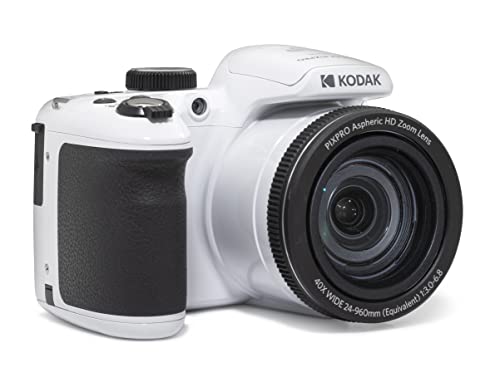
The AZ405-WH offers an impressive 40X optical zoom paired with a 20MP sensor, enabling sharp close-ups at substantial distances. The 24mm wide-angle lens broadens framing for macro subjects in group settings or landscapes that include small details. Best for: users who want strong reach for close-up subjects without stepping back, or sports and wildlife scenarios where proximity is limited. Limitation: high zoom can amplify camera shake—using a tripod or stabilization is advised.
G-Anica 5K&64MP Digital Cameras Kit

This kit blends 64MP image quality with a macro lens and 16X zoom, giving a strong option for close-ups and macro-rich scenes. A built-in fill light helps illuminate tiny subjects, and the 180° flip screen supports easy framing for selfies or vlogs that feature macro work. Best for: travelers and vloggers who want macro-friendly capabilities without swapping lenses. Caution: bulky accessory bundle may affect portability for strictly pocket-sized use.
Panasonic LUMIX ZS99 Point & Shoot

Panasonic’s LUMIX ZS99 emphasizes travel-friendly performance with a 30x optical zoom (24-720mm) and 4K video. The camera’s pocketable design makes macro-friendly framing possible from varied distances while maintaining image detail. A tiltable 1,840k-dot touchscreen aids in composition for close-ups from awkward angles. Best for: travelers who want a versatile zoom range and reliable 4K capture in a compact body. Caution: less control at the macro end may require practice to optimize close-up shots.
Buying Guide: Key Factors For Macro-Focused Point-And-Shoot Cameras
- Macro capability: Look for a dedicated macro lens option or close-focusing distance that allows imaging of small subjects at close range. A longer zoom can help you frame tight details without moving closer.
- Resolution and sensor: Higher megapixels help with detail in macro shots, but sensor quality and color rendition matter most for sharpness and noise control in close-ups.
- Lens versatility: A wide-angle to standard zoom or macro lens pairing expands framing options for small subjects in tight spaces or on cluttered backgrounds.
- Stabilization: Optical or electronic stabilization reduces blur when capturing close-ups at higher magnifications or in low light.
- Video capabilities: If macro video matters, prioritize cameras offering Full HD or 4K with good autofocus for close subjects.
- Focal length and aperture: A shorter focal length with a bright aperture helps separate the subject from the background while maintaining working distance.
- Connectivity: Built-in WiFi or mobile sharing makes it easier to upload macro shots to social platforms or cloud storage on the go.
- Portability vs. features: Compact models are easier to carry, but some macro-friendly kits include additional lenses or accessories that boost versatility at the expense of pocketability.
Frequently Asked Questions
- What is the best point-and-shoot for macro photography?
- Do I need a dedicated macro lens on a point-and-shoot?
- Is image stabilization important for macro photography?
- Can I shoot macro videos with these cameras?
- What should I consider about image resolution for macro shots?
- How important is the screen for macro composition?
The best option depends on your needs. If you want a simple, pocketable camera with decent macro potential, a model with a good close-focusing distance and a versatile lens is ideal. For more serious macro work, a kit that includes a dedicated macro lens or multiple lenses offers more flexibility.
Not always. Some point-and-shoots provide macro modes or macro-capable lenses. A dedicated macro lens provides greater magnification and closer focusing distances, but many compact cameras can produce excellent close-ups without swapping lenses.
Yes. Macro shooting magnifies motion. Optical or digital stabilization helps keep close-up images sharp, especially in low light or when shooting handheld.
Some models support Full HD or 4K video with macro-friendly autofocus. If macro video is a priority, verify video modes, frame rates, and autofocus performance before purchase.
Higher resolution supports larger prints and cropping flexibility. However, macro image quality also depends on sensor performance, lighting, and lens optics. Balance resolution with noise control and color accuracy.
A tilting or articulating screen helps you compose macro shots from difficult angles, and a bright screen aids in framing small subjects in challenging lighting.