Best Rectilinear Wide Angle Lens Options for Sharp, Low-Distortion Landscape Shots
For photographers chasing clean, undistorted wide scenes, rectilinear wide-angle lenses deliver straight lines and crisp detail across the frame. This guide highlights top rectilinear options from popular brands, spanning full-frame and APS-C formats. Each pick prioritizes minimal distortion, sharpness, and reliable build quality, helping you capture expansive landscapes, architectural exteriors, and dramatic interiors with confidence. Below, you’ll find quick product highlights and a buying guide to compare pivotal considerations like sensor coverage, autofocus performance, and optical coatings.
Summary of chosen products
| Product | Brand | Format | Key Benefit |
|---|---|---|---|
| Irix 11mm f/4.0 Firefly | Irix | Full-Frame / APS-C | Widest rectilinear option in its class with minimal distortion |
| Sony FE 20mm F1.8 G | Sony | Full-Frame / APS-C | Bright ultra-wide prime with excellent resolution |
| Canon RF10-20mm F4 L IS | Canon | Full-Frame | Compact ultra-wide zoom with IS and strong optics |
| Sigma 8-16mm f/4.5-5.6 DC HSM | Sigma | APS-C | Versatile ultra-wide zoom withFLD/Aspherical elements |
| Rokinon 10mm F2.8 ED AS NCS CS | Rokinon | Canon EF-S / APS-C | Low distortion, wide angle for Canon APS-C systems |
Irix 11mm f/4.0 Firefly For Nikon

The Irix 11mm f/4.0 Firefly is designed for Nikon, supporting both APS-C and Full Frame formats, and is described as the widest rectilinear option in its class with minimal distortion. It includes a clearly labeled infinity focus position and a tactile click-stop to assist in low-light or dark environments. This lens emphasizes edge-to-edge sharpness with essentially straight lines preserved in wide scenes, making it ideal for architectural exteriors and sweeping landscapes.
Sony FE 20mm F1.8 G
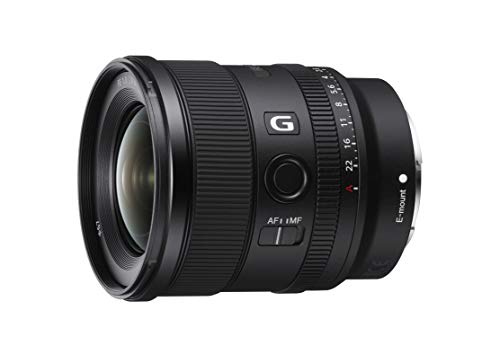
Sony’s FE 20mm F1.8 G offers a bright, modern ultra-wide prime with a compact design and strong optical performance for both full-frame and APS-C Sony bodies. The fast f/1.8 aperture provides shallow depth of field and impressive low-light capability, while the wide angle supports expansive landscapes, architectural interiors, and creative environmental portraits. Its G-series designation signals refined rendering, contrast, and minimal distortion across the frame when used on compatible Sony cameras.
Canon RF10-20mm F4 L IS STM

The Canon RF10-20mm F4 L IS STM is an ultra-wide zoom designed for full-frame Canon mirrorless cameras. Its compact, well-balanced form compares favorably against older ultra-wide designs, offering a versatile 10-20mm range suitable for still photography and videography. The lens features a combination of UD elements and coatings intended to reduce ghosting and flare, delivering crisp highlights and wide, distortion-controlled storytelling at multiple focal lengths.
Sigma 8-16mm f/4.5-5.6 DC HSM

The Sigma 8-16mm f/4.5-5.6 DC HSM is a versatile ultra-wide zoom aimed at Canon APS-C bodies. It incorporates four FLD low-dispersion elements and three aspherical elements to minimize aberrations, while an HSM motor enables quiet, fast focusing. The design emphasizes broad coverage without significant distortion, making it a strong option for expansive landscapes and architectural interiors on crop-sensor bodies.
Rokinon 10mm F2.8 ED AS NCS CS

The Rokinon 10mm F2.8 ED AS NCS CS is a Canon EF-S type ultra-wide designed for Canon APS-C DSLRs. It employs a Nano Crystal coating system to enhance light transmission and reduce internal reflections. With a wide 106-degree edge-to-edge field of view, this lens targets versatile wide-angle shooting on Canon APS-C bodies, balancing cost and image quality for landscapes and cityscapes.
Buying Guide: Key Purchase Considerations
When choosing a rectilinear wide-angle lens, consider format compatibility, distortion control, and overall optical performance. Full-frame lenses often deliver superior image quality and framing flexibility, but high-quality APS-C options can be lighter and more affordable. Look for a lens with minimal barrel or pincushion distortion, particularly if you shoot architectural interiors or expansive landscapes where straight lines matter.
Another important factor is autofocus behavior. Prime rectilinear lenses for mirrorless cameras typically provide fast, accurate AF, while older DSLR-oriented designs may rely on screw-drive or slower systems. If you shoot video or fast-paced scenes, a lens with stable focus breathing and reliable AF performance can be critical.
Optical coatings and element design influence flare control and contrast, especially against bright skies or interior lighting. Lenses with special coatings (e.g., NCS, ASC, SWC) tend to yield higher contrast with fewer ghosting artifacts. Weight and size also impact usability for handheld shooting and travel, so evaluate the balance between reach, weight, and handling in your kit.
Budget and brand ecosystem are practical considerations. Well-known brands offer robust warranties and resale value, while third-party options can provide excellent value with comparable image quality. If you own a specific camera system (Canon, Sony, Nikon, Pentax, etc.), ensure the lens mount and autofocus capabilities align with your body for optimal performance.
In summary, the best rectilinear wide-angle lens choice depends on sensor size, mount compatibility, and your primary shooting scenarios—landscapes, architecture, or interiors. The options listed above provide a range of focal lengths, from ultra-wide primes to versatile zooms, all emphasizing rectilinear rendering and minimized distortion for crisp, straight-line images.