Best Reverse Ring Macro Photography: Affordable Macro Solutions With Classic Lens Reversing
If you want macro results without buying a dedicated macro lens, a reverse ring adapter is the simplest path. These adapters let you mount a lens in reverse, turning it into a high-magnification macro lens. They’re especially popular for budget-conscious photographers and hobbyists who shoot small subjects like flowers, insects, and textures. This guide highlights five practical reverse ring options for common camera systems, clarifying who benefits most from each and why they stand out in real-world use. A quick buying table at a glance follows the opening overview.
| Product | System | Filter Thread | Why It Stands Out |
|---|---|---|---|
| PROfezzion 58mm Macro Lens Reverse Ring Adapter | Canon EF-S / Canon DSLR | 58 mm | Direct, affordable path to macro with Canon kit lenses |
| Fotodiox 58mm Macro Reverse Adapter for Canon EF/EF-S | Canon EF/EF-S | 58 mm | All-metal construction and simple reverse-mount macro |
| Fotodiox 52mm Macro Reverse Ring for Nikon F | Nikon F | 52 mm | Budget macro option for Nikon DSLR systems |
| Fotodiox Macro Reverse Ring 52mm for Nikon Z | Nikon Z-Mount | 52 mm | Macro solution for mirrorless Nikon without special optics |
| Fotodiox 67mm Macro Reverse Ring for Sony E | Sony E-mount | 67 mm | Compact reverse-mount macro for Sony mirrorless cameras |
PROfezzion 58mm Macro Lens Reverse Ring Adapter for Canon
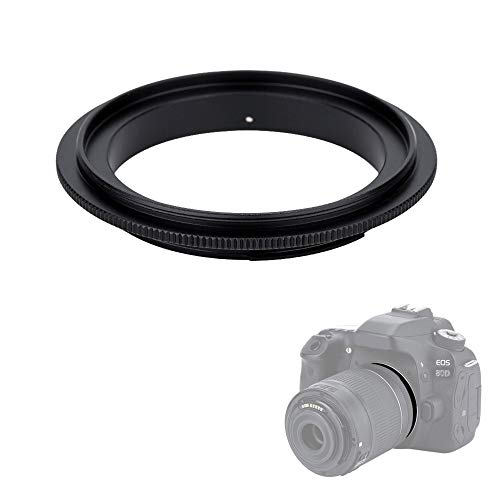
This ring enables reverse mounting of a Canon lens with a 58 mm filter thread to the camera body. It is built from aluminum, offering sturdy construction for macro work. The setup effectively turns your existing lens into a macro lens, providing close focusing and high magnification. Best for photographers who want a cost-effective, hands-on macro solution using Canon kit lenses.
Best for: Canon DSLR users who want a simple, affordable macro option without purchasing a dedicated macro lens. Consider this if you already own a 58 mm threaded Canon lens.
Caution: Reversing a lens removes electronic communication with the camera, so you’ll rely on manual settings. Check your lens’ minimum focus distance when planning shots.
Fotodiox 58mm Macro Reverse Adapter for Canon EF/EF-S

Designed to mount any 58 mm filter-thread lens in reverse on Canon EF/EF-S bodies, this all-metal adapter supports macro photography with a straightforward, affordable approach. Its durability and smooth threads make it a reliable choice for entry-level macro work or rapid field setups.
Best for: Canon users who want a robust, budget-friendly macro adapter and have lenses with 58 mm fronts. Choose this if you value metal construction and a straightforward reverse-mount workflow.
Caution: As with other reverse-mount setups, there is no electronic lens control when reversed, so manual exposure is required. Lighting can be challenging at high magnification; consider ring lights or LEDs.
Fotodiox Macro Reverse Ring for Nikon F (52 mm)

This reverse ring is sized for Nikon F cameras and 52 mm filter-thread lenses. It enables macro capabilities by reversing the lens, creating high magnification without specialized gear. The all-metal construction helps withstand frequent field use and enables precise mounting.
Best for: Nikon DSLR owners who want a compact, economical macro option. It’s a good entry point for experimenting with reverse-mount macro on Nikon bodies.
Caution: Expect limited working distance and the need to manage parallax and framing manually. Be mindful of lens compatibility if you have non-52 mm front threads.
Fotodiox Macro Reverse Ring for Nikon Z (52 mm)

Specifically designed for Nikon Z-mount mirrorless cameras, this adapter uses a 52 mm thread to allow reverse mounting of lenses. It offers a cost-effective macro path for users who want macro capabilities on Nikon’s mirrorless platform, with a focus on a lightweight, accessible setup.
Best for: Nikon Z users seeking a simple macro option without adding optical elements. This is a good match for shooters who want quick macro on the go with existing 52 mm lenses.
Caution: Some full-frame lenses may show vignetting or corner shading at extreme magnification; test with your chosen lenses before critical work.
Fotodiox 67mm Macro Reverse Ring for Sony E

This adapter fits Sony E-mount cameras with 67 mm filter-thread lenses and reverses them for macro shooting. The all-metal build provides durability, while the 0.75 pitch ensures smooth threading for repeated use. It’s a practical option for Sony mirrorless shooters focusing on macro subjects.
Best for: Sony shooters who own 67 mm lenses and want a simple, affordable macro route. It’s a solid choice for beginners exploring macro on Sony’s ecosystem.
Caution: Limited availability of lenses with exactly 67 mm threads can require planning or adapter stacking; verify your lens fit before purchase.
Buying Guide: How to Choose a Reverse Ring Macro Adapter
What matter most when selecting a reverse ring is compatibility with your lens and camera system. Start by identifying your lens’s front filter thread size and your camera’s mount. If you plan to use multiple lenses across systems, consider a model that covers common thread sizes (52 mm, 58 mm, or 67 mm).
Material quality matters. All-metal adapters offer durability and smoother threading, which improves repeatable macro setups. In contrast, cheaper plastics may wear faster and feel less precise over time.
Manual operation is standard with reverse-mount macros. You should be comfortable adjusting exposure, white balance, and focus manually. Lighting is crucial; macro subjects often require brighter, diffuse light or a ring light to avoid shadows and loss of detail.
Portability and setup speed are practical considerations for fieldwork. Some adapters are bulkier or heavier; others emphasize a quick-on, quick-off workflow, which can be helpful when shooting multiple small subjects.
Consider your subject matter. For flowers, insects, textures, and close-up textures, a simple 1:1 to 2:1 magnification range is typical. Lenses with longer focal lengths can give greater working distance but may be bulkier to handle in reverse.
Frequently Asked Questions
- Do reverse ring adapters affect image quality? They do not introduce optical elements into the light path, but image quality is primarily influenced by the lens’s performance when reversed and light conditions.
- Will my autofocus work with a reverse-mounted lens? No. Reverse-mount macro setups typically require manual focus and exposure control.
- Can I use any lens with a reverse ring? Only lenses with compatible filter-thread sizes can be used, and many users reverse standard kit lenses to maximize magnification.
- Is a macro reverse adapter suitable for beginners? Yes. It’s one of the most affordable ways to explore macro photography and learn close-up techniques.
- How do I avoid vignetting or shading? Test different lenses and distances. Some combinations may show corners darkening at higher magnifications, especially on full-frame bodies.
- Are there limitations on subject distance? Yes. Reversing a lens creates very close focusing distances, so you’ll be working at near-subject distances and need stable support.