Best Second-Hand DSLR Lenses for Budget-Conscious Photographers
Direct answer: For affordable upgrades or backups, these second-hand DSLR lenses offer strong value across common Canon and Nikon formats. They suit wildlife shooters, portrait photographers, and general telephoto or wide-angle needs. Each pick is chosen for compatibility with legacy bodies, build quality, and practical optical benefits when buying used. This guide helps you compare options and decide which lens fits your camera system and shooting style.
| Product | Brand | Best For |
|---|---|---|
| BENOISON Telephoto Lens EF 420-800mm | BENOISON | Wildlife and moon photography on Canon bodies |
| Canon EF 50mm f/1.8 STM | Canon | Portraits and low-light street photography |
| EF 85mm f/1.8 Portrait Lens (MF) | lightdow | Classic portrait work with manual focus |
| EF/EF-S 420-800mm F8.3 Telephoto Zoom (MF) White | lightdow | Long-telephoto wildlife and astronomical use |
| Nikon AF-S FX 200-500mm f/5.6E VR | Nikon | High-telephoto wildlife on Nikon DSLR bodies |
BENOISON Telephoto Lens EF 420-800mm for Canon

This manual-focus telephoto lens covers a 420-800mm range with a fixed aperture of F/8.3 at 420mm and F/16 at 800mm. It is designed for Canon DSLRs with EF/EF-S mounts and is built for durability. Best for wildlife watchers and hobbyist moon photographers who need reach without breaking the bank. Limitations include a non-variable aperture and the need for manual focusing, which demands skill and practice.
Who it’s best for: photographers seeking a budget-long lens to pair with Canon crop- or full-frame bodies, especially in daylight or outdoor wildlife sessions. Why selected: strong reach, compatible mounting options, and robust construction for a second-hand purchase.
Canon EF 50mm F/1.8 STM Lens

This standard prime offers a bright f/1.8 maximum aperture, making it ideal for portraits, low-light street work, and creative bokeh. It’s a compact, affordable option with a natural field of view on Canon DSLR bodies. Cautions for a second-hand purchase include checking for dust in the elements and ensuring the autofocus mechanism responds smoothly, as older copies can exhibit minor wear. It is fully compatible with EF and EF-S mount cameras.
Best for: hobbyists and beginners who want a versatile, lightweight lens for everyday shooting. Choose this if you need a fast, affordable prime for low-light situations and natural perspective.
EF 85mm f/1.8 Portrait Lens (MF)

This lens is fully manual and optimized for classic portrait photography. The large aperture yields shallow depth of field and attractive bokeh, with a precise manual focus experience. The absence of autofocus means this lens is best for photographers who enjoy deliberate composition and control. Limitations include the lack of electronic contacts for focusing, and potential camera settings adjustments to avoid “no lens” errors on some bodies.
Best for: portrait shooters and enthusiasts who value manual focus precision. Choose this if you want a simple, fast prime for artistic portraits and learning the craft of focus.
EF/EF-S 420-800mm F8.3 Telephoto Zoom (MF) White

This fully manual zoom lens covers 420-800mm with an automatic aperture response depending on focal length. It includes an internal focusing mechanism and 62mm filter compatibility. It is designed for Canon EF/EF-S mount cameras and is suited for wildlife and astronomical photography from a fixed tripod or steady hand. A common caveat is the missing electronic focus assist, requiring precise manual technique.
Best for: users who want a long-reach, all-in-one telephoto option on a Canon body without relying on autofocus. Choose this if you prefer a legacy lens with strong reach and a straightforward manual workflow.
Nikon AF-S FX 200-500mm f/5.6E VR (Renewed)
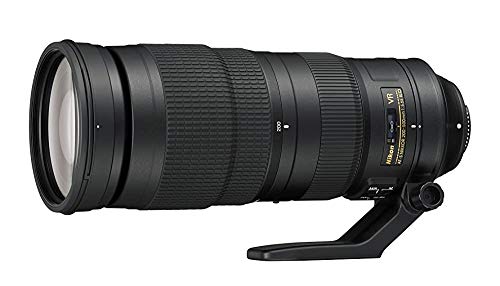
On Nikon DSLRs, this zoom provides 200-500mm focal range with a constant f/5.6 aperture and built-in Vibration Reduction. The added VR helps stabilize hand-held shots, especially in lower light or longer focal lengths. This product is listed as renewed, which can offer substantial savings but may come with cosmetic wear or minimal risk considerations tied to refurbishing. Caution: confirm instrument integrity and actuation of the VR system when purchasing used.
Best for: Nikon shooters needing substantial reach for wildlife, sports, or distant subjects. Choose this if you want a versatile, stabilized zoom on a budget and don’t mind a renewed unit.
Buying Guide
Key considerations when shopping for second-hand DSLR lenses:
- Mount compatibility: Confirm EF/EF-S compatibility for Canon or F-mount for Nikon. Some third-party lenses may fit multiple bodies but require adapters or may lack electronic communication.
- Manual vs. autofocus: Many budget or older lenses are fully manual. Decide if you prefer manual focus for creative control or need autofocus for speed and ease.
- Optical condition: Check for scratches, haze, or fungus in the glass. Ensure the aperture blades move smoothly and that the focus ring on the lens turns without stiffness.
- Mechanical wear: Inspect the zoom and focus rings for play or looseness. A stiff or gritty feel may indicate wear that could affect performance.
- Electronic contacts: For Canon or Nikon AF lenses, ensure electronic contacts are clean and not corroded. Some lenses are legacy MF; others require a camera body with compatible signaling.
- Weight and balance: Long telephotos can be heavy; ensure you are comfortable with handling and support, especially on entry-level bodies.
- Return policy and warranty: When buying used or renewed, a return window or limited warranty increases protection against hidden defects.
Frequently Asked Questions
- Q: Are second-hand DSLR lenses reliable on older camera bodies?
A: Yes, many older lenses work well with compatible camera bodies, but inspect condition and confirm compatibility with your specific model. - Q: Should I avoid manual-focus lenses on modern cameras?
A: Not necessarily. Manual-focus lenses can offer precise control and teach technique, though you may lose autofocus convenience on some bodies. - Q: What should I check before buying a used zoom lens?
A: Check for smooth zoom movement, no optical haze, and stable focus. Test the lens on a camera if possible to verify image quality. - Q: Do renewed lenses come with a warranty?
A: Renewed items often come with limited warranties; read the seller’s terms to understand coverage. - Q: Can third-party lenses be a good value?
A: Yes, many third-party options provide comparable optical performance at a lower price, though build and autofocus behavior can vary. - Q: Which lens is best for beginner wildlife photography?
A: A long, affordable telephoto like 200-500mm can be a practical start, especially when paired with a steadier shooting setup.