Best Beginner SLR Film Cameras for New Shooters
Film photography offers a tactile, interval-rich experience that can help new shooters learn timing, composition, and light. The following five cameras are well-suited for beginners, balancing simplicity with control. Each model listed here provides reliable exposure metering, accessible lenses, and straightforward operation—essential when you’re building fundamentals in film.
Summary of chosen products:
| Product | Brand | Key Feature | Notes |
|---|---|---|---|
| Canon Rebel 2000 SLR Film Camera | Canon | 7-point autofocus; built-in flash | Renewed; 35mm format |
| Canon New EOS Kiss / Rebel G | Canon | Wide-area autofocus; user-friendly interface | Renewed; compatible with 35-80mm lens |
| Pentax K1000 Manual Focus SLR | Pentax | Fully mechanical; simple controls | Requires battery only for light meter (A76) |
| Canon EOS Rebel K2 SLR | Canon | 35-zone metering; 12 shooting modes | Renewed; EF mount with auto focus |
| KODAK EKTAR H35 Half Frame | KODAK | Twice as many exposures per roll; built-in flash | Lightweight, easy-to-use half-frame |
Canon Rebel 2000 SLR Film Camera With 28-80mm Lens

The Canon Rebel 2000 is a classic 35mm SLR that emphasizes ease of use for beginners. It features a 7-point autofocus system that helps keep subjects sharp on auto-focus, and a built-in pop-up flash for low-light situations or fill lighting. The camera’s compatibility with standard 35mm film supports a wide array of film types, making it ideal for first-time film shooters who want reliable results without a steep learning curve.
Canon New EOS Kiss SLR AF Film Camera With 35-80mm Lens

The Canon New EOS Kiss (Rebel G in North America) is a user-friendly AF film camera that helps beginners through its wide-area autofocus and intuitive controls. With a 35-80mm EF lens, it provides versatility for portraits, landscapes, and everyday scenes. The camera’s simplified menu and LCD readout support quick learning, while the autofocus performance delivers reliable sharpness across common subjects.
Pentax K1000 Manual Focus SLR With 50mm Lens

The Pentax K1000 is renowned for its straightforward, mechanical design. Fully manual controls—aperture, shutter speed, and focus—teach core photographic skills without relying on automatic exposure. While the light meter needs a battery (A76), the camera remains dependable and approachable for those who want tactile control and a low learning curve while shooting with standard 50mm glass.
Canon EOS Rebel K2 SLR 35mm with EF Lens

The Canon EOS Rebel K2 balances manual and automatic modes within a familiar Canon EF lens ecosystem. It features a 35-zone metering system linked to a 7-point autofocus system, plus 12 shooting modes including several programmable image control options. This flexibility helps beginners experiment with creative exposure while offering a straightforward path to more advanced settings as skills grow.
Canon FT-QL 35mm SLR with 50mm Lens

The Canon FT-QL is a classic, fully mechanical camera that emphasizes fundamental exposure control. Its 50mm lens offers a natural field of view suitable for learning composition. While it requires some manual labor from the photographer, the simplicity of the control layout makes it an effective platform for mastering essential skills before moving to more complex bodies.
KODAK EKTAR H35 Half Frame
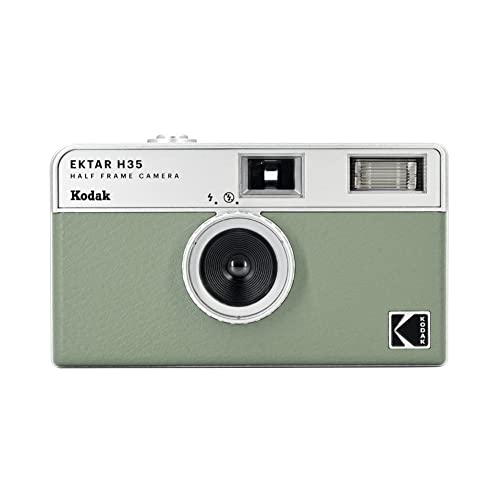
The Kodak EKTAR H35 Half Frame camera doubles the number of frames per roll by using a half-frame format. It’s compact, lightweight, and designed for ease of use with built-in flash and straightforward controls. This can be a practical option for beginners who want to maximize shooting opportunities on a single film roll while learning framing and light in everyday situations.
Buying Guide: Key Considerations For Beginner SLR Film Cameras
- Exposure control: Look for cameras with clear exposure meters (auto or manual) and intuitive controls. Early practice with aperture and shutter speed helps learners understand light principles.
- Autofocus vs. manual focus: Beginners may prefer autofocus for faster learning, but manual focus teaches precise focusing skills. A mix of both in the same camera or rangefinder-friendly options can be beneficial.
- Film compatibility: Most entry-level SLRs use 35mm film. Confirm film stock availability and processing options in your area to avoid supply gaps.
- Lenses and compatibility: Check the standard lens kit (often 28-80mm or 50mm). Ensure availability of common focal lengths for versatile shooting, plus compatibility with future lenses if you decide to upgrade.
- Battery and metering: Some cameras rely on batteries for metering or advanced features. If you prefer mechanical reliability, choose models with a working light meter or fully mechanical operation.
- Build and ergonomics: A compact, comfortable grip and straightforward control layout reduce fatigue during longer shoots and accelerate learning progress.
- Maintenance and repair: Consider availability of service and parts, especially for older models. Simpler cameras often have more accessible parts and easier diagnostics.
- Cost of entry and film progress: While prices vary, choose a model that offers reliable performance without overcomplicating the barrier to practicing monthly film development and scanning.
- Learning path: A mix of fully manual cameras (to learn fundamentals) and semi-automatic models (to practice composition and timing) helps build a solid foundation.
- Resale value and longevity: Classic Canon and Pentax bodies tend to maintain interest among hobbyists, potentially easing future upgrades or reuse of lenses.