Best Tripod Solutions for Telephoto Lenses: Stable Platforms for Sharp Shots
Finding a stable tripod setup is essential when using telephoto lenses. The right combination keeps camera shake at bay, supports heavy gear, and enables smooth tracking for wildlife, sports, and landscape photography. Below are five notable options that pair well with long lenses, along with practical buying considerations to help you choose.
| Product | Brand | Key Benefit |
|---|---|---|
| Fotga L200 Telephoto Support | FOTGA | Heavy-load, adjustable, Arca-compatible |
| NEEWER GM102 Gimbal Head | NEEWER | 360° pan, 3-axis, supports up to 15 kg |
| NEEWER Portable Desktop Mini Tripod | NEEWER | Compact desk tripod with Arca-style plate |
| Monopod Gimbal Head MH-100 (FANAUE) | FANAUE | Arca-Swiss compatibility, side-saddle tilt |
| MIAO LAB 30X Telephoto Lens Kit | MIAO LAB | Tripod-enabled telephoto kit for phones |
Notes: The selections cover a range from dedicated telephoto support plates and gimbal heads to compact desk tripods and phone-telephoto solutions. Each option emphasizes stability, ease of use, and compatibility with Arca-Swiss or quick-release systems for quick setup on location.
Fotga L200 Telephoto Support Plate For Big Lenses

The Fotga L200 is designed to support heavy telephoto lenses on tripods with Arca Swiss compatibility and a CNC aluminum alloy construction. It is built to handle loads from 6 to 10 kg (13.2–22 lbs). Features include a 48 mm surface center diameter and a 1/4″ quick-release plate with a non-slip rubber surface. The height is adjustable to accommodate different lens heights, and the plate can move horizontally for precise balance. This solution focuses on stability for long focal lengths and larger lens setups.
NEEWER GM102 Gimbal Head For Telephoto Lenses

NEEWER’s GM102 Gimbal Head is built for stability and smooth motion when tracking wildlife or birds. It supports DSLR cameras and telephoto lenses up to 33 lb (15 kg) and features a 360° pan base, a swing arm, and a dedicated quick-release system. The head allows full three-axis adjustment—pan, tilt, and swing—through hand-tightening knobs. A built-in spirit level helps verify level setup, and a 3/8″ threaded hole enables versatile mounting on tripods, monopods, or sliders. This head aims to deliver reliable tracking and balance during dynamic sequences.
NEEWER Portable Desktop Mini Tripod

This mini desktop tripod from NEEWER is built from aluminum alloy for durability and supports up to 11 pounds (5 kilograms). It offers an adjustable height from 6.7″ to 19.7″ (17 to 50 cm) with a five-section leg design for macro or small-to-medium setups. Although compact, its 360° swivel ball head and Arca-type quick-release plate enable panoramic framing and stable support for lighter telephoto applications, making it a practical desk-side option for studio-based telephoto work or travel with compact gear.
Monopod Gimbal Head MH-100 With Arca-Swiss Plate

The Monopod Gimbal Head from FANAUE uses a dual 3/8″ and Arca-Swiss dovetail interface to support telephoto lenses up to 100 lbs. It emphasizes quick-release plate efficiency and precise balance during side-saddle tilt operations. The design prioritizes safety with triple-locking mechanisms and a robust anti-slip Arca-Swiss groove. CNC-machined from aerospace-grade aluminum, this head is built for heavy rigs and long-term reliability, making it suitable for long-duration wildlife or sports shoots where sturdy balance is critical.
36X Telephoto Lens Kit For Phones With Tripod
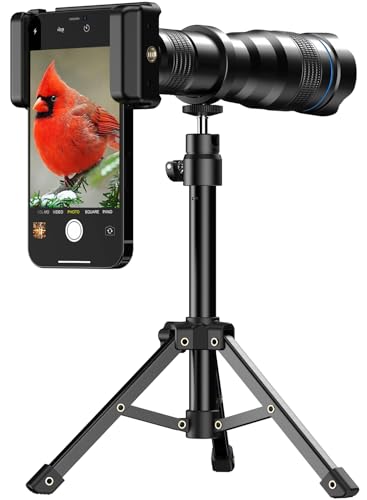
The Evil Eye 36X telephoto lens is designed for smartphones and includes a tripod attachment for stabilized long-distance shots. It has a metal construction and a high-quality lens assembly to minimize distortions and maintain clarity at the edge-to-edge field. While not a traditional camera tripod system, its tripod-ready setup makes it a compact option for mobile telephoto work, travel, and field shooting where bulk-free gear is valued.
MIAO LAB 30X Telephoto Lens Kit for Smartphones
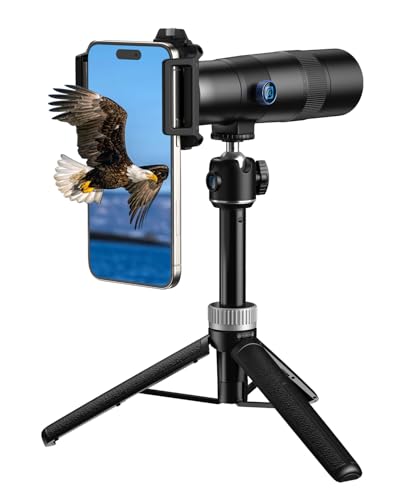
The MIAO LAB 30X Telephoto Lens is designed for smartphones with an adjustable focus ring for real-time sharpness control. It includes a detachable silicone eyecup that doubles as a monocular, and it ships with a tripod-compatible base. Made from aluminum alloy with high-quality glass, the kit emphasizes clarity and durability for long-distance mobile photography. It supports a wide range of smartphones and is ideal for travelers seeking an affordable telephoto option for phones.
Buying Guide: Key Purchase Considerations
Stability, load capacity, and compatibility are the core criteria when choosing a tripod or head for telephoto work. Consider these perspectives to balance performance with budget and use-case:
- Load capacity: Telephoto lenses, especially with high magnification, require sturdy support. Look for heads and plates rated well above your heaviest rig to prevent flex and wobble.
- Head type: Gimbal heads excel for tracking moving subjects, while ball heads or panoramic heads offer speed and versatility for static framing. For long glass, consider a dedicated gimbal or a rigid pan-tilt head with friction controls.
- Arca-Swiss compatibility: An Arca-compatible quick-release system simplifies swapping lenses and supports across tripods and heads for faster on-field setup.
- Build material: CNC-machined aluminum and other aerospace-grade alloys provide rigidity and durability under field conditions. Surface treatments (anodizing) can enhance wear resistance.
- Portability: For travel, balance weight with stability. Compact desk tripods or light travel heads can be paired with a travel tripod to reduce load while maintaining performance.
- Setup speed vs. precision: Quick-release plates and easy balance adjustments save a lot of time when capturing moving subjects. Ensure the locking mechanisms are reliable and easy to operate with gloves in cold weather.
- Environmental suitability: If you shoot outdoors, consider weatherproofing, salt spray resistance, and compatibility with accessories like tilt-stops and sun shrouds.
In selecting a setup, align the choice with your typical subjects (birds, wildlife, sports), lens weight, and the environments you shoot in. For heavy telephotos, gimbal heads combined with a robust tripod typically yield the most stable, repeatable results. For desk or compact setups, smaller tripods with robust quick-release systems can work well in controlled environments or mobile photo sessions.