Best Underwater Single-Use Cameras for Snorkeling and Beach Fun
If you’re planning underwater memories, a disposable underwater camera is a simple, reliable choice. These single-use models are ideal for travelers, snorkelers, and casual beach goers who want easy, film-based photos without risking expensive gear. The top picks here are best for different needs: compact ease, added buoyancy, or rugged depth handling. Use the table below to compare features at a glance.
| Product | Why It Stands Out |
|---|---|
| Fujifilm QuickSnap 800 Waterproof 35mm (2-Pack) | Best for budget-friendly bulk photos and forgiving print results |
| Fujifilm Quick Snap Waterproof 35mm (Yellow, with Foam Strap) | Best for shallow-water adventures with floatability |
| 1 Shot Waterproof Disposable Camera (2-Pack) | Best for versatile use and clear external view-finder |
| Solo H2O 35mm Single Use Underwater Camera | Best for built-in durability and simple use |
| Kodak Sport Underwater Disposable Camera (3-Pack) | Best for deeper water and rugged environments |
Fujifilm QuickSnap 800 Waterproof 35mm One-Time-Use Disposable Camera, 27 Exposures 2-Pack
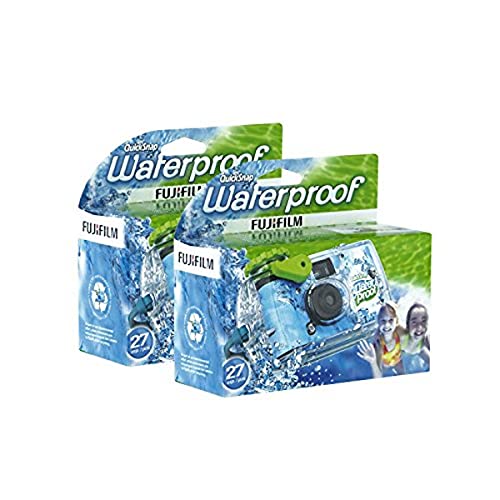
Best for budget-conscious travelers who want multiple underwater photos without reloading film. The 800-speed film enhances color in sunlight and up to 17 feet of water. This 2-pack is suitable for family adventures or group snorkeling, where multiple shots are preferred.
Who it’s best for: vacationers who need a simple, repeatable option and are comfortable with standard 35mm results. Why selected: widely compatible with common film processing, and the 27 exposures provide ample underwater storytelling.
Caution: Film availability for developing may affect turn-around time; ensure you have timely processing options at your destination.
Fujifilm Quick Snap Waterproof 35mm Single Use Camera | Floating Foam Strap (Yellow)

Best for shallow-water outings where you want easy retrieval and quick surface visibility. This model includes a foam floating strap and is loaded with Fujicolor Superia X-TRA 800 film, enabling bright colors and clear underwater contrasts.
Who it’s best for: snorkelers and water enthusiasts who need a light, easy-to-handle single-use option. Why selected: buoyant design reduces loss risk and the 800-film helps brighten scenes in fair-to-bright water.
Caution: Floating strap adds bulk; may be less comfortable for long swims compared to slimmer disposable options.
1 Shot Waterproof Disposable Camera – 35mm Underwater – 27 Exposures – 2-Pack

Best for travelers who want simple, reliable underwater photography with larger external view-finders for easier framing. The 27-exposure 35mm color film provides strong color performance under water up to typical recreational depths.
Who it’s best for: snorkelers and casual divers seeking straightforward camera use without complex controls. Why selected: large view-finder aids composition in active underwater scenes.
Caution: Made for recreational depths; avoid deep dives where higher-end gear is preferred.
Solo H2O 35mm Single Use Underwater Camera with 400ASA 27 Exposure Film

Best for durability-focused users who want a rugged, pre-loaded underwater camera. It features 27 exposures with 400ASA film, a focus-free lens, and water resistance up to 20 feet.
Who it’s best for: families and adventurers who need a reliable, straightforward underwater option that can withstand casual drops and splashes. Why selected: USA-made film adds familiarity, and basic lens design keeps operation simple.
Caution: Depth tolerance is for recreational use; do not rely on it for deeper dives than listed.
Kodak Sport Underwater Single-Use Disposable Camera with 800 Speed 27-Exposure Film (3-Pack)
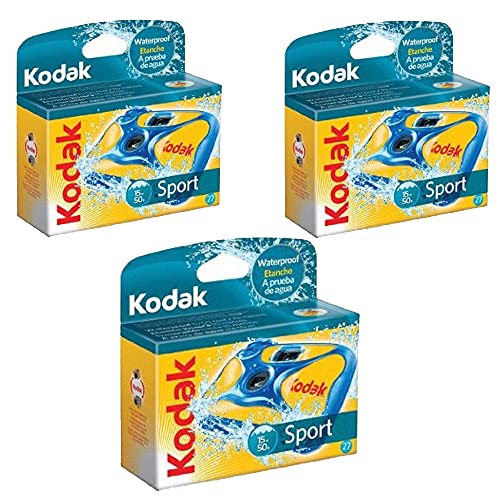
Best for deeper-water outings and rugged environments where more exposure flexibility matters. The 800-speed film is designed for vibrant color under sunlit waters, and the triple-pack offers extended shooting sessions for families or groups.
Who it’s best for: travelers and beachgoers who want a robust, budget-friendly option with multiple disposables for ongoing photo opportunities. Why selected: rugged shell and 50-foot water depth capability support more adventurous use.
Caution: Handling and processing times can vary; check local labs for turn-around windows if traveling.
Buying Guide
What to consider when choosing an underwater disposable camera
- Water depth tolerance: Some models are built for shallow to moderate depths, others claim higher depths. Choose based on your planned activities (snorkeling vs. light scuba).
- Film speed and color: Higher ISO/ASA films improve color in bright water but can grain in low light. Consider film speed in relation to sun exposure and water clarity.
- Buoyancy and handling: Floating straps and rugged shells help prevent loss. Buoyancy aids are useful for surface swimmers and families with kids.
- Exposures per camera: More exposures mean more photos but require more careful framing and processing planning.
- Bulk options: Multi-pack sets offer savings and convenience for group trips or keepsakes for multiple friends.
Common Scenarios
- Family beach day: Choose a 2-pack or 3-pack with buoyant features for easy retrieval.
- Snorkel trip with friends: A single-use camera with bright color film helps capture underwater life clearly.
- Vacation snorkeling: Look for cameras with higher film sensitivity and robust build for simple use in bright sun.
FAQ
- Do underwater disposable cameras work at depth? Most are designed for recreational depths; always check the specified depth limit for each model.
- Can you develop film from these cameras abroad? Yes, most standard photo labs can develop 35mm film, though processing times vary by location.
- Are these cameras easy for kids? Yes, they require no setup—point and shoot is common across models.
- What is the best option for shallow-water beginners? Models with floating straps and bright 800-speed film perform well in bright, shallow water.
- Do they work in saltwater? They work, but rinse with fresh water after use to reduce corrosion and extend film life.
- Can you reuse a disposable underwater camera? No, they are single-use; you must replace with a new unit after the film is exhausted or after the trip.