Best USB Digital Microscope Cameras for Clear Magnification
Exploring the microscopic world is now easier and more accessible with USB digital microscope cameras. Whether you’re an educator, hobbyist, or professional, finding the right microscope camera that offers high definition, versatile connectivity, and user-friendly compatibility is essential. Below is a summary of top options available, along with detailed reviews to help make your selection easier.
| Product | Magnification Range | Resolution | Connectivity | Compatibility |
|---|---|---|---|---|
| Plugable USB Digital Microscope 250x | Up to 250x | 2MP | USB & USB-C | Windows, Mac, ChromeOS, Linux, Android, iPad |
| Jiusion WiFi USB Digital Handheld Microscope | 50x to 1000x | 4K 3840x2160p | WiFi & USB | iOS, Android, Mac, Windows, Linux, Chrome |
| Skybasic Wireless Digital Microscope | 50x to 1000x | 1080P HD | WiFi & USB | iPhone, Android, Windows, Mac |
| T TAKMLY Wireless Digital Microscope | 50x to 1000x | 1080P HD | Wireless & USB | iPhone, Android, Windows, Mac |
| KEEMIKA USB Digital Microscope 50x-1600x | 50x to 1600x | 1440P HD, 2MP | USB Type-C | iOS, Android |
Plugable USB Digital Microscope 250x for Versatile Use

The Plugable USB Digital Microscope offers up to 250x magnification and a 2MP sensor that delivers clear images and videos. Designed for hobbyists and students, it excels as an electronics or coin microscope. Its flexible arm stand and observation pad facilitate easy handheld or stationary examination. It supports USB and USB-C connections, working seamlessly with most operating systems, including Windows, Mac, ChromeOS, Linux, Android, and iPad devices. The camera allows capturing single images, time-lapse videos, and provides broad compatibility through a webcam chipset standard.
Jiusion WiFi USB Digital Handheld Microscope with 4K Camera

This Jiusion model provides exceptional 4K 3840x2160P resolution for detailed microscopic examination with magnification ranging from 50x to 1000x. It works wirelessly via WiFi on iOS and Android devices, while also supporting wired USB connection for PC use. Equipped with 8 built-in LED lights and adjustable brightness, it enables clear viewing in various lighting conditions. The device features adjustable focus and zoom control through knobs and buttons directly on the microscope, making it versatile for jewelry, circuit boards, skin inspection, and insect observation.
SKYBASIC Wireless Digital Microscope with Adjustable Stand

The Skybasic Wireless Digital Microscope supports 50x to 1000x magnification and offers wireless WiFi connectivity alongside USB options. It connects effortlessly to Android and iOS devices by creating a WiFi hotspot, with USB support for Windows and Mac computers. It uses an 8 LED light system for excellent clarity and captures images in 1080p on smartphones and 720p on computers. Its 2MP CMOS sensor provides vivid detail for a variety of applications like scientific observation, electronics repair, and education. A free USB replacement is available if needed.
T TAKMLY Wireless Digital Microscope with 8 LEDs and Stand
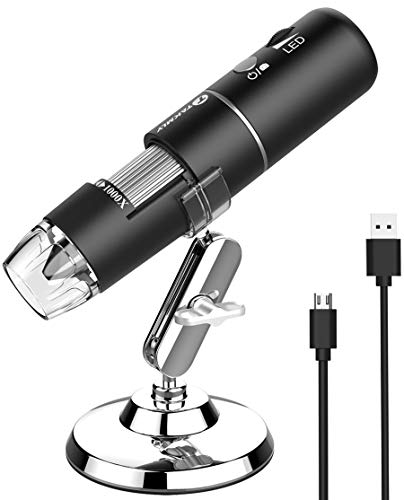
The T TAKMLY microscope is more than just a magnifier – it acts as a camera and jeweler’s loupe delivering 1080P HD photo and video quality and supporting 50x to 1000x zoom. It operates on apps compatible with iOS, Android, Windows, and Mac systems. The microscope features 8 bright, adjustable LED lights for use in low-light environments and an included adjustable stand for stable inspection. It caters well to daily use by students, hobbyists, and technicians who require high magnification and portability.
KEEMIKA USB Digital Microscope 50x-1600x High Zoom

The KEEMIKA USB Digital Microscope pushes magnification further to 1600x with a sharp 2MP sensor delivering 1440P HD image and video quality. It is completely portable, working via USB Type-C connection (with Lightning and Micro-USB adapters included), tailored for smartphone and tablet use without PC compatibility. The microscope includes 8 adjustable LEDs for excellent lighting and is suitable for varied uses such as viewing plants, electronics, coins, and skin. It requires iOS 9.0+ or Android 7.0+ devices for operation and does not need WiFi or charging.
Buying Guide: What to Consider When Choosing a USB Digital Microscope Camera
Selecting the right USB digital microscope camera depends on several important factors:
Magnification Range
Magnification capabilities vary widely, typically from 50x to 1600x. Higher magnification allows detailed observation but may require steadier setups or additional accessories to reduce shaking effects. Choose magnification based on your application, whether casual learning or professional inspection.
Image and Video Resolution
High resolution sensors (2MP and above) and HD video quality (1080p or higher) ensure sharp, clear images. For precision tasks like electronics inspection or jewelry analysis, higher resolution models provide better detail capture.
Connectivity Options
Microscopes may connect through USB (Type-A or Type-C), WiFi, or both. Wireless WiFi models offer greater flexibility on mobile devices but could experience latency. USB provides stable, plug-and-play reliability especially for computers.
Compatibility
Check operating system support including Windows, Mac, Linux, ChromeOS, Android, or iOS. Some models offer apps for smartphones and tablets making them versatile for field use.
Lighting and Stand Features
Built-in adjustable LEDs enhance visibility in low-light settings. A flexible arm or adjustable stand helps maintain focus and stability, essential for magnified viewing and image capturing.
Portability and Power
Decide if you need a handheld, pocket-sized device or a desktop unit. Battery-powered options allow outdoor use without nearby outlets, whereas USB-powered models are convenient for prolonged sessions at a workstation.
Additional Functionalities
Features such as zoom control, focus adjustment knobs, image capture modes (single photo, time-lapse), and video recording are valuable for specific tasks. Software availability can extend functionality with measurement, annotation, and sharing capabilities.