Best Video Camera Tripod Guide: Top Stands for Stable Shots
Answer: A sturdy, versatile tripod is essential for steady video work with any camera or phone. This guide highlights five reliable tripods for a range of budgets and setup needs, from compact desk rigs to tall, professional-height stands. Best for travelers, vloggers, and hobbyists who want reliable stability and flexible height options.
Use this quick-reference table to compare the five picks at a glance.
| Product | Height Range | Rated Load | Best For |
|---|---|---|---|
| JOILCAN Tripod Camera Tripods | 19″ – 74″ | Up to 15 lb | All-purpose, DSLR + phone, heavy-duty support |
| Amazon Basics 50-Inch Tripod | 16.1″ – 50″ | Lightweight use | Budget travel, compact carry |
| VICTIV 74” Camera Tripod | 19″ – 74″ | Up to 9.5 lb | Long reach, versatile for DSLR and phone |
| K&F CONCEPT Camera Tripod | 18.9″ – 75″ | Lightweight, robust for travel | Travel, live streaming, versatile media |
| Yeaki 71” Auto Face Tracking Tripod | Minimal to 71″ | Phone and compact cameras | Auto-tracking vlogging and TikTok |
JOILCAN Tripod Camera Tripods

Best for: Enthusiasts who need a tall, heavy-duty stand that supports cameras and phones. This model adjusts from 19″ to 74″ and folds to a compact 18″ with the pan head removed, making it versatile for studios and outdoor shoots. It includes quick-release plates and a phone mount to maximize compatibility with a wide range of devices.
Why it’s selected: It blends stability with portability. The thicker tubes improve torsional rigidity, and non-slip feet plus a stability hook add external weight for extra steadiness on uneven terrain. The long height range suits seated and standing shots alike.
Caution: It lists a max load of 15 lb; ensure your camera setup remains within this limit to maintain balance and performance.
Amazon Basics 50-inch Lightweight Portable Tripod Stand

Best for: Budget-conscious travelers who need a simple, reliable base without bulk. This tripod locks into height range of 16.1 to 50 inches and features quick-rail access for fast setup.
Why it’s selected: Lightweight at about 1.23 lb and made from aluminum, it’s easy to carry and assemble. It includes a zippered storage bag, which is convenient for packing on trips or daily shoots.
Caution: It’s best for lightweight cameras or small phones; heavier rigs may exceed its stability limits.
VICTIV 74” Camera Tripod
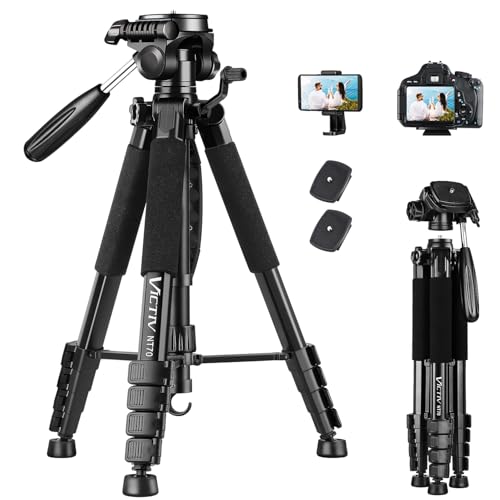
Best for: Shooters needing tall reach and a sturdy platform for DSLR or phone work. It’s designed to accommodate a wide range of devices with a standard 1/4″ screw mount and includes a three-way pan head for flexible angles.
Why it’s selected: Its tall height (up to 74 inches) and professional pan head make it a solid all-around pick for landscape, portrait, and video work in varied environments.
Caution: Heavier than some compact models; consider your transport needs for travel or tight spaces.
K&F CONCEPT Camera Tripod

Best for: Users who want travel-grade stability with compact folded size and a robust 75″ maximum height. It supports smartphones and cameras with a 1/4″ screw mount and has a 360° pan head for precise framing.
Why it’s selected: Pentagonal tube design aids stability and portability, while the built-in bubble level helps ensure accurate alignment for professional-looking results.
Caution: Some users may find the full height setup bulkier than ultra-lightweight options; balance the need for height with ease of carry.
Yeaki 71” Auto Face Tracking Tripod

Best for: Vloggers and social content creators who want automated subject tracking and built-in lighting for enhanced visuals. It supports iPhone and Android devices with a wireless remote for hands-free control.
Why it’s selected: Auto face tracking plus a rechargeable remote control streamlines mobile video creation, while three lighting modes help in varied lighting conditions.
Caution: The lighting and tracking features rely on battery power; plan for charging intervals during longer shoots.
Buying Guide
What height do you need? Taller shoots benefit from stands that reach 70 inches or more, while desk setups require shorter models. Consider a tripod with a robust center column and wide stance for stability on uneven ground.
What payload will you support? For cameras with lenses, a higher load rating is safer. If you plan to mount a heavier camcorder or DSLR with a long lens, pick a model rated above that weight.
What device compatibility is essential? Some tripods include universal 1/4″ screw mounts and phone mounts. If you switch between a smartphone, action cam, and DSLR, look for a tripod with quick-change plates and a compatible phone holder.
What type of head is best? A 3-way pan head offers precise control for video framing, while a simple ball head is quicker for casual photography. A fluid head is ideal for video pans but adds cost and weight.
Portability matters. If you travel frequently, prioritize light weight and folding compactness. A included carry bag helps with transport, and quick-release legs improve setup speed.
FAQ
Q: What is a good all-around tripod height? A: For many shooters, a height range that reaches eye level while standing is ideal, typically around 60–70 inches when fully extended, depending on your height.
Q: Can I use a tripod for phone filming? A: Yes, most tripods include a phone mount or allow a compatible clamp to fit mobile devices securely.
Q: How important is load capacity? A: Crucial for safety and stability. Exceeding the max load can cause tipping or vibration in windy or dynamic environments.
Q: Are tall tripods harder to transport? A: Generally yes. Look for models with compact folded lengths and included bags to ease travel.
Q: Do I need a tripod with a remote? A: A remote can improve efficiency for mobile video and livestreams, especially when you need hands-free operation.