Best Wide Angle Prime Lenses for Crisp, Expansive Shots
Finding the right wide angle prime lens can unlock dramatic landscapes, architectural details, astrophotography, and captivating vlogs. This guide highlights five top-rated options that balance sharpness, contrast, and bokeh, across full-frame and APS-C bodies. Each lens brings its own strengths—extreme angles, bright apertures, and reliable autofocus—so you can pick a model that best fits your camera system and shooting style. Below, you’ll find quick, feature-driven snapshots to compare performance and select the best wide angle prime for your next project.
Product Overview:
- Sony FE 14mm F1.8 GM — Ultra-wide full-frame prime with exceptional resolution and luminous F1.8 aperture.
- Sony E-mount FE 24mm F1.4 GM — Bright, versatile full-frame standard-wide prime with outstanding sharpness.
- Canon RF16mm F2.8 STM — Ultra-wide, compact fixed focal length for EOS R systems with smooth AF.
- Sony FE 20mm F1.8 G — Ultra-wide, lightweight prime designed for full-frame with strong bokeh and compact form.
- Sony E 11mm F1.8 APS-C — Ultra-wide APS-C prime delivering dramatic perspective and fast AF.
Best Wide-Angle Masterpiece: Sony FE 14mm F1.8 GM

The FE 14mm F1.8 GM delivers top-tier G Master quality with an ultra-wide 14mm field of view and a bright F1.8 aperture. This lens is designed for astrophotography, architecture, and landscape work, while also performing well for portraits and motion capture. Its optical design uses two XA elements, one aspherical, and multiple ED glasses to maintain corner-to-corner sharpness with minimal chromatic aberration. The Nano AR coating II reduces flare, and the fast XD Linear Motors enable precise autofocus tracking, even in challenging lighting. The lens remains compact and relatively light for its class, making it a strong option for gimbals and on-the-go shoots.
Two key strengths are its dramatic foreground/background separation and clean, high-contrast imagery at wide openness. The circular F1.8 aperture yields smooth, creamy bokeh for night skies or close-ups, while the rugged build supports professional use. If you shoot landscapes at dawn or do astrophotography with long exposures, this lens helps render star fields with minimal distortion, preserving edge-to-edge integrity even at the image corners.
Ideal use cases: architectural exteriors and interiors, astrophotography, landscape panoramas, and video with a vivid, cinematic look. Pairing it with a sturdy tripod, appropriate color grading, and careful coma control yields standout results.
Bright, Balanced Wide: Sony E-mount FE 24mm F1.4 GM
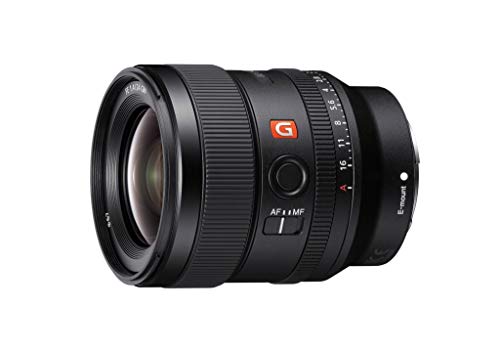
The 24mm focal length offers a natural field of view with a slightly wider stance than 35mm, providing impressive scene context without excessive perspective distortion. The F1.4 maximum aperture enables exceptional low-light performance and shallow depth of field, giving subject separation in a broad range of scenarios. As a GM design, it balances sharpness and smooth, cinematic bokeh while maintaining high-contrast, edge-to-edge resolution. The lens is noticeably compact for its performance tier, making it compatible with handheld shooting, street photography, and travel vlogging on full-frame bodies.
Construction emphasizes stability and consistent performance: robust manual and autofocus control, minimal chromatic aberration, and refined coatings reduce flare in bright, contrasty scenes. Its imaging performance suits landscape enthusiasts who want crisp skies and detail from corner to corner, as well as portrait photographers who want a natural perspective with a touch of creamy bokeh at wider apertures.
Use cases include environmental portraits, cityscapes, street photography, and documentary shoots where a versatile everyday wide lens is beneficial. With careful exposure and color grading, this lens yields true-to-life colors and striking image quality across the frame.
Compact Wide: Canon RF16mm F2.8 STM

Canon’s RF16mm F2.8 STM is a small, lightweight ultra-wide option designed for EOS R-series cameras. The fixed focal length and a fast F2.8 aperture (relative to size) provide a versatile balance of field of view, depth of field, and exposure control. The STM motor delivers smooth, quiet autofocus that’s suitable for video capture and casual shooting alike. This lens suits run-and-gun filmmakers and travel photographers who want a compact setup without sacrificing width or image clarity.
Optically, this lens prioritizes practical sharpness and manageable distortion for real-world scenes. It’s a cost-efficient entry point into wide-angle prime photography for Canon shooters who appreciate a portable, all-day lens that still yields strong performance in landscapes, interiors, and street scenes. It pairs effectively with Canon’s color science and can be a solid complement to a higher-end macro or portrait setup.
Common use includes interior architecture, scenic cityscapes, and event photography where a lightweight, unobtrusive lens is advantageous. Its compactness helps with discreet candid shooting and vlog-style content where minimizing gear footprint matters.
Ultra-Wide, Ultra-Light: Sony FE 20mm F1.8 G
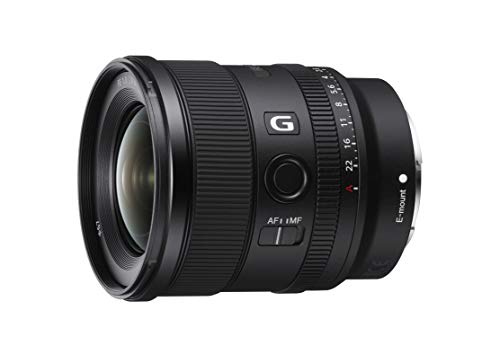
The Sony FE 20mm F1.8 G is a compact, high-performance ultra-wide ideal for landscape, architecture, and astro work. Its bright F1.8 aperture supports low-light shooting and shallow depth of field when needed, while maintaining a broad 20mm perspective that captures expansive scenes with minimal distortion. The lens design emphasizes a lightweight profile without compromising image quality, making it a popular choice for travel shooters and vloggers who want a high-quality, easy-to-carry option for full-frame cameras.
Autofocus is fast and reliable, with solid tracking in video and stills. The optical performance focuses on delivering clean edge-to-edge sharpness and pleasant bokeh for closer subjects without introducing too much blur in the background. Color rendition is typically balanced and true-to-life, compatible with Sony’s color science and post-processing workflows.
Use cases span landscape panoramas, architectural exteriors, night skies, and handheld shooting where a modestly wider frame than 24mm is beneficial. The combination of reach and aperture makes it a versatile core lens for creators building a compact, capable Sony kit.
Ultra-Wide APS-C Favorite: Sony E 11mm F1.8 APS-C

The Sony E 11mm F1.8 is a standout for APS-C systems, delivering an expansive field of view with a bright F1.8 aperture. Its optical design uses multiple ED and aspherical elements to maintain sharpness and minimize distortion, resulting in crisp corners and pronounced, cinematic bokeh. The compact form supports mobile and handheld shooting, while fast autofocus ensures reliable performance for stills and video content.
Designed for vlogging, landscape, and architectural work on APS-C bodies, this lens makes it possible to tell expansive stories in tight spaces. Its short minimum focusing distance enables creative close-ups with dramatic perspective. The lens is a practical choice for creators who want wide vantage without stepping up to full-frame gear, while maintaining excellent image quality and color rendition.
Use cases include travel storytelling, street photography with dramatic perspective, and interior shots where space is limited. The 11mm focal length is especially adept at capturing sweeping environments and dynamic urban scenes.
Buying Guide: Key Considerations For Wide Angle Primes
When selecting a wide angle prime, consider these factors to match your shooting style and camera system:
- Sensor compatibility: Full-frame vs. APS-C affects field of view; factor crop factor into framing expectations.
- Aperture and depth of field: Brighter lenses (e.g., F1.4–F1.8) offer better low-light performance and subject isolation, but may be larger and heavier.
- Optical quality: Look for elements like aspherical and ED elements to minimize distortion, chromatic aberration, and flare; coatings can improve contrast in bright scenes.
- Autofocus performance: For video and moving subjects, fast, accurate AF with reliable tracking is essential, especially on mirrorless bodies.
- Size and weight: Many wide angles are designed to be compact for travel and handheld use; consider how the lens balances with your body.
- Use-case alignment: Landscape and astrophotography favor sharpness and minimal coma, while street or vlog work prioritizes size and autofocus
- Build and weather sealing: Professional work benefits from rugged construction and weather resistance, especially for outdoor shoots.
Buying a wide angle prime often involves balancing maximum sharpness with practical handling. If you frequently shoot in low light or want pronounced background separation, prioritize lenses with wide maximum apertures. For travel or street workflows, smaller, lighter designs can reduce fatigue and improve mobility. Consider also whether you prefer full-frame or APS-C systems, and how the lens will integrate with existing accessories like tripods, gimbals, or color grading pipelines.