Best Wireless Backup and Hitch Camera Systems for Safer Reversing
Answering your search intent: wireless backup and hitch camera systems provide clear, real-time views without messy wiring. This guide highlights five reliable options ideal for trucks, trailers, RVs, and other towing setups. Best for: fleet drivers and DIY installers who want simple installation, strong signals, and night vision. Below, you’ll find quick fits, standout features, and practical cautions to help you choose the right camera for your vehicle and use case.
Product Comparisons at a Glance
| Product | Best For | Key Strength | Limitations |
|---|---|---|---|
| EWAY Strong Magnetic Wireless Backup Camera | RV, Gooseneck, Boat and Truck trailers | Real-time Wi-Fi viewing, easy charging, broad compatibility | Requires app permissions and Local Network; battery life varies by use |
| Pemacom 1080P Wireless Magnetic Kit | Long-distance, high-stability signals for trucks | 33 ft transmission, strong magnets, interference resistance | Magnetic mount may not suit non-metal surfaces |
| EWAY Wireless WiFi Magnetic Hitch Camera | Large trailers and fifth wheels | Up to 100 ft range, bright 1080P image | Requires proper WiFi reception for best range |
| Casoda Wireless Backup Camera | Trailer, fifth wheel, gooseneck setups | Strong 5G Wi-Fi, long transmission distance | Interface may require initial setup effort |
| YEOIZO Wireless Magnetic Backup Camera | Gooseneck and RV trailers | 1280x720p, IP68, rechargeable battery | Battery life depends on usage; charging time noted |
EWAY Strong Magnetic Wireless Backup Camera

Best for: RVs, gooseneck trailers, and large vehicles needing quick magnetic mounting. This camera delivers real-time video via built-in Wi‑Fi and charges via its rechargeable battery. It supports iPhone and Android devices with iOS 12+ and Android 7+ systems. The camera is designed for portable use with a built-in battery and a simple, local-network connection. Best for users who want an easy setup without wiring and need to monitor from a phone or tablet.
Why selected: It combines portability with broad device compatibility and a straightforward charging workflow. The magnetic base provides flexible mounting on metal surfaces, ideal for temporary setups.
Limitation: Some users may need to adjust Local Network permissions and avoid VPNs for optimal connectivity. Ensure you power off before charging to protect the battery. Caution about using quick chargers to avoid potential damage.
Pemacom 1080P Wireless Magnetic Kit

Best for: Trucks and large trailers needing a high-clarity image with strong signal stability. The kit features a 6-magnet base, 1080P image, and a digital signal with frequency hopping to resist interference. It’s designed to perform well in varying temperatures and weather conditions. This option is suitable for users who want clarity and a robust magnetic mounting system.
Why selected: The magnetic base and advanced CMOS sensor provide a sharper image and reliable transmission up to the stated distance, with improved night vision and reduced glare. It’s engineered to minimize frame drops in typical trailer setups.
Limitation: Magnetic mounting may not suit vehicles with non-metal surfaces. Ensure the camera’s mounting surface is clean and flat for best adhesion.
EWAY Wireless Magnetic Hitch Camera 1080P

Best for: Large vehicles like trucks, RVs, and horse trailers needing a wide field of view. This camera system uses a 1080P image, a magnetic mount, and a 100 ft practical wireless range for open areas. The device includes a 5-inch monitor and IR lights for night use. It’s well-suited for those who want a dedicated monitor and straightforward, wire-free installation.
Why selected: The 100 ft range and strong magnets offer a reliable, adaptable setup. It’s a strong all-around choice for drivers who want a robust, wireless solution with visible day and night performance.
Caution: Maintain a clear line of sight and avoid metal obstructions that could affect signal strength. Consider a secondary view if you frequently operate in highly urban areas with interference.
Casoda Wireless Magnetic Backup Camera

Best for: Gooseneck and fifth-wheel trailers needing a long-range, stable Wi-Fi feed with a rechargeable battery. Casoda emphasizes a strong 5G Wi-Fi signal and an extended transmission distance, making it suitable for larger towed setups where cabling is impractical. It uses advanced H.265 encoding for efficient streaming.
Why selected: The combination of 5G Wi-Fi and H.265 reduces bandwidth needs while maintaining image quality, which helps in areas with crowded wireless spectrum. This is advantageous for big rigs with limited mounting options.
Limitation: System setup may require initial configuration to ensure the camera and monitor pair correctly. Battery life varies by usage, so plan charging accordingly.
YEOIZO Magnetic Backup Camera
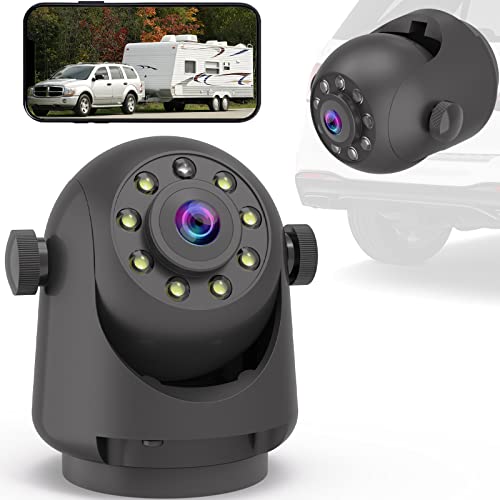
Best for: Gooseneck trailers, RVs, and campers needing a rechargeable, wireless solution with solid night vision. The 1280x720p resolution, IP68 waterproof rating, and a 160-degree viewing angle provide wide coverage and durable operation. The magnet base and USB-C charging support flexible mounting.
Why selected: The rechargeable battery and long excursion time between charges suit frequent shippers and campers who cannot always access power outlets. It’s a practical, compact option with clear day and night imaging.
Limitation: Battery life is user-dependent; heavy use reduces runtime. Expect to recharge after several trips or intermittent use.
Buying Guide: How To Pick The Right Wireless Backup Camera
What should I look for in a wireless backup camera system?
Key factors are image resolution, range, mounting method, power source, and compatibility with your smartphone. A higher resolution (1080P) helps visibility in low light and at distance. A longer range reduces signal drop-offs when reversing on large properties or busy roads.
Is a magnetic mount better than a fixed mount?
Magnetic mounts offer quick installation and removal, ideal for renters or temporary setups. Fixed mounts provide stable reliability for permanent installations on trucks and trailers. Consider your vehicle’s surface and anti-corrosion needs when choosing.
What about power and charging?
Rechargeable batteries enable cordless operation but require regular charging. Some systems allow charging while off to extend life. If you drive long trips, plan for battery maintenance and ensure you have a charging routine.
How important is night vision and weather resistance?
Night vision and IP ratings matter for driving in low light or rainy conditions. Look for IR lights, water resistance (IP67/IP68), and weatherproof housings to ensure consistent performance.
What about installation complexity?
Some systems are plug-and-play with pre-paired monitors, while others require initial pairing and app setup. If you’re pressed for time, choose the ready-to-use options with minimal wiring or app setup.
How should I evaluate range and interference?
Wireless ranges are tested in open spaces. In urban areas or near Wi‑Fi networks, interference can reduce range. Look for devices using frequency-hopping or advanced encoding to minimize interference.
FAQ
- Q: Do wireless backup cameras require an internet connection to work? A: No. Most operate over a local Wi‑Fi network or dedicated wireless link between the camera and a smartphone or monitor without internet access.
- Q: Can I use these cameras with both iPhone and Android? A: Yes. Most models support iOS 12+ and Android 7+ devices via dedicated apps or built-in streaming compatibility.
- Q: Are magnetic backup cameras durable in cold weather? A: Many are designed to withstand extreme temperatures, but performance can vary by model. Check the product’s operating temperature range and battery specifications.
- Q: What should I do if the camera won’t connect on first setup? A: Verify local network permissions, disable VPN if active, and ensure the camera is within the effective range (often within 30-100 feet). Re-pair with the monitor or app if required.
- Q: Is wired installation always better than wireless? A: Wired systems typically offer more stable connections and don’t rely on battery life, but wireless systems provide easier, quicker installation for many users.
- Q: How long do batteries last between charges? A: Battery life depends on usage, distance, and night-vision operation. Plan charging intervals according to your typical trips and monitor usage.