Best 50mm or 85mm Prime Lenses for Canon, Nikon, and Sony
Whether you’re chasing sharp portraits or clean street photography, 50mm and 85mm prime lenses offer classic field of view and wide apertures that help you isolate subjects and create beautiful background blur. This guide highlights five well-rounded options across Canon, Nikon, and Sony systems. Best for enthusiasts and semi-pro shooters seeking affordable, capable primes with solid autofocus and reliable image quality. The following table summarizes the selected models by mount and focal length for quick comparison.
| Product | Mount / System | Focal Length | Best For |
|---|---|---|---|
| YONGNUO YN50mm F1.8 | Canon EF | 50mm | Budget-friendly portraits, EOS DSLR users |
| Nikon NIKKOR Z 50mm f/1.8 S | Nikon Z | 50mm | Sharpness and speed for Z-series |
| Nikon NIKKOR Z 85mm f/1.8 S | Nikon Z | 85mm | Portraits with creamy background |
| VILTROX AF 85mm F1.4 Pro FE | Sony E | 85mm | Portraits with fast AF |
| Canon EF 50mm f/1.4 USM | Canon EF | 50mm | Low-light daily photography, versatile |
YONGNUO YN50mm F1.8 Lens For Canon EF
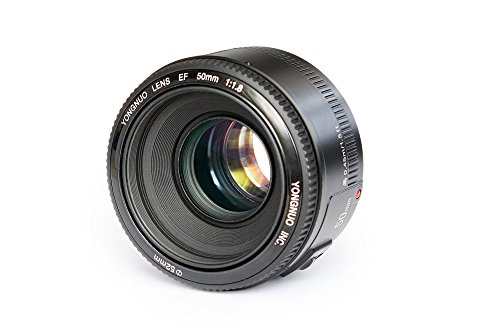
F1.8 aperture provides strong low-light performance and shallow depth of field for Canon EOS shooters. The lens supports autofocus and manual focus, and it is compatible with full-frame and APS-C Canon cameras. Its multi-coated elements improve transmittance and reduce flare. Best for budget-conscious photographers who want a fast standard prime for Canon EF bodies.
Best for: Canon DSLR owners seeking an affordable, sharp 50mm prime. Limitations: Autofocus performance may be slower on older bodies; build is lightweight and may feel less rugged than pro lenses.
Nikon NIKKOR Z 50mm f/1.8 S
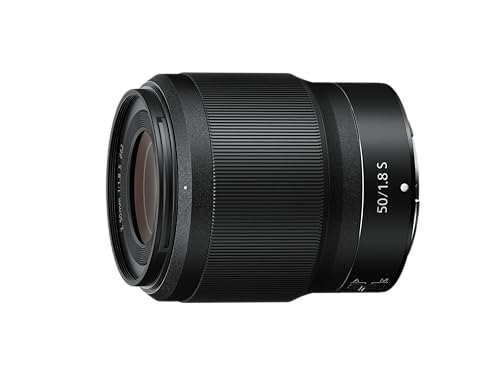
Fast 50mm prime for Nikon Z mirrorless cameras with exceptional sharpness and minimal distortion. The lens uses a quiet stepping motor for smooth, near-silent focusing. Best for Z-series shooters who want a compact, high-performance standard prime for everyday photography and documentaries.
Best for: Nikon Z users seeking a sharp, reliable 50mm. Limitations: Some users may prefer a larger maximum aperture for ultra-low light or subject isolation beyond f/1.8.
Nikon NIKKOR Z 85mm f/1.8 S

85mm focal length with a bright f/1.8 aperture yields flattering portrait compression and robust sharpness. Features include a dust and drip resistant build and Nano Crystal coating to maintain color accuracy. Best for Nikon Z photographers seeking premium portrait results in varied lighting.
Best for: Portrait-focused Nikon Z shooters. Limitations: Not a native long-tele prime; f/1.8 may still require careful exposure under bright scenes.
VILTROX AF 85mm F1.4 Pro FE

Targeted at Sony E-mount, this 85mm prime uses a Dual Hyper VCM motor for fast, precise autofocus. The 85mm focal length provides classic portrait perspective with a shallow depth of field at f/1.4. Best for Sony shooters who want quick, dependable AF and strong background separation.
Best for: Sony full-frame portrait work with fast AF. Limitations: Autofocus performance can vary by body; price may be higher than budget options.
Canon EF 50mm f/1.4 USM

Standard 50mm focal length with an f/1.4 maximum aperture for Canon EF systems. The lens is designed for versatile everyday shooting, delivering smooth bokeh and solid performance in low light. Best for Canon Canon EF users needing a classic, bright prime for street and portrait work.
Best for: Canon shooters requiring a fast, everyday 50mm prime. Limitations: Not native to newer RF-mount bodies without an adapter; may be bulkier than modern compact primes.
Buying Guide
What to consider when choosing 50mm vs 85mm
50mm primes are versatile for general photography, events, street, and environmental portraits. They are typically lighter and more affordable, offering broad field of view and easier framing in tight spaces. 85mm primes excel in portraiture with subject isolation and flattering perspective, but require more working distance and may be less versatile in small spaces.
Mount compatibility and ecosystem
Choose a lens that matches your camera’s mount and sensor format. Full-frame lenses on crop bodies may behave differently due to focal length equivalence. Consider autofocus performance and weather sealing based on your shooting environments.
Maximum aperture and image quality
Aperture governs background blur and low-light performance. Wider f-numbers (lower f-stop) produce shallower depth of field, but may demand precise focus. Check lens coatings and element arrangements that affect sharpness, contrast, and flare resistance.
Budget and build quality
Prime lenses range from budget-oriented to premium builds. While 50mm primes are often less expensive, 85mm portrait lenses can add cost. Assess weight, weather sealing, and handling feel relative to your typical shooting sessions.
Practical usage scenarios
- Portraits: 85mm primes offer flattering perspective and compression.
- Street and documentary: 50mm primes provide a natural field of view with good speed.
- Low light: Look for lenses with wide maximum apertures (f/1.4 or faster).
- Video: Quiet focusing motors and smooth bokeh are valuable.
FAQ
- Q: Is a 50mm or 85mm better for beginners? A: 50mm is generally more versatile for beginners across multiple genres.
- Q: Do these lenses work with full-frame and APS-C cameras? A: Most listed lenses support both formats; check each model’s specifications for your camera.
- Q: Which lens gives the best background blur? A: Lenses with wider apertures (f/1.4 or lower) and longer focal lengths (like 85mm) typically produce stronger background blur.
- Q: Should I choose an autofocus-prioritized lens or manual focus? A: If you shoot events or moving subjects, autofocus-priority is advantageous; for controlled studio work, manual focus can be precise.
- Q: Can I use these lenses on an adapter with a different brand body? A: Adapters may be required; autofocus behavior and metering can vary by adapter and camera.