Best Compact Monopod for DSLR Photography
Looking for a compact monopod that travels light while still delivering solid stability for your DSLR setup? This guide highlights five top compact monopods designed for on‑the‑go shooting. Each option targets different buyers—travel shooters, hobbyists, or professionals needing quick setup—and includes clear reasons to choose or avoid. A quick summary table is provided to help compare essentials at a glance.
Summary of selected products
| Product | Best For | Key Benefit | Best Compatibility |
|---|---|---|---|
| ULANZI TB12 61-Inch Monopod | Travel photographers | Lightweight aluminum; 5-section height; folds compact | DSLRs & mirrorless |
| NEEWER Basics Camera Monopod TP08 | Budget solve‑and‑go setups | 2‑in‑1 tripod/monopod; solid load | DSLRs up to 13 lb |
| Altura Photo 62-Inch Monopod | Minimalists and hikers | Lightweight; compact carry pouch; foam grip | DSLRs & mirrorless up to 5 lb |
| Manbily Carbon Fiber Monopod | Travel and wildlife shooters | 8‑layer carbon fiber; high load; compact | DSLRs & camcorders |
| SMALLRIG 166.5cm Carbon Fiber Monopod | Versatile compact pro kit | One‑touch height, long reach; lightweight | DSLRs & compact cameras |
ULANZI TB12 61-Inch Camera Monopod

The ULANZI TB12 is a portable aluminum monopod designed for photographers who want a tall, flexible support without the bulk of a full tripod. It extends up to 61 inches (155 cm) and weighs about 0.83 lbs, making it ideal for travel, wildlife, or event photography. The five‑section design and adjustable heights provide versatility for low to high angles. Best for: travelers who need a lightweight stand that can reach eye level or higher for full‑body shots. Limitation: the lower height settings are potentially less stable than a short, wide tripod when shooting on uneven terrain.
NEEWER Basics Camera Monopod TP08

The NEEWER Basics TP08 combines value with practicality. It is marketed as 2‑in‑1: a tripod that converts to a monopod, offering a compact travel solution. The unit is built with an aluminum alloy frame and supports DSLRs up to about 13 lb (6 kg). This makes it suitable for general photography and light videography. Best for: budget‑conscious shooters who want a dual‑purpose stand without extra clutter. Caution: the included head and locking mechanisms may be basic compared with premium models, so users relying on heavy or pro‑grade gear should assess load tolerance.
Altura Photo 62-Inch Monopod

The Altura Photo monopod emphasizes lightweight design and ease of transport. It collapses to about 16.75 inches and weighs roughly 0.59 lbs, including a carry pouch. A universal 1/4 inch thread allows quick attachment of DSLRs or mirrorless cameras, with a 3/8 inch adapter included. Best for: ultralight travel and hikers who want a quick, stable pole for up-close shots. Limitation: lower weight capacity, up to 5 lbs, may constrain larger camera bodies or heavy lenses.
Manbily Carbon Fiber Monopod
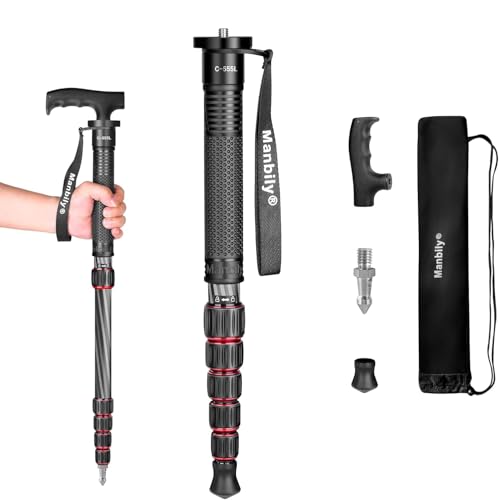
The Manbily carbon fiber monopod offers an 8‑layer carbon fiber build and a load capacity up to 15.4 lbs (7 kg). It weighs about 0.93 lb and folds down to 15.7 inches, making it an excellent travel companion for DSLR shooters and wildlife photographers who require sturdy support without extra bulk. Best for: users needing high rigidity and strength in a compact form. Caution: carbon fiber components require careful handling to prevent cracking at joints if subjected to impact or misalignment during setup.
SMALLRIG 166.5cm Carbon Fiber Monopod

The SMALLRIG carbon fiber monopod reaches up to 166.5 cm (65.6 in) with one‑touch height adjustment for quick, single‑hand operation. Its four‑section leg design optimizes both extension and compact storage, ideal for tight spaces or overhead angles. Best for: professionals who need precise height control and easy one‑hand operation on the go. Limitation: higher end of the price spectrum and weight can be a factor for strictly light travel kits.
Buying Guide — Key Purchase Considerations
- Height range and extension consistency: Choose a monopod that reaches your typical working height, but also collapses compactly for travel. Look for multiple height stops and a secure locking mechanism to prevent sudden movement.
- Weight and carrying comfort: For travel and hiking, a lighter unit reduces fatigue. Consider models with foam grips and wrist straps for steadier handling during long shoots.
- Load capacity: Ensure the monopod can safely support your camera body plus lenses. If you frequently shoot with larger DSLRs and telephotos, favor higher load ratings (8 kg/17 lb or more).
- Build material: Aluminum monopods are lightweight and affordable; carbon fiber ones offer higher stiffness and lighter weight but at a premium. Choose based on budget and ongoing use patterns.
- Head compatibility and accessory options: Some monopods come with a basic head, while others are sold as bare poles. Consider compatibility with your preferred heads (ball heads, pan/tilt heads) and quick‑release plates.
- Portability vs stability: Taller monopods can be less stable on uneven ground. If you shoot in rough terrain, look for monopods with robust leg locks and a broad base or compatible footwear feet.
- Versatility and two‑in‑one options: Some models convert to a tripod or offer inverted center column features for macro work. These can save space but may add weight.
FAQs for Buyers of Compact Monopods
- What is the ideal monopod height for a typical DSLR setup?
Answer: An ideal monopod should extend to at least eye level or higher for most standing shots, while collapsing to a compact length for travel. - Is carbon fiber worth the extra cost?
Answer: Yes for frequent travelers or professionals who need strength and lightness, but not necessary for casual hobbyists on a tight budget. - Can monopods replace tripods in all scenarios?
Answer: Monopods provide mobility and speed, but tripods offer greater stability for long exposures and video work on windy days. - What should I consider about load capacity?
Answer: Match the monopod’s maximum load to your heaviest camera body plus lens to avoid tipping or stability issues. - Are two‑in‑one tripod/monopod models reliable?
Answer: They offer convenience but may compromise stiffness compared with dedicated designs; assess your need for space vs. peak stability.